Hybrid terror modules rise as self-radicalised cells go leaderless
June 10, 2026
  • Read Ecopy
  • Circulation
  • Advertise
  • Careers
  • About Us
  • Contact Us
Android AppiPhone AppArattai
Organiser
  • ‌
  • Bharat
    • Assam
    • Bihar
    • Chhattisgarh
    • Jharkhand
    • Maharashtra
    • View All States
  • World
    • Asia
    • Europe
    • North America
    • South America
    • Africa
    • Australia
  • Editorial
  • International
  • Opinion
  • RSS @ 100
  • More
    • Op Sindoor
    • Analysis
    • Sports
    • Defence
    • Politics
    • Business
    • Economy
    • Culture
    • Special Report
    • Sci & Tech
    • Entertainment
    • G20
    • Azadi Ka Amrit Mahotsav
    • Vocal4Local
    • Web Stories
    • Education
    • Employment
    • Books
    • Interviews
    • Travel
    • Law
    • Health
    • Obituary
  • Subscribe
    • Subscribe Print Edition
    • Subscribe Ecopy
    • Read Ecopy
  • ‌
  • Bharat
    • Assam
    • Bihar
    • Chhattisgarh
    • Jharkhand
    • Maharashtra
    • View All States
  • World
    • Asia
    • Europe
    • North America
    • South America
    • Africa
    • Australia
  • Editorial
  • International
  • Opinion
  • RSS @ 100
  • More
    • Op Sindoor
    • Analysis
    • Sports
    • Defence
    • Politics
    • Business
    • Economy
    • Culture
    • Special Report
    • Sci & Tech
    • Entertainment
    • G20
    • Azadi Ka Amrit Mahotsav
    • Vocal4Local
    • Web Stories
    • Education
    • Employment
    • Books
    • Interviews
    • Travel
    • Law
    • Health
    • Obituary
  • Subscribe
    • Subscribe Print Edition
    • Subscribe Ecopy
    • Read Ecopy
Organiser
  • Home
  • Bharat
  • World
  • Operation Sindoor
  • Editorial
  • Analysis
  • Opinion
  • Culture
  • Defence
  • International Edition
  • RSS @ 100
  • Magazine
  • Read Ecopy
Home Bharat

Hybrid terror modules rise in India as self-radicalised recruits form leaderless cells beyond group affiliations

India’s terror threat is mutating into a shadowy, leaderless network where ideology, not organisation, binds operatives. Security agencies warn that self-radicalised, hybrid modules inspired by multiple terror groups are now the most dangerous frontier

Dr Vishnu AravindDr Vishnu Aravind
Apr 9, 2026, 12:30 pm IST
in Bharat
Follow on Google News
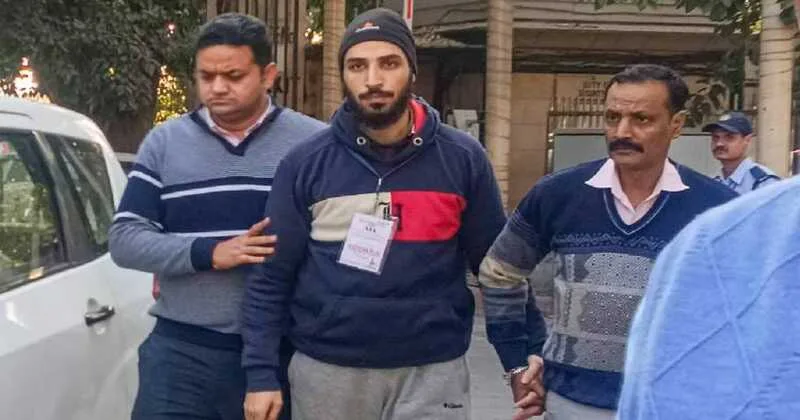
Terror module busts expose new pattern as operatives cut across groups, signalling shift beyond single-organisation networks

Terror module busts expose new pattern as operatives cut across groups, signalling shift beyond single-organisation networks

FacebookTwitterWhatsAppTelegramEmail

New Delhi: Recent busts of multiple terror modules across India have revealed a worrying and evolving pattern in extremist operations. Unlike earlier networks where members were tied to a single organisation, investigators are now finding individuals linked to multiple terror outfits while primarily driven by a shared ideological framework.

In the Faridabad module, for instance, members were found to have links with Jaish-e-Mohammad. However, investigators noted that their core ideological alignment was with the Islamic State. This blending of affiliations marks a significant shift in how terror networks are structured and operate.

A similar trend emerged in the latest case involving arrests made jointly by the Delhi Police and the Maharashtra Anti-Terrorism Squad (ATS). Two individuals taken into custody were found to have connections with both the Islamic State and Jaish-e-Mohammad. Officials say such overlaps are no longer isolated incidents but part of a broader and deliberate strategy.

Shift from organised groups to ideology-driven cells

According to an Intelligence Bureau official, this emerging pattern reflects a calculated shift. Terror operatives are no longer strictly attached to a single organisation. Instead, they are increasingly inspired by a range of extremist ideologies and groups, allowing them to operate more fluidly.

This development signals a dangerous trend that individuals are coming together independently to form terror modules without direct command structures. These self-created groups function autonomously, making detection and disruption more challenging for security agencies.

Also Read: Manipur: Kuki militants suspected to be involved in Moirang attack arrested; Huge cache of arms, ammunitions recovered

The role of Pakistan’s Inter-Services Intelligence (ISI) is central to this transformation. Officials indicate that the ISI is now encouraging a model where recruits are not formally tied to specific organisations. Instead, they are allowed to choose their ideological and operational affiliations freely.

This approach offers multiple advantages. It provides plausible deniability for handlers, reduces operational risks, and is significantly more cost-effective. Importantly, it eliminates the need for direct involvement in establishing terror groups on foreign soil.

Propaganda, recruitment, and the role of social media

India’s zero-tolerance policy on terrorism, intensified after the Pahalgam attack, has made it difficult for external actors to establish structured networks within the country. In response, Pakistan has reportedly shifted tactics by deploying individuals who are not directly affiliated with terror groups to disseminate propaganda online. Following Operation Sindoor, intelligence agencies observed a sharp increase in propaganda activity from Pakistani social media handles. This strategy mirrors methods long used by the Islamic State, which has relied heavily on digital platforms for recruitment and radicalisation.

Officials explain that this propaganda ecosystem is designed to target vulnerable youth. Individuals are continuously exposed to jihadi literature and extremist content through social media and encrypted messaging platforms. Handlers closely monitor how this material is consumed and identify users who engage with it in similar ways.

Once a cluster of such individuals is identified, networking begins. These recruits are then subtly encouraged to connect with like-minded individuals, eventually forming self-contained modules. Notably, even the handlers spreading such content are often not formally associated with any single terror group.

Self-inspired attacks and emerging threat landscape

Investigations into several recent terror incidents outside Jammu and Kashmir reveal that most were carried out by self-inspired modules with no direct organisational links. The only common factor among the perpetrators was their ideological alignment, particularly with the Islamic State. One such case involved Jamesha Rubin, who plotted to blow up a mandir in Coimbatore. He was self-radicalised and influenced by Islamic State propaganda, much of which was propagated by Zahran Hashim, the mastermind of the Sri Lanka Easter bombings. Rubin reportedly raised funds for the attack largely on his own.

Similarly, the Rameshwaram Cafe blast in Bengaluru on March 1, 2024, was executed by two individuals, Mussavir Hussain and Abdul Mateen Talha, who were inspired by the Islamic State. In another instance, Mohammad Shariq and Syed Yasin, involved in the failed Mangaluru blast case, were also found to be driven by the same ideological influence. An official noted that none of these individuals had direct links with each other or with established terror organisations. Each case represented a standalone module, self-radicalised and self-motivated.

Under this evolving strategy, the ISI has reportedly instructed handlers not to pressure recruits into joining specific groups. Instead, propaganda is disseminated widely, allowing individuals to choose their preferred affiliations. This decentralised approach ensures flexibility and reduces traceability.

Officials warn that this model is likely to become more prevalent in the coming years. By relying on ideology rather than structured networks, terror outfits and their backers are adapting to increased surveillance and counter-terrorism measures, posing a complex and persistent threat to national security.


 

Topics: Islamic State influenceJaish-e-Mohammad linksISI strategyTerror modules IndiaOnline RadicalisationLone Wolf AttacksHybrid terrorismSelf-radicalisation
ShareTweetSendShareSend
✮ Subscribe Organiser YouTube Channel. ✮
✮ Join Organiser's WhatsApp channel for Nationalist views beyond the news. ✮
Previous News

Shadow of Malda looms large: Can Bengal ensure peaceful polling this time?

Next News

UP Religious Conversion Case: Satish Dwivedi alleges organised bid to convert poor Hindu families in Siddharthnagar

Related News

Representative Image

Karnataka Terror Link Probe: Alla Baksh arrested in Tumakuru over links with foreign terrorists

Accused Sameer Khan (Left), Hizbullah Khan (Right)

UP: ATS arrests Hizbullah Ali Khan and Sameer Khan in Noida for alleged Pakistan ISI-linked terror plot

Representative image

Andhra Pradesh: Social media influencer Sayeeda arrested over alleged terror links & recruitment activities

Representative image

Karnataka: NIA alleges Al-Qaeda plot to overthrow elected government; Bengaluru-based woman among five charged

Jamaat al-Mu'minaat is the JeM's female front organisation for psychological warfare

Jaish-e-Mohammed launches covert women’s brigade, ‘Jamaat al-Mu’minaat’ for radicalisation and recruitment: Reports

A representative image

From Afghanistan to India: How ISIL is adapting and expanding its terror network

Load More

Latest News

Hawkers protest in West Bengal

The Left’s Selective Morality: From Sainbari to Hawker protests

Odisha CM Mohan Charan Majhi and Union Minister of Law and Justice Arjun Ram Meghwal along with other dignitaries on the stage on the occasion of completion of 12 years of the Central Government

PM Modi’s 12-years of governance marks era of transformation, growth & global recognition: Odisha CM Mohan Majhi

Modi govt clears Rs 13,000 Crore Great Nicobar Airport Project (This is an AI generated image)

India’s strategic move in Great Nicobar: Rs 13,000 crore airport to double strength in the Indian Ocean

Redistricting efforts across the United States continue to redefine electoral boundaries and congressional competition before the 2026 midterms.

America’s electoral map shifts ahead of 2026 Midterms; Courts back redistricting push

India Deploys 12 Nuclear Warheads: Heralds doctrinal shift to script strategic deterrence against multi-front threat

J&K: Zojila tunnel clears key hurdle; Signals new era of connectivity for Ladakh

How Cockroach politics is hollowing out Bharatiya democratic culture

RSS centenary year is a time for renewed resolve and greater commitment to nation-building: Dr Mohan Bhagwat

Ex-DMK Minister Senthil Balaji (Right Side-File Photo)

Tamil Nadu: CBI books Rs 397 cr transformer tender scam from ex-DMK Minister Senthil Balaji’s tenure (2021-2023)

Border Security Force (BSF) officials inspect the Single Row Fencing (SRF) at a Border Out Post area (India-Bangladesh border)

Infiltration and Border Management: Saving the Siliguri corridor

Load More
  • Privacy
  • Terms
  • Cookie Policy
  • Refund and Cancellation
  • Delivery and Shipping

© Bharat Prakashan (Delhi) Limited.
Tech-enabled by Ananthapuri Technologies

  • Home
  • Search Organiser
  • Bharat
    • Assam
    • Bihar
    • Chhattisgarh
    • Jharkhand
    • Maharashtra
    • View All States
  • World
    • Asia
    • Africa
    • North America
    • South America
    • Europe
    • Australia
  • Editorial
  • Operation Sindoor
  • Opinion
  • Analysis
  • Defence
  • Culture
  • Sports
  • Business
  • RSS @ 100
  • Entertainment
  • More ..
    • Sci & Tech
    • Vocal4Local
    • Special Report
    • Education
    • Employment
    • Books
    • Interviews
    • Travel
    • Health
    • Politics
    • Law
    • Economy
    • Obituary
  • Subscribe Magazine
  • Read Ecopy
  • Advertise
  • Circulation
  • Careers
  • About Us
  • Contact Us
  • Policies & Terms
    • Privacy Policy
    • Cookie Policy
    • Refund and Cancellation
    • Terms of Use

© Bharat Prakashan (Delhi) Limited.
Tech-enabled by Ananthapuri Technologies