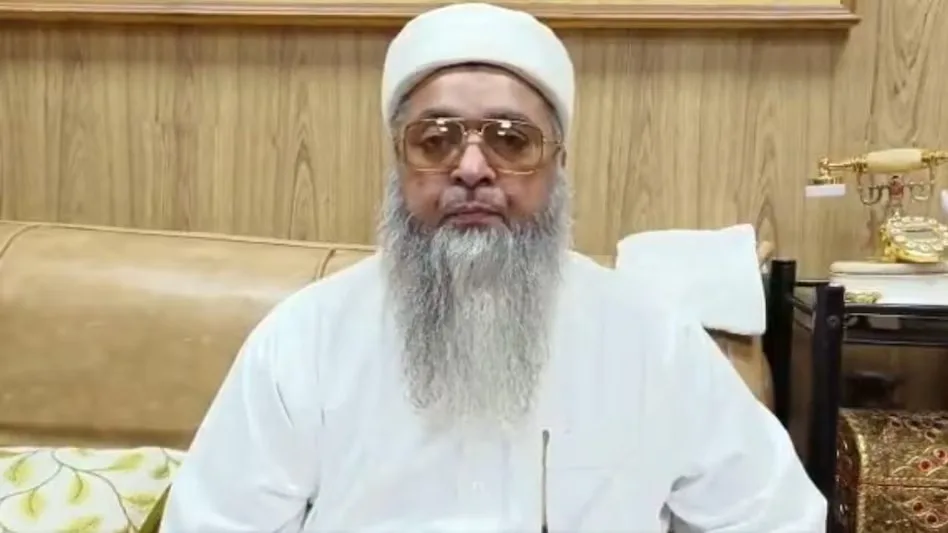
In a statement made during his visit to Jammu and Kashmir, Umer Ahmed Ilyasi, Chief Imam of the All India Imam Organisation, expressed strong confidence that Pakistan-Occupied Kashmir (PoK) will soon be reintegrated with India.
Addressing reporters, Ilyasi said, “PoK, which is an integral part of India, will definitely rejoin India because the people of PoK want to have a referendum there.” His remarks reflect a broader narrative that the people living in the region are increasingly inclined towards integration with India.
He further emphasised that the sentiment for reunification is not merely political rhetoric but rooted in the aspirations of the local population. “God willing, their ‘ghar wapsi’ will take place soon. It is the people there who want it,” he added.
Cites development in Jammu & Kashmir as driving gorce
Highlighting the transformation of Jammu and Kashmir after the abrogation of Article 370 abrogation, Ilyasi described the region as a “new Kashmir” marked by peace, prosperity, and progress.
He pointed to visible socio-economic changes, stating that the Valley has witnessed a remarkable shift in its atmosphere. “Today’s Kashmir has become excellent; there is prosperity throughout, and tourism has increased,” he said.
Drawing a stark contrast with the past, he remarked, “There was a time when young people and children here used to throw stones. Today, they have pens in their hands. They are studying.”
According to Ilyasi, such developments have not gone unnoticed by residents of PoK, who are closely observing the changes across the Line of Control. He suggested that this comparative progress is influencing public sentiment in PoK and strengthening calls for integration with India.
Tourism revival and call to visit Kashmir
The Imam also highlighted the revival of tourism in Jammu and Kashmir, describing it as a key indicator of stability and normalcy returning to the region.
Referring to the terror attack in the Baisaran meadows of Pahalgam in 2025, which had temporarily impacted tourist inflow, he acknowledged that such incidents had caused concern but stressed that the situation has since improved.
“I want to tell everyone that they should visit Kashmir, as there is no atmosphere of fear now,” he said, urging people from across the country and beyond to experience the region’s natural beauty and cultural richness.
His appeal aligns with ongoing efforts to reposition Kashmir as a safe and attractive tourist destination, contributing to local livelihoods and economic growth.
India’s position on PoK reiterated
Ilyasi reiterated India’s long-standing position that Pakistan-Occupied Kashmir is an integral part of the country. His remarks echo a consistent stance maintained by successive governments regarding the status of the region.
By linking the issue with the aspirations of PoK residents, the Imam framed the debate not just in geopolitical terms but also as a matter of people’s will and future prospects.
His comments come at a time when discussions around regional stability, cross-border relations, and internal development in Jammu and Kashmir continue to remain central to India’s policy discourse.
Call for peace in West Asia
Beyond regional issues, Umer Ahmed Ilyasi also spoke about the ongoing conflicts in West Asia, emphasising the destructive consequences of war.
“Wars harm everyone; they are a sign of destruction,” he said, advocating for the peaceful resolution of conflicts.
Expressing optimism about India’s global role, he voiced hope that Narendra Modi, Prime Minister of India, could contribute to peace-building efforts. “I have hopes from our country’s Prime Minister Narendra Modi ji, and God willing, he will mediate, and the war will end soon… there will be peace and tranquillity,” he added.
The remarks by the Chief Imam come against the backdrop of evolving dynamics in Jammu and Kashmir, where the government has consistently emphasised development, infrastructure growth, and improved security conditions following the constitutional changes of 2019.
By linking Kashmir’s transformation with aspirations in PoK, Ilyasi’s statement adds a new dimension to the discourse, suggesting that economic progress and stability could play a decisive role in shaping regional sentiments.
While the geopolitical realities surrounding PoK remain complex, such assertions highlight the importance of development-driven narratives in influencing public perception and political conversations.
The statement by Umer Ahmed Ilyasi shows a mix of political assertion, developmental optimism, and a call for peace. By projecting confidence in PoK’s eventual reintegration with India and praising the changes in Jammu and Kashmir post Article 370 abrogation, he has reinforced a narrative centered on progress and aspiration.
At the same time, his appeal for peace in conflict-hit regions and his faith in India’s leadership reflect a broader vision of stability, both within the country and beyond its borders.