Mere Use of ‘Waqf’ or ‘Mosque’ Not Enough: Madras High Court
June 15, 2026
  • Read Ecopy
  • Circulation
  • Advertise
  • Careers
  • About Us
  • Contact Us
Android AppiPhone AppArattai
Organiser
  • ‌
  • Bharat
    • Assam
    • Bihar
    • Chhattisgarh
    • Jharkhand
    • Maharashtra
    • View All States
  • World
    • Asia
    • Europe
    • North America
    • South America
    • Africa
    • Australia
  • Editorial
  • International
  • Opinion
  • RSS @ 100
  • More
    • Op Sindoor
    • Analysis
    • Sports
    • Defence
    • Politics
    • Business
    • Economy
    • Culture
    • Special Report
    • Sci & Tech
    • Entertainment
    • G20
    • Azadi Ka Amrit Mahotsav
    • Vocal4Local
    • Web Stories
    • Education
    • Employment
    • Books
    • Interviews
    • Travel
    • Law
    • Health
    • Obituary
  • Subscribe
    • Subscribe Print Edition
    • Subscribe Ecopy
    • Read Ecopy
  • ‌
  • Bharat
    • Assam
    • Bihar
    • Chhattisgarh
    • Jharkhand
    • Maharashtra
    • View All States
  • World
    • Asia
    • Europe
    • North America
    • South America
    • Africa
    • Australia
  • Editorial
  • International
  • Opinion
  • RSS @ 100
  • More
    • Op Sindoor
    • Analysis
    • Sports
    • Defence
    • Politics
    • Business
    • Economy
    • Culture
    • Special Report
    • Sci & Tech
    • Entertainment
    • G20
    • Azadi Ka Amrit Mahotsav
    • Vocal4Local
    • Web Stories
    • Education
    • Employment
    • Books
    • Interviews
    • Travel
    • Law
    • Health
    • Obituary
  • Subscribe
    • Subscribe Print Edition
    • Subscribe Ecopy
    • Read Ecopy
Organiser
  • Home
  • Bharat
  • World
  • Operation Sindoor
  • Editorial
  • Analysis
  • Opinion
  • Culture
  • Defence
  • International Edition
  • RSS @ 100
  • Magazine
  • Read Ecopy
Home Bharat

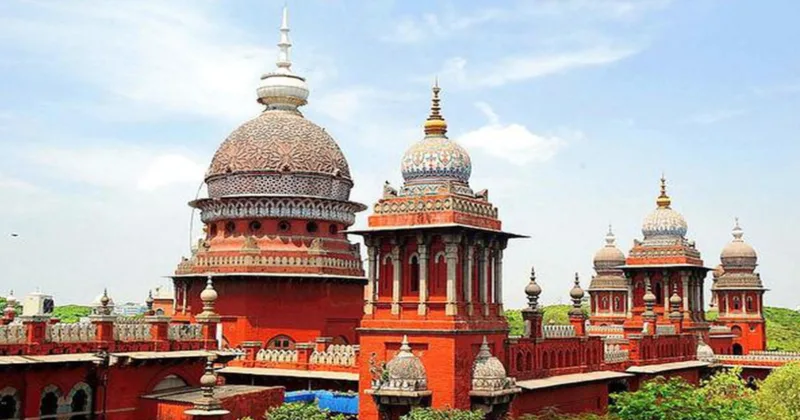
Mere use of ‘Waqf’ or ‘Mosque’ not enough to claim properties: Madras High Court sets aside TN Waqf Board order

The Madras High Court has ruled that simply mentioning “Waqf” or “Mosque” in a document does not automatically make a property waqf. The court emphasised that a valid waqf requires clear dedication for public religious or charitable purposes and complete transfer of ownership

WEBDESKWEBDESK
Apr 3, 2026, 09:00 am IST
in Bharat, Law, Tamil Nadu
Follow on Google News
Madras High Court

Madras High Court

FacebookTwitterWhatsAppTelegramEmail

In a significant ruling clarifying the legal requirements for declaring a property as waqf, the Madras High Court has held that the mere usage of the terms “Waqf” or “Mosque” in a settlement deed does not by itself constitute a valid declaration of waqf property.

Justice P B Balaji, while adjudicating a civil revision petition, observed that for a property to be legally recognised as waqf, there must be a clear and unequivocal declaration by the owner dedicating the property for public religious or charitable purposes. The court further stressed that such a declaration must be accompanied by the complete divestment of ownership rights by the person creating the waqf.

“At the risk of repetition, mere use of the words ‘Waqf’ and ‘Mosque’ will not suffice,” the court remarked, underlining that legal substance must prevail over mere terminology in property documents.

The ruling came in response to a petition originally filed by M Sirajudeen Sayeed (now deceased), which was subsequently pursued by his legal heirs, Zarina Sayeed and Shabana Sayeed. The petition challenged the classification of their property as waqf land by the Tamil Nadu Waqf Board.

The disputed property is located in Siruvadi village in Villupuram district of Tamil Nadu. According to the petitioners, the Waqf Board had, through an order dated November 3, 2009, registered their property as waqf under the provisions of the Waqf Act.

Aggrieved by this classification, the petitioners initially approached legal forums, eventually taking the matter before the Tamil Nadu Waqf Tribunal. However, the tribunal upheld the Waqf Board’s decision on October 11, 2022.

Also Read: Dharma Swantantrya Adhiniyam: Safeguarding the fundamental freedom

Following this, the petitioners filed a civil revision petition before the Madras High Court, seeking to overturn the tribunal’s order.

Appearing on behalf of the petitioners, Advocate Balan Haridas argued that the Waqf Board had based its decision on a flawed interpretation of two historical deeds dated 1910 and 1951. He contended that these documents did not contain any explicit declaration dedicating the property for public religious or charitable purposes.

The counsel further submitted that the notification issued by the Board was legally defective. He pointed out that no proper notice had been served to interested parties, thereby denying them an opportunity to present their case. Additionally, he argued that the Board had failed to conduct a mandatory inquiry under Section 40 of the Tamil Nadu Waqf Act before declaring the property as waqf.

These procedural lapses, according to the petitioners, rendered the Board’s decision unsustainable in law.

While examining the matter, the High Court referred to established legal principles and precedents, including rulings of the Supreme Court of India, to reiterate the essential ingredients required for the creation of a waqf.

The court noted that a waqf is created only when the owner of a property makes a formal declaration of endowment for religious or charitable purposes. Upon such declaration, the property is considered to vest in God Almighty, and the owner must relinquish all rights, title, and interest in the property.

Justice Balaji highlighted two fundamental conditions:

1. There must be a clear intention on the part of the owner to dedicate the property for public purposes.
2. The owner must completely divest himself or herself of ownership and control over the property.
3. In the absence of these elements, the court observed, a property cannot be treated as waqf merely on the basis of wording used in a document.

Applying these principles to the present case, the High Court found no evidence to suggest that the property in question had ever been dedicated for public purposes or vested in God.

“There is absolutely no indication that there has been dedication for public purposes, or properties being vested in God, the executants divesting themselves of all their interest and title,” the court stated while setting aside the order of the Tamil Nadu Waqf Board.

The ruling effectively overturns both the Board’s 2009 notification and the tribunal’s 2022 order, granting relief to the petitioners.

The judgment is expected to have wider implications for similar disputes involving waqf properties across the country. By clearly defining the criteria for waqf declaration, the court has reinforced the importance of due process and substantive legal requirements over mere textual references.

Topics: Madras High Court waqf rulingwaqf property law IndiaTamil Nadu Waqf Board casewaqf declaration rulesJustice PB Balaji judgment
ShareTweetSendShareSend
✮ Subscribe Organiser YouTube Channel. ✮
✮ Join Organiser's WhatsApp channel for Nationalist views beyond the news. ✮
Previous News

ED cracks down on I-PAC with multi-city raids in Bengal coal scam probe

Next News

Amid West Asia tensions, centre moves to cut LPG import dependence; Pushes PNG, renewables

Related News

A representative image

“Mere use of words like ‘Waqf’ or ‘Mosque’ does not create public waqf”: Madras HC sets aside TN Board order

Load More

Latest News

Centre seeks explanation from Keralam Waqf Board on Munambam land entry into Umeed Portal

In China's strategic map of threats, geography continues to give India a significance that cannot be overlooked

The Rival China Cannot Ignore: Why India matters more than Beijing admits

Addressing the second day of Vijnana Bharati’s 7th National Convention at BHU, RSS Sah Sarkaryavah Dr Krishna Gopal

Vijnana Bharati’s 7th National Convention | Scientists must work to harmonise spirituality & science: Dr Krishna Gopal

Representative image

West Asia Conflict: Donald Trump announces landmark US-Iran agreement, raises hopes for peace

Keralam: CM VD Satheesan Faces Backlash for Criticising VCs Attending RSS Programme Addressed by Dr Mohan Bhagwat

Prime Minister Narendra Modi: Record maker and breaker

India surpasses South Korea, Enters big 5 manufacturing hub; Seals strategic footprint in the global supply chain

Gujarat: Married Man Karim Rafik Posed as Widower 'Aditya Patel' to Trap Hindu Women; 8,000 Photos and Videos Found on Phone

Gujarat Matrimonial Fraud: Karim posed as widower ‘Aditya Patel’ to target Hindu women; 8,000 photos found on phone

A suicide bomber attacked the Jhangi police checkpost in Taunsa Sharif, Dera Ghazi Khan, Punjab, near the Khyber Pakhtunkhwa border

Khyber Pakhtunkhwa: TTP suicide bomber hits police checkpost, two Pakistani policemen killed

(Left) BJP leaders R Ashok (Right) BY Vijayendra

Karnataka: Guarantee schemes revision exposes Congress failure; BJP alleges secret plan to slash beneficiaries

Load More
  • Privacy
  • Terms
  • Cookie Policy
  • Refund and Cancellation
  • Delivery and Shipping

© Bharat Prakashan (Delhi) Limited.
Tech-enabled by Ananthapuri Technologies

  • Home
  • Search Organiser
  • Bharat
    • Assam
    • Bihar
    • Chhattisgarh
    • Jharkhand
    • Maharashtra
    • View All States
  • World
    • Asia
    • Africa
    • North America
    • South America
    • Europe
    • Australia
  • Editorial
  • Operation Sindoor
  • Opinion
  • Analysis
  • Defence
  • Culture
  • Sports
  • Business
  • RSS @ 100
  • Entertainment
  • More ..
    • Sci & Tech
    • Vocal4Local
    • Special Report
    • Education
    • Employment
    • Books
    • Interviews
    • Travel
    • Health
    • Politics
    • Law
    • Economy
    • Obituary
  • Subscribe Magazine
  • Read Ecopy
  • Advertise
  • Circulation
  • Careers
  • About Us
  • Contact Us
  • Policies & Terms
    • Privacy Policy
    • Cookie Policy
    • Refund and Cancellation
    • Terms of Use

© Bharat Prakashan (Delhi) Limited.
Tech-enabled by Ananthapuri Technologies