New Delhi/Washington: Emphasising the strength and future potential of bilateral ties, US Ambassador to India Sergio Gor has said that Donald Trump “deeply cares” about the relationship between the United States and India, underlining the strategic importance Washington places on its partnership with New Delhi.
Gor made these remarks following a recent meeting with President Trump at the White House, describing the interaction as reaffirming the administration’s commitment to strengthening ties with India across multiple domains.
White House meeting reinforces strategic commitment
Taking to the social media platform X, Gor shared details of his meeting, stating: “Back in the U.S. for a few days. First stop, meeting with our GREAT President in the White House. The President deeply cares about the relationship between the U.S. and India.”
He also posted a photograph from the Oval Office featuring himself alongside President Trump and U.S. Secretary of State Marco Rubio, symbolising high-level engagement between the two nations.
Gor, who assumed office as the US Ambassador to India in January this year, previously served as Director of the White House Presidential Personnel Office. He also currently holds the role of US Special Envoy for South and Central Asian Affairs, placing him at the centre of Washington’s diplomatic engagement with the region.
Defence cooperation at the core of bilateral relations
Highlighting the pillars of the partnership, Gor identified defence and security cooperation as the most strategically significant area of collaboration between the two countries. “Defence and security cooperation represents our most strategically significant area of collaboration,” he said, pointing to the continued deepening of the U.S.-India Major Defence Partnership.
He noted that the partnership is being reinforced through a renewed 10-year defence framework, alongside expanded cooperation in defence industrial production, science and technology, and operational coordination between the armed forces of both nations. India’s designation as a Major Defence Partner of the United States continues to facilitate closer military ties, enabling enhanced technology sharing and interoperability.
Gor also highlighted the growing frequency and sophistication of joint military exercises, which have become a cornerstone of defence cooperation. “India is a Major Defence Partner, and defence cooperation is one of the brightest spots in our bilateral relationship,” he said.
He cited key exercises such as Malabar, Tiger Triumph, and Cope India as critical platforms for improving military interoperability between the two countries. In addition, the 16th edition of Exercise Vajra Prahar 2026, a premier joint Special Forces exercise between the Indian Army and the United States Army, was held in Himachal Pradesh earlier this year, further strengthening operational coordination. According to Gor, these engagements ensure that both militaries can operate seamlessly together, particularly in addressing evolving security challenges in the Indo-Pacific region.
The ambassador also underscored the importance of the Quadrilateral Security Dialogue (Quad), which includes the United States, India, Japan, and Australia, as a key strategic platform. “Both of our nations are part of the Quad, a strategic partnership that keeps our security interests robust and aligned,” he noted.
He added that diplomacy, defence exercises, and military sales collectively form the backbone of bilateral defence cooperation, predicting that continued focus on these areas will naturally strengthen ties in the years ahead.
Trade, AI and critical minerals collaborations offer transformative potential
Beyond defence, Mr. Gor emphasised that economic investment and trade expansion present equally transformative opportunities for both nations. “Economic investment and trade expansion also offer equally transformative potential,” he said, noting that President Trump’s goal is to facilitate bilateral trade in a way that generates unprecedented opportunities for American businesses and workers.
India’s rapidly growing economy and its vast infrastructure requirements, he observed, align closely with American expertise in sectors such as energy, aviation, advanced manufacturing, and digital infrastructure. “These investments benefit both of our nations, while strengthening the economic foundation of our long-term strategic partnership. Simply put, we have a win-win situation in front of us,” he added.
Turning to emerging technologies, Gor highlighted artificial intelligence (AI) as a major area of future collaboration, describing its potential as “limitless.” He referred to the recent AI Impact Summit held in New Delhi as a key milestone in advancing cooperation between governments and private stakeholders. “Just a few weeks ago, I saw first-hand the limitless potential of the U.S. and India partnering on AI innovation,” he said.
Gor stressed that as AI becomes increasingly embedded in everyday life, governance frameworks must remain flexible and rooted in bilateral cooperation rather than rigid global oversight mechanisms. “The answer is certainly not to have some global governance board based out of the UN determine what you can and can’t use AI for,” he said, advocating instead for nuanced, evolving approaches driven by dialogue between the United States and India.
The ambassador also pointed to strong prospects for collaboration in critical minerals and advanced manufacturing, sectors that are becoming central to economic security and technological leadership. He highlighted initiatives such as the U.S.-India COMPACT framework, which focuses on building resilient supply chains for semiconductors, critical minerals, and pharmaceuticals. In addition, India’s participation in the Pax Silica Declaration was cited as another significant step toward aligning economic and national security interests between the two countries. “Pax Silica is focused on further aligning U.S.-India economic and national security interests through partnerships on critical mineral processing capacity and AI infrastructure investments,” Mr. Gor explained.
Leadership chemistry drives bilateral momentum
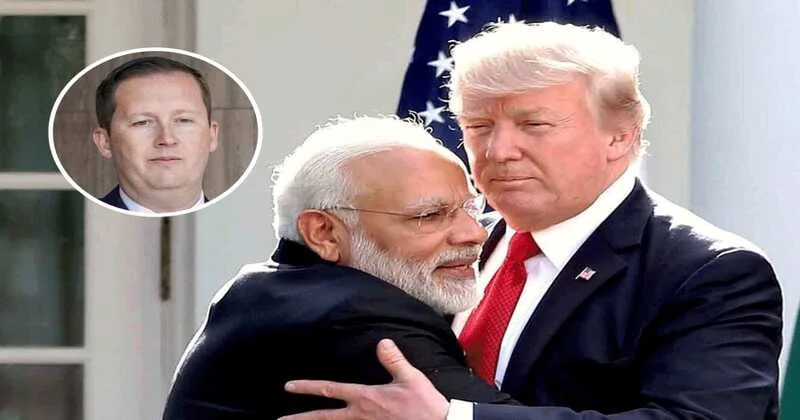
At the highest political level, Gor underscored the personal rapport between President Trump and Prime Minister Narendra Modi as a key driver of stronger ties. “President Trump considers Prime Minister Modi a true friend, and their genuine relationship strengthens the already important bond between our two nations,” he said.
He noted that this relationship at the leadership level provides momentum for deeper cooperation and facilitates progress on mutually beneficial goals.
Outlining his broader vision, Gor said he aims to transform the U.S.-India relationship into the defining strategic partnership of the 21st century. “My vision is to transform the U.S.-India relationship into the defining strategic partnership of the 21st century, one that delivers tangible benefits for both our nations,” he stated. He emphasised that the partnership must produce real, measurable outcomes for citizens in both countries, ranging from increased market access for American farmers to collaborative breakthroughs in energy and medical research.
Concluding his remarks, Gor reiterated that shared democratic values form the foundation of the U.S.-India partnership. “The U.S.-India relationship is rooted in shared democratic values, mutual prosperity, and common security interests that will shape the global order for generations,” he said. As both nations continue to deepen cooperation across defence, technology, trade, and diplomacy, the relationship is increasingly being viewed as one of the most consequential partnerships in shaping the future global order.