Alappuzha: In the run-up to the elections, serious allegations have emerged that both the Left Democratic Front (LDF) and the United Democratic Front (UDF) are being influenced by the Social Democratic Party of India (SDPI), the political wing of the banned Popular Front of India (PFI), and the Welfare Party, the political arm of Jamaat-e-Islami. Critics claim that the CPI(M) and the Congress, which lead the respective fronts, are facilitating the entry of these organisations into mainstream politics in pursuit of consolidating vote banks, even as internal dissent grows within both camps.
Allegations of electoral compromise and strategic alliances
In the 2025 local body elections, candidates affiliated with the SDPI and Welfare Party were reportedly fielded as independents with the tacit backing of both the LDF and the UDF fronts. There were widespread allegations that local CPI(M) and Congress units covertly supported such candidates to secure victories for their official nominees.
This time, however, the approach appears more overt. Reports suggest that both the CPI(M) and the Congress are accepting indirect support, including campaign-related assistance, from these organisations. Earlier attempts to formally include the Welfare Party as a constituent of the UDF were stalled due to opposition from the Indian Union Muslim League, which feared a dilution of its political relevance within the alliance.
Despite that setback, recent developments indicate a renewed effort to consolidate Muslim organisations under a unified political strategy. In constituencies such as Manjeshwarm in Kasaragod district, even prominent League leaders are said to have intervened in facilitating the withdrawal of SDPI candidates in favour of League candidates. The withdrawn candidates themselves have reportedly confirmed such arrangements, prompting demands for transparency regarding the terms of these compromises. Leaders of both the SDPI and the Welfare Party have publicly stated that in constituencies where the BJP holds a strong position, they will extend support to the most viable candidate, irrespective of whether it belongs to the CPI(M) or the Congress. This has further intensified claims that electoral strategies are being shaped by opportunistic alignments rather than ideological commitments.
Criticism within parties and questions of ideological Drift
The current political landscape, observers argue, reflects a sharp polarisation in Kerala politics, with the BJP on one side and a broad spectrum of Left, Right, and religious organisations on the other. This alignment has drawn criticism from within party ranks, particularly in the CPI(M), where some members see it as a departure from the party’s foundational principles.
Historically, both fronts have engaged with the extremist Abdul Nasser Madani’s People’s Democratic Party (PDP), whose leader has faced serious allegations in connection with the Bengaluru and Coimbatore blast cases. The PDP has alternated its support between the LDF and UDF in successive elections and is reportedly aligned with the Left in the current political scenario.
Significantly, former Chief Minister V.S. Achuthanandan had, during his tenure, openly criticised the Popular Front of India, describing it as an organisation that misguides Muslim youth towards extremist objectives. His government had also blocked the PFI’s attempt to conduct a Freedom Parade on Independence Day. Achuthanandan had similarly opposed any association with the PDP, taking a firm ideological stand.
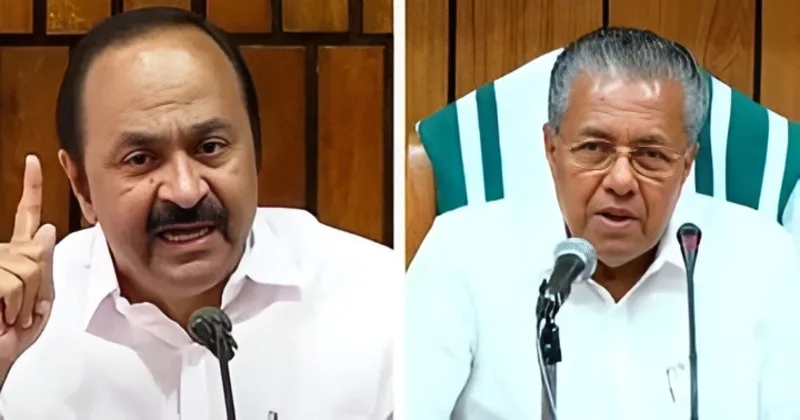
In contrast, critics argue that the present CPI(M) leadership lacks a comparable internal corrective force. The absence of strong dissenting voices capable of challenging Chief Minister Pinarayi Vijayan has led to accusations that the party is now willing to overlook ideological contradictions for electoral gains.
There is growing demand for both the CPI(M) and the Congress to disclose any understandings or assurances given to the SDPI and Welfare Party in exchange for electoral support. Party cadres and sympathisers have voiced strong objections, alleging that such alliances betray the sacrifices of party workers and martyrs, including figures like Abhimanyu. As the election approaches, these allegations have intensified scrutiny over the evolving nature of political alliances in Kerala, raising fundamental questions about ideology, governance, and the limits of electoral pragmatism.