
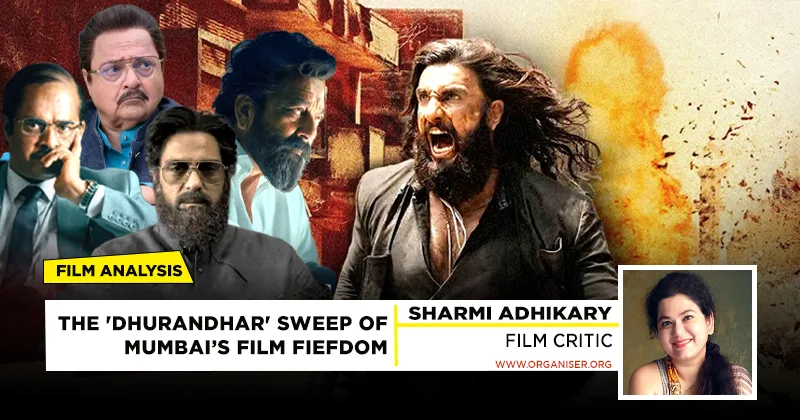
We could have penned a review of Dhurandhar: The Revenge, written, directed and produced by the man-of-the-moment Aditya Dhar, highlighting not just the intent but also the accuracy and technical brilliance of the film that is running to packed theatres (after the first part raked in all time record-breaking figures at the box office), but the social media blitzkrieg surrounding the work doesn’t really leave much space for deconstruction on those lines.
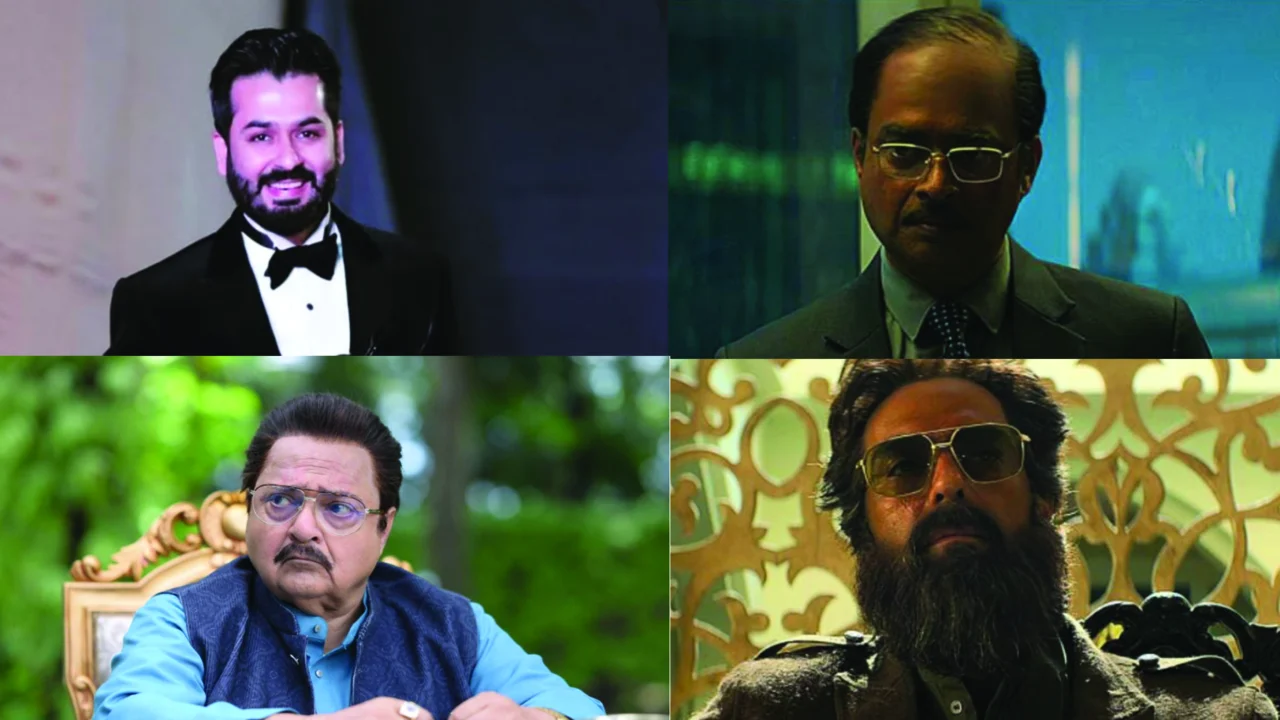
In simpler terms, the laurels being showered on not just Dhar for his vision and execution but also on Shashwat Sachdev for the mastery he’s exhibited in composing the music are absolutely deserved. Not to mention the diverse artists from all over the country he brought under one roof to create the stellar soundtrack. These are names who have been neglected by the Hindi film music industry for the longest time ever. Just like senior (Rakesh Bedi surely is having the last laugh, along with Akshaye Khanna and Gaurav Gera) as well as regional and new actors (important names emerging are Sara Arjun, Udaybir Sandhu and Danish Pandor) who made the two movies so real and relatable. The ensemble cast was an embodiment of precision and perfection; their superlative performances rendered impeccable by a fabulous script.
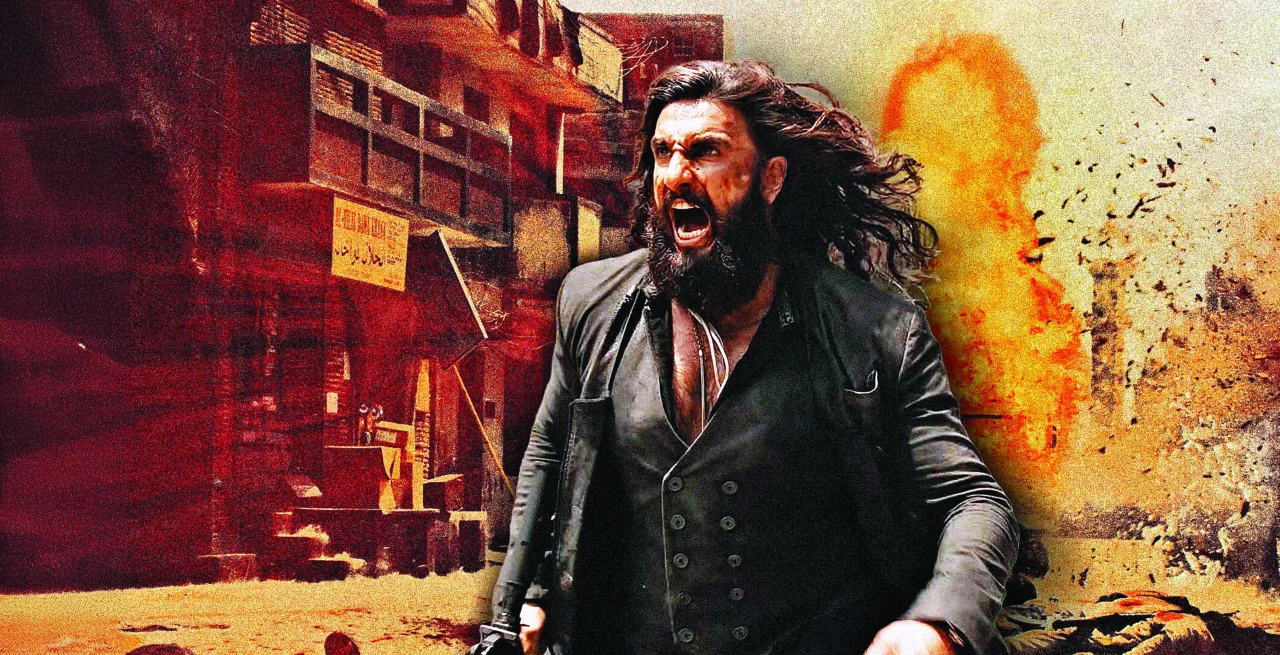
In an age when people doom scroll through reels that hardly last 30 seconds, Dhar and his team have managed to pull in crowds to the plex for first, three and a half hours, and now, almost four hours. The sweetest bit about this is that there are those who are catching multiple shows of the film! This is like watching the film ‘growing on you’ become a lived reality.
This ‘Dhurandharisation’ of the Hindi film industry however has broken the entitled hearts of many who are flustered by the second part exposing the narco-terror links between the power brokers of ‘Bollywood’ and the Islamic mafia (headed by Dawood Ibrahim) sheltered by Pakistan. Hence, the words ‘propaganda’, ‘Islamophobia’ and ‘majoritarianism’ are being brandished liberally to discredit the film in their lopsided reviews and discourse. The meltdown couldn’t be more comical than what it already is but it also mirrors the truth about anti-Indians who bear allegiance to Pakistan’s ISI and other terrorist organisations that have repeatedly harmed India and its people.
Before we dwell on some of the film highlights that are heartbreakingly haunting, let’s take a tiny detour to delve into the hypocrisy of toxic liberals by discussing excerpts from one lugubrious write-up penned recently by Shobhaa De, an eminent columnist and author, whose distorted narratives and overhyped books fail to find relevance anymore.
Titled, “Why Arjun Rampal saying ‘Bharat Mata ki Jai’ should worry Bollywood audiences” De lamented in this piece (for an online publication) that warns readers about the excessive nationalism depicted in current Hindi cinema, “Soon, our three reigning Superheroes—the Khans—will find themselves being smoothly eased out as producers sign up actors better aligned to the political briefs dictated by Delhi. The changeover will be gradual to make it look “natural” (“The Khans are too old… their movies aren’t bringing in the numbers any more…”). Production houses and big studios are already fast-tracking projects pitched by pro-Hindutva players. Choking those who choose to remain outside these charmed circles is not a big deal. Their projects are kept on hold until patience and money run out.”
The only line from this paragraph that made sense was her admitting that the Khans are too old even as she, like a classic sycophant, calls them Superheroes! What I ask is, isn’t it obvious that artists who are as senior as the Khans should gracefully make space for young performers who are as talented if not more? Why is De so ruffled by the emergence of fresh blood in the industry, better scripts and pro-India narratives? She repeatedly lashes out at the nationalistic fervour in many successful contemporary films labelling it as belonging to the Hindutva club. Does it mean she openly acknowledges how the Khans and their coterie willingly perpetuated anti-Hindu ideas through their works while whitewashing, normalising or glorifying the mafia as well as radical Islamic thoughts through them?
She is worried that an actor saying ‘Bharat Mata Ki Jai’ in a country called Bharat is now a threat! That reaction itself exposes the mindset. When Dhar’s Uri: The Surgical Strike became a massive hit, it wasn’t because of propaganda or BJP it was because people connected with a story of national security and sacrifice. Vivek Ranjan Agnihotri’s The Kashmir Files didn’t get corporate backing initially, yet audiences turned it into a phenomenon. Why? Because stories that were earlier brushed aside finally found space. The film became a voice for the voiceless, despite its technical discrepancies.
S S Rajamouli’s RRR openly celebrated civilizational pride and went global. No one called it dangerous when western audiences applauded it but closer home, the discomfort showed against it by communists and the pro-Congress club lay bare their own noxious agenda against the country finding glory globally through proud depiction of a Sanatani chronicle inspired by Bharat’s age-old itihaasa.
Let’s go further back. The nationalistic subject matter in Ashutosh Gowarikar’s Lagaan of J P Dutta’s Border was never the problem. It was celebrated. So what changed now? Not the audience. It’s the gatekeepers that De doesn’t want to explicitly name.
For years, a certain ecosystem decided what stories were acceptable, what patriotism should look like. That monopoly is breaking
For years, a certain ecosystem decided what stories were acceptable, what patriotism should look like, and who gets funded. That monopoly is breaking, and instead of admitting it, they’re calling it a threat. No one is being silenced. No law is stopping films from being made. If anything, more voices are entering the space from writers, directors, to actors who don’t belong to old elite circles and they are rising because of sheer hard work.
People like De are finding it hard to accept that the audience is no longer passive. They are choosing what resonates with them with respect to culture, identity, history, without waiting for validation from critics or columnists. So, when someone says this should worry Bollywood, they’re not talking about freedom of expression. They’re worried about losing control over it slowly and very rightly so. If immaterial needed to be defined right now, voices like De would make the cut!
Now coming back to our takeaways from Dhurandhar: The Revenge, an action film that collates real life events with fiction magnificently to form a larger-than-life world of patriotism, adventure, love, friendship, revenge and redemption. There are those moments that will haunt you as you watch the liquid eyes of the lead protagonist display an array of emotions as Hamza Ali Mazari as well as Jaskirat Singh Rangi.
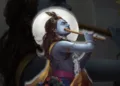
Ranveer Singh lives these roles as if he is not enacting them, but becomes them. Right from the beginning when as a young man he decides to avenge the brutalities his family has to go through (an impulse that actually lands him in the reckoning of R Madhavan’s Ajay Sanyal) in the hands of a corrupt MLA to the way he schemes through and infiltrates the mafia gangs of Lyari emerging as the Sher-e-Baloch and then gradually plotting the revenge, Singh is spectacular. There are too many scenes where he stands out but if you ask us to point to that one moment that makes the entire experience worth it, it is the part where he breaks down when his wife, Yalina, calls him Jaskirat for the first time. It reminded us of Shri Krishna getting separated from his eternal love Radha when he left for Gokul to destroy Kansa, his maternal uncle. The melodious yet melancholic flute recital placed strategically in the song Akhri Ishq, is reminiscent of how Shri Krishna played bansuri for the lover he could never be united with when he had to leave. Jaskirat’s identity is a thing of the past and while he will never be able to be with his beloved and his son, that he gets to hear her say his name is the recognition he needs at that juncture. He rediscovers himself once again in that tender but heartbreaking moment!
But, Dhar saves the best bit for the last. The ‘homecoming scene’. Singh’s remarkably restrained expressions, punctuated by Arijit Singh’s mellifluous rendition of the song Phir Se, accessorized by the string layers of Ramana Balachandran, this montage lingers on even after the end credits roll. The moment is quietly devastating yet deeply poignant, exposing the loneliness felt by an Indian spy ravaged by the extremities faced on a dangerous mission, after which he is left emotionally vacant under the weight of identity erasure. That and just that should inspire every Indian to be indebted to these brave ‘unknown men’ who give up their all for their motherland and its people!