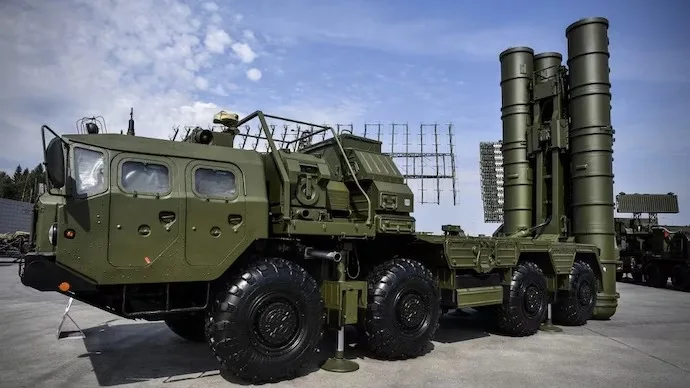
India is set to receive the fourth squadron of the advanced S-400 air defence system by May this year. The delivery is expected to coincide with the first anniversary of Operation Sindoor, during which the system played a pivotal role in neutralising aerial threats.
Reports confirmed that the fifth and final squadron under the landmark defence deal with Russia is likely to be delivered by the end of 2026, completing India’s induction of one of the world’s most sophisticated air defence platforms.
India had signed a Rs 35,000 crore agreement with Russia in 2018 for the procurement of five S-400 squadrons, marking one of the most significant defence acquisitions in recent years. So far, three squadrons have been delivered and operationalised, forming a critical layer in India’s multi-tiered air defence network.
The induction of the remaining two systems will complete the envisioned shield designed to safeguard key strategic and civilian assets against a wide spectrum of aerial threats, including hostile aircraft, missiles, and drones.
The S-400 systems already inducted have been strategically deployed across India’s most sensitive and vulnerable regions, underscoring their importance in national security planning.
One of the squadrons has been positioned to secure the Siliguri Corridor, often referred to as the ‘Chicken’s Neck’, which connects the northeastern states with the rest of India. Given its geographic vulnerability, securing this corridor is considered vital for maintaining territorial integrity.
Another squadron has been deployed in the Pathankot region, providing enhanced aerial protection over Jammu and Kashmir and Punjab, areas that face potential threats from both Pakistan and China.
The third system has been deployed along India’s western frontier, covering strategic zones in Rajasthan and Gujarat, further reinforcing the country’s defensive grid.
Role in Operation Sindoor
The S-400 system demonstrated its operational effectiveness during Operation Sindoor, where it was used alongside indigenous air defence systems to counter incoming aerial threats. The operation marked a critical test of India’s evolving defence preparedness and showcased the integration of imported and homegrown technologies.
The upcoming delivery around the anniversary of the operation is being seen as both symbolic and strategic, reinforcing India’s commitment to strengthening its defence posture in a volatile regional environment.
India’s push to accelerate air defence modernisation gained momentum following the 2020 border standoff with China in Ladakh. The prolonged tensions highlighted the need for robust surveillance and interception capabilities, prompting faster deployment of advanced systems like the S-400.
The addition of these systems has significantly enhanced India’s ability to monitor and respond to threats across both western and northern borders.
S-400: India’s ‘Invisible Shield’
The S-400 is widely regarded as one of the most advanced long-range surface-to-air missile systems in the world. Its capabilities extend far beyond conventional air defence systems.
It can detect aerial targets at distances of up to 600 kilometres and engage them at ranges of up to 400 kilometres. The system is capable of simultaneously tracking multiple targets, including fighter jets, ballistic missiles, cruise missiles, and unmanned aerial vehicles.
Each S-400 squadron comprises a network of 16 vehicles, including mobile missile launchers, sophisticated radar units, command-and-control centres, and support systems. This integrated architecture allows for rapid deployment and high operational flexibility.
With the induction of all five S-400 squadrons, India will possess a formidable multi-layered air defence system capable of addressing diverse threat scenarios. The S-400 will work in tandem with indigenous systems such as Akash missiles and other radar networks to create a comprehensive security umbrella.
Many believe that the full deployment will significantly deter adversarial actions and provide India with a decisive edge in aerial warfare preparedness.
As India prepares to receive its fourth S-400 squadron, the country moves closer to completing a critical component of its national security framework. The timing, aligned with the anniversary of Operation Sindoor, highlights both the operational significance and symbolic value of the system.