The Bharatiya Janata Party has announced Ratna Debnath, mother of the victim in the 2024 RG Kar Medical College rape and murder case, as its candidate for the Panihati Assembly constituency in North 24 Parganas.
Her name figured in the party’s third list of 19 candidates released on Wednesday (March 25) evening, marking a significant political development in the run-up to the West Bengal Legislative Assembly election. The Panihati seat is scheduled to go to polls in the first phase on April 23.
The announcement comes shortly after Debnath publicly expressed her willingness to enter electoral politics on a BJP ticket.
After Sandeshkhali, BJP brings another victim’s voice to the forefront
The move is being seen as part of a broader political pattern where the BJP has positioned itself as a platform for victims seeking justice in West Bengal. Earlier, during the Sandeshkhali controversy, the party had fielded Rekha Patra, bringing national attention to allegations of atrocities against women in the region.
By nominating Ratna Debnath, the BJP appears to be reinforcing its position of giving voice to those who have been ignored or sidelined by the ruling establishment. The party’s leadership has repeatedly highlighted issues of women’s safety, alleging that several serious cases have not received the attention they deserved under the current regime.
“My decision, my fight for justice”
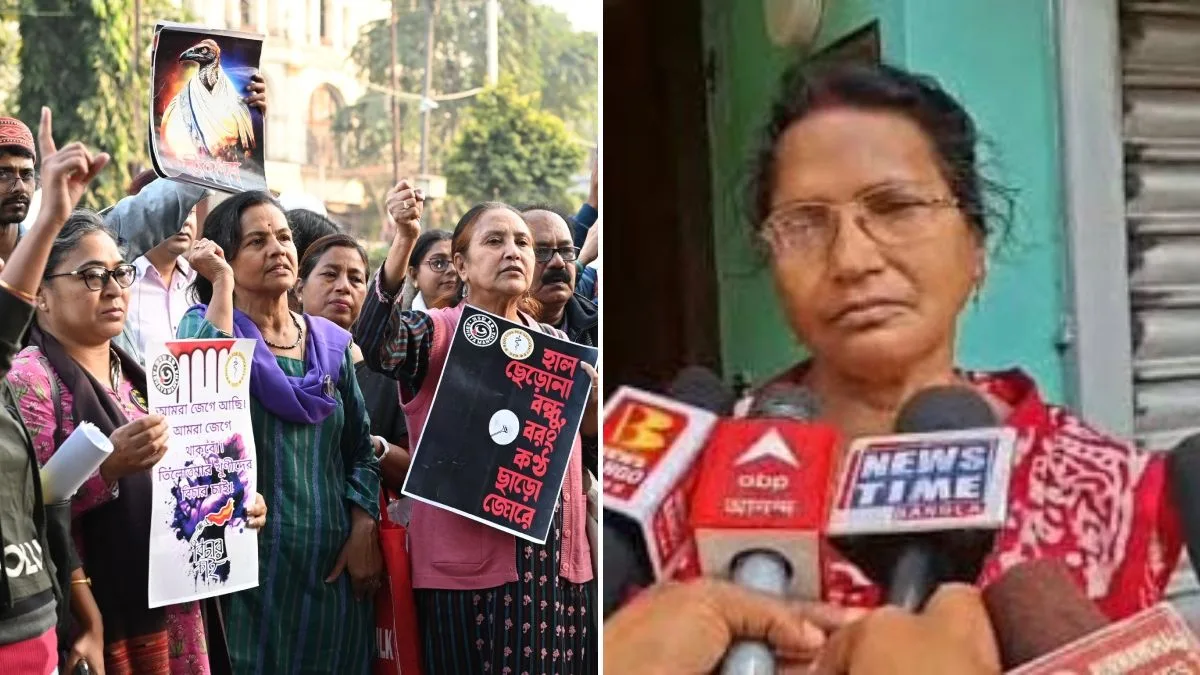
Speaking to reporters, Ratna Debnath clarified that her decision to join politics was personal and not imposed by the party. She stated that her entry into public life is driven by a quest for justice for her daughter and a larger concern over governance in the state.
“I am entering politics to ensure justice for my daughter and to remove this government from power,” she said. She further added that her primary objective is to challenge the leadership of Mamata Banerjee and the ruling Trinamool Congress, citing concerns over women’s safety.
Debnath revealed that the BJP had approached her earlier as well, but she had declined at the time due to emotional distress. “Yesterday, I decided to accept it and contest because I want to end the rule of the home minister,” she remarked, referring to the Chief Minister, who also holds the home portfolio.
Ratna Debnath voiced dissatisfaction with the pace of the investigation into her daughter’s death. She alleged that despite court interventions, justice has not yet been delivered and accused the state administration of creating obstacles in the process.
She also pointed to recurring incidents of violence against women and alleged corruption in the state as factors that influenced her decision to join politics. Her statements echo a growing perception among sections of the public that serious crimes against women have not always been addressed with urgency.
Notably, despite being led by a woman Chief Minister, the administration has failed to adequately respond to multiple allegations of abuse and violence, allowing political considerations to overshadow justice in some cases.
Case that sparked statewide protests
The RG Kar case refers to the death of a 31-year-old postgraduate trainee doctor whose body was discovered in a seminar hall at RG Kar Medical College and Hospital in August 2024.
The incident triggered widespread protests across West Bengal and other parts of the country, with doctors, civil society groups, and citizens demanding swift justice and accountability. The case became a flashpoint in discussions around women’s safety and institutional accountability.
Ratna Debnath’s husband has also joined the BJP, indicating the family’s growing political alignment. He has criticised opposition parties like the CPI(M), alleging that while protests were organised, there was no sustained support extended to the family.
The family has maintained that the BJP was the only party that stood by them consistently during their pursuit of justice against the ruling Trinamool Congress.
Voice to the voiceless
The BJP has projected its decision as part of a larger commitment to stand with victims, even in a politically charged environment like West Bengal. Party leaders have often alleged that their workers face intimidation and violence during elections, yet continue to raise issues they claim are ignored by the ruling dispensation.
By fielding candidates like Rekha Patra and now Ratna Debnath, the BJP is becoming a party that amplifies grassroots voices and challenges entrenched power structures, even at significant political risk.
With Ratna Debnath entering the electoral fray, the Panihati constituency is expected to witness a high-profile and emotionally charged contest. Her candidature is likely to bring renewed attention to the RG Kar case and the broader issue of women’s safety during the election campaign.
As the political battle intensifies in West Bengal, her transition from a grieving mother seeking justice to an electoral candidate underscores the growing intersection of personal tragedy, public anger, and electoral politics in the state.