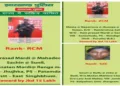
Bhubaneswar: Less than a month after allegedly killing his deputy over a disagreement on surrendering before security forces, Odisha’s top Maoist leader, Sukru alias Kosa Sodi, has laid down arms.
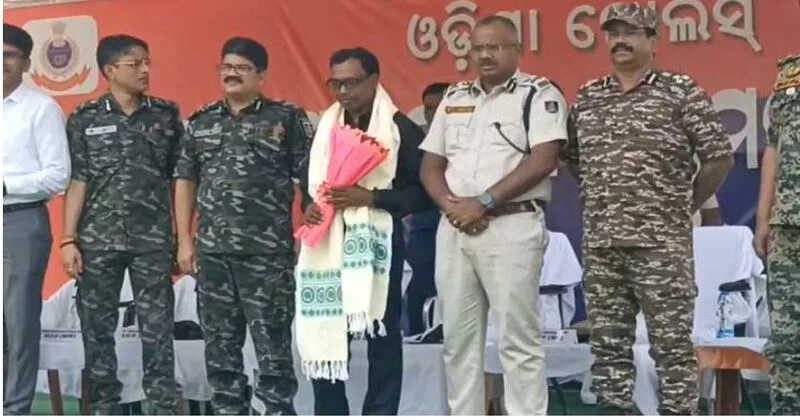
In a major breakthrough in the state’s fight against Maoism, Sukru, one of the most wanted Maoist operatives in Odisha, surrendered before the Odisha Police on Wednesday along with four other cadres. The development is being seen as a decisive moment in the state’s prolonged anti-Naxal campaign.
Surrender of Top Maoist Leader
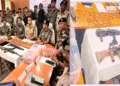
According to Additional Director General (Anti-Naxal Operations) Sanjeev Panda, the five Maoists carried a combined bounty of Rs 66 lakh. Sukru alone had a Rs 55 lakh reward on his head. The surrendered group also laid down five weapons, including an AK-47 rifle, an INSAS rifle, two .303 rifles, and a single-shot firearm. Welcoming the move, ADG Panda said, “Sukru has surrendered before the police along with four other cadres. I welcome them into the mainstream. All five members carried a total bounty of Rs 66 lakh.”
239 Odisha policemen martyred as anti-Maoist fight reaches final phase
Panda said that the fight against Maoist insurgency in Odisha has now reached a decisive phase, largely due to sustained operations and the sacrifices of security personnel. He revealed that 239 police personnel have lost their lives over the years in anti-Naxal operations across the state.
“These sacrifices have brought us to this stage where Maoist presence has drastically reduced,” he said.
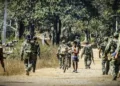
The ADG noted that Maoist activity is now confined to limited pockets, particularly in Kandhamal district, where only 8 to 9 cadres remain active. Of these, just one is from Odisha, while the others are from neighbouring Chhattisgarh.
Call for Remaining Maoists to Surrender
With the number of active Maoists dwindling, security forces are intensifying operations to meet a March 31 target deadline. Panda urged the remaining insurgents to surrender and join the mainstream, assuring them of full benefits under the state government’s rehabilitation policy.
He emphasised that no major Maoist leaders are currently hiding in the forests of Odisha, indicating a significant weakening of the insurgent network.
Profile of Sukru: From Cadre to Key Leader
Sukru, a native of Malkangiri district and belonging to the Koya tribal community, joined the banned CPI (Maoist) outfit in 1997. He was initially sent to the Dandakaranya region and later returned to Odisha in 2007 as part of the Ghumsar division.
Over the years, he rose steadily through the ranks and eventually became a divisional secretary, overseeing Maoist operations across Ganjam, Kandhamal, Gajapati, and Rayagada districts. Between 2012 and 2017, he operated in the Niyamgiri division and was considered a close aide of senior Maoist leader Modem Balakrishna, who was killed in Chhattisgarh in September 2025.
Before his surrender, Sukru was reportedly operating in the Kandhamal–Kalahandi–Rayagada border region with a small group of around 13 cadres.
Earlier Surrenders Weaken Maoist Network
Officials have noted that the recent surrenders of key Maoist leaders have significantly weakened the insurgent structure in Odisha. The surrender of Niranjan Rout, also known as Nikhil, and his wife Rasmita Lenka, alias Indu, in Rayagada has been characterised as a “turning point” in the fight against Naxalism.
Both leaders held vital positions within the Maoist hierarchy; Nikhil served as the secretary of the Bansadhara-Ghumusar-Niyamgiri (BGN) division, where he was instrumental in maintaining the organisation’s network.
In February, Sukru allegedly killed his deputy, Anwesh, also known as Renu, after the latter expressed a desire to surrender and reintegrate into society.
The incident came to light after the decomposed body of Anwesh was discovered in a shallow grave in the Pakari forest near Kutibari village in Kandhamal district. This recovery followed disclosures from two Maoist cadres, Nitu and Rupa, who surrendered earlier this month.
Anwesh, a 31-year-old from Sukma district in Chhattisgarh, served as the second platoon commander in the Kandhamal-Kalahandi-Boudh-Nayagarh (KKBN) division.
According to police, Anwesh had indicated his intention to surrender on January 28. His decision reportedly angered Sukru, who then ordered or executed him to prevent dissent within the organisation.
To minimise panic among cadres and deter further defections, the body was buried deep in the forest. Acting on this information, police exhumed the remains and sent them to Daringbadi hospital for a post-mortem examination.
Government Assures Rehabilitation
The Odisha Police, in an official statement, reiterated its appeal to all underground Maoist cadres to lay down their arms and reintegrate into society. Authorities assured full support, protection, and assistance through comprehensive rehabilitation and reintegration programs.
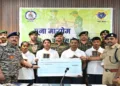
Financial incentives will also be provided to surrendered cadres, with Sukru set to receive Rs 55 lakh in accordance with policy provisions.
The surrender of Sukru represents a significant milestone in Odisha’s efforts to combat Maoist insurgency. With the number of active cadres reduced to single digits and internal divisions weakening the organisation, officials are optimistic about achieving a Maoist-free state in the near future.
Security forces are now concentrating on the final phase of operations, aiming to dismantle the remaining network entirely and restore lasting peace in affected regions.