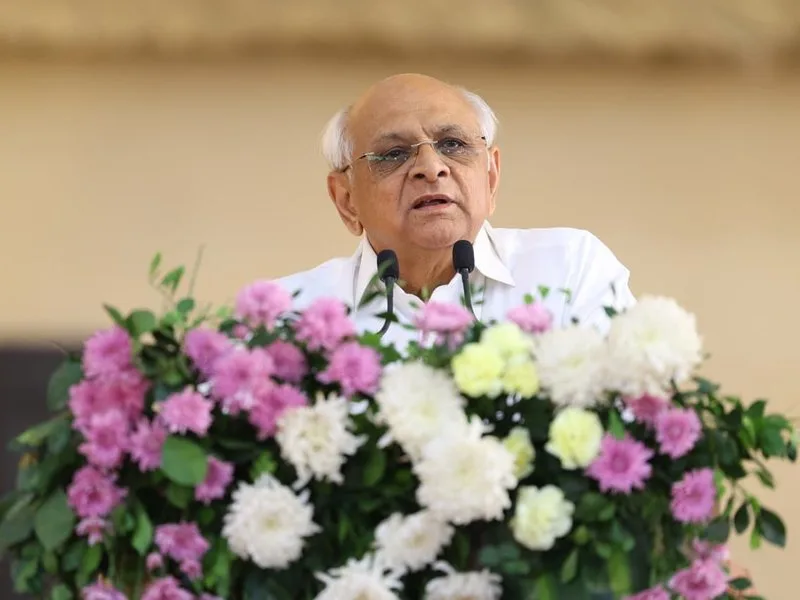
In a landmark development, the Gujarat Legislative Assembly on March 24, 2026, passed the Gujarat Uniform Civil Code Bill, 2026, with a majority vote, marking a decisive step towards implementing a common civil framework in the state. With this, Gujarat joins Uttarakhand as the second state in India to enact such a law aimed at unifying personal laws across religions.
The Bill was introduced by Chief Minister Bhupendra Patel, shortly after a state-appointed expert panel submitted its final recommendations on the implementation of the Uniform Civil Code. The move is being seen as a significant policy shift, particularly in the context of ongoing national debates around Article 44 of the Constitution, which envisions a common civil code for all citizens.
Who it applies to
The proposed legislation will extend across the entire state of Gujarat and will also be applicable to residents of Gujarat living outside the state. However, it provides constitutional safeguards by excluding Scheduled Tribes and certain communities whose customary practices are protected under existing legal provisions.
By doing so, the state has attempted to strike a balance between legal uniformity and the preservation of indigenous customs and traditions.
At its core, the Bill seeks to bring uniformity in civil matters such as marriage, divorce, maintenance, succession, and adoption. One of its major provisions includes the mandatory registration of marriages, irrespective of the religious customs under which they are solemnised.
While marriages may continue to be performed according to religious or customary rites, failure to register them may invite penalties. However, non-registration will not invalidate the marriage itself.
The Bill also explicitly prohibits bigamy, stating that a marriage will be considered valid only if neither party has a living spouse at the time of entering into the union. This provision aims to ensure gender justice and legal clarity in matrimonial relationships.
Another notable feature is the legal recognition and regulation of live-in relationships. The law mandates registration of such relationships and provides a formal mechanism for their termination through a declaration process. This marks a significant shift in how non-marital relationships are treated under statutory law.
Equality in family and succession laws
The legislation places strong emphasis on equality, particularly in matters of inheritance and family rights. It recognises children born within and outside marriage, including those born through assisted reproductive technologies and adoption, on an equal footing.
The Bill defines key legal terms such as “child,” “spouse,” “estate,” and “will,” ensuring clarity in interpretation and application. It also removes disqualifications based on physical or mental disabilities, signalling a progressive approach towards inclusivity.
However, individuals found responsible for the death of a deceased person are barred from inheriting their property, reinforcing principles of justice and accountability.
The UCC Bill lays down uniform provisions for resolving matrimonial disputes, including restitution of conjugal rights, judicial separation, and annulment of marriages deemed void or voidable. By standardising these aspects, the law seeks to reduce ambiguity and ensure consistency in legal proceedings across communities.
In matters of succession, the Bill governs both intestate (without a will) and testamentary (with a will) inheritance. It provides detailed guidelines on the execution, validity, alteration, and revocation of wills, thereby streamlining property-related disputes.
Government’s Stand
According to the official statement of objects and reasons, the legislation aims to establish a uniform legal framework governing civil matters for all citizens, irrespective of religion, caste, creed, or gender.
The government has argued that the law upholds the principles of secularism and gender justice while promoting social reform. It is also being projected as a step towards strengthening social cohesion and national integration by eliminating disparities in personal laws.
The passage of the UCC Bill in Gujarat carries both symbolic and substantive importance. It reflects a growing trend among states to take the lead on reforms traditionally considered within the domain of the Union government.
The Gujarat Uniform Civil Code Bill, 2026, marks a significant moment in India’s evolving legal landscape. By attempting to harmonise personal laws across communities while preserving certain constitutional protections, the state has initiated a complex but consequential reform process.