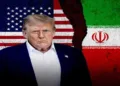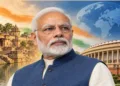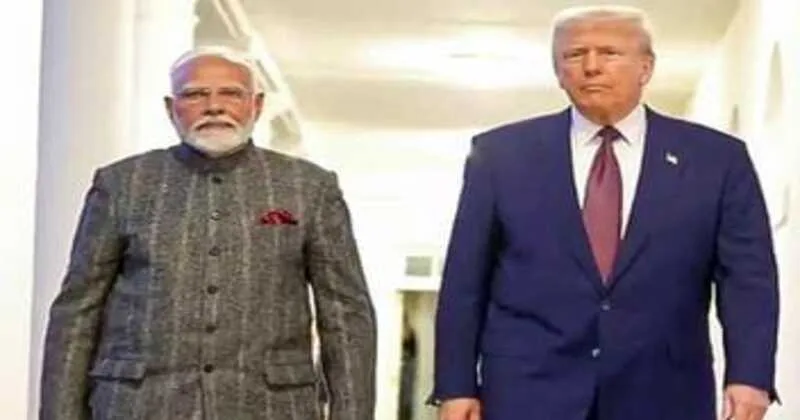
New Delhi: Amid escalating tensions in West Asia, Donald Trump spoke by phone with Narendra Modi, with both leaders underscoring the critical importance of keeping the Strait of Hormuz open. The conversation comes at a time of heightened geopolitical uncertainty and growing concerns over global energy security. According to US Ambassador to India Sergio Gore, the two leaders discussed the evolving situation in the region and emphasised the need to ensure uninterrupted maritime movement through the strategic waterway. Prime Minister Modi later described the exchange as useful, reiterating India’s support for efforts to de-escalate and restore peace in West Asia.
In a statement shared on X, Modi conveyed that India strongly backs diplomatic initiatives to reduce tensions and highlighted that the security of the Strait of Hormuz is vital for global stability. The call followed Trump’s assertion that significant and constructive discussions were underway to end the ongoing conflict in the region. The development also coincides with reports suggesting that Pakistan had attempted to position itself as a mediator in the ongoing US-Israel-Iran tensions.
Received a call from President Trump and had a useful exchange of views on the situation in West Asia. India supports de-escalation and restoration of peace at the earliest. Ensuring that the Strait of Hormuz remains open, secure and accessible is essential for the whole world.…
— Narendra Modi (@narendramodi) March 24, 2026
Strategic lifeline under threat
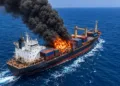
Prime Minister Modi has consistently maintained that any disruption in the Strait of Hormuz is unacceptable. Addressing the Lok Sabha, he expressed serious concern over recent attacks on commercial shipping and interruptions to global maritime routes. He emphasised that such actions threaten not only regional stability but also international trade and energy supplies.
He noted that attacks on commercial vessels and interference with international waterways, such as the Strait of Hormuz, cannot be tolerated. He further stated that India is actively working through diplomatic channels to ensure the safe passage of its ships, even amid the prevailing conflict.
The Strait of Hormuz, a narrow but crucial passage connecting the Persian Gulf with the Gulf of Oman, is one of the world’s most important oil transit chokepoints. A significant portion of global oil exports passes through this corridor, making it indispensable to the global energy market. Recent disruptions in this region have contributed to volatility in energy prices and heightened fears of a broader economic crisis.
Economic fallout and India’s concerns
In the Rajya Sabha, Modi warned that the ongoing conflict has already begun to destabilise the global economy, with long-term consequences likely. He pointed out that the war has triggered a serious fuel crisis worldwide, raising concerns for India’s economic stability.
He stated that the conflict has adversely affected key trade routes, disrupting the steady supply of essential commodities such as petrol, diesel, gas and fertilisers. These disruptions, he added, pose significant challenges for India’s domestic economy and energy security.
Despite these concerns, the Prime Minister assured Parliament that the government is closely monitoring the rapidly evolving situation. He emphasised that continuous measures are being taken to mitigate the impact on India and safeguard national interests.
Conflicting claims over peace talks by the US and Iran
The latest diplomatic exchanges come shortly after President Trump announced that a planned attack on Iranian power infrastructure had been postponed for five days, contingent upon the reopening of the Strait of Hormuz. He also claimed that productive discussions had taken place with Tehran. However, Iranian authorities have categorically rejected these assertions. Mohammad Bagher Qalibaf dismissed the claims as false, stating that no negotiations had occurred between Iran and the United States.
He further alleged that such statements were intended to manipulate financial and oil markets while diverting attention from setbacks faced by the US and Israel. According to him, the narrative of ongoing talks was being used as a strategic tool to manage perceptions amid the escalating conflict.
The stark contrast in positions highlights the deep mistrust between the parties involved and underscores the complexity of the crisis in West Asia. As tensions persist, the global community continues to watch closely, with the stability of vital trade routes and energy supplies hanging in the balance.