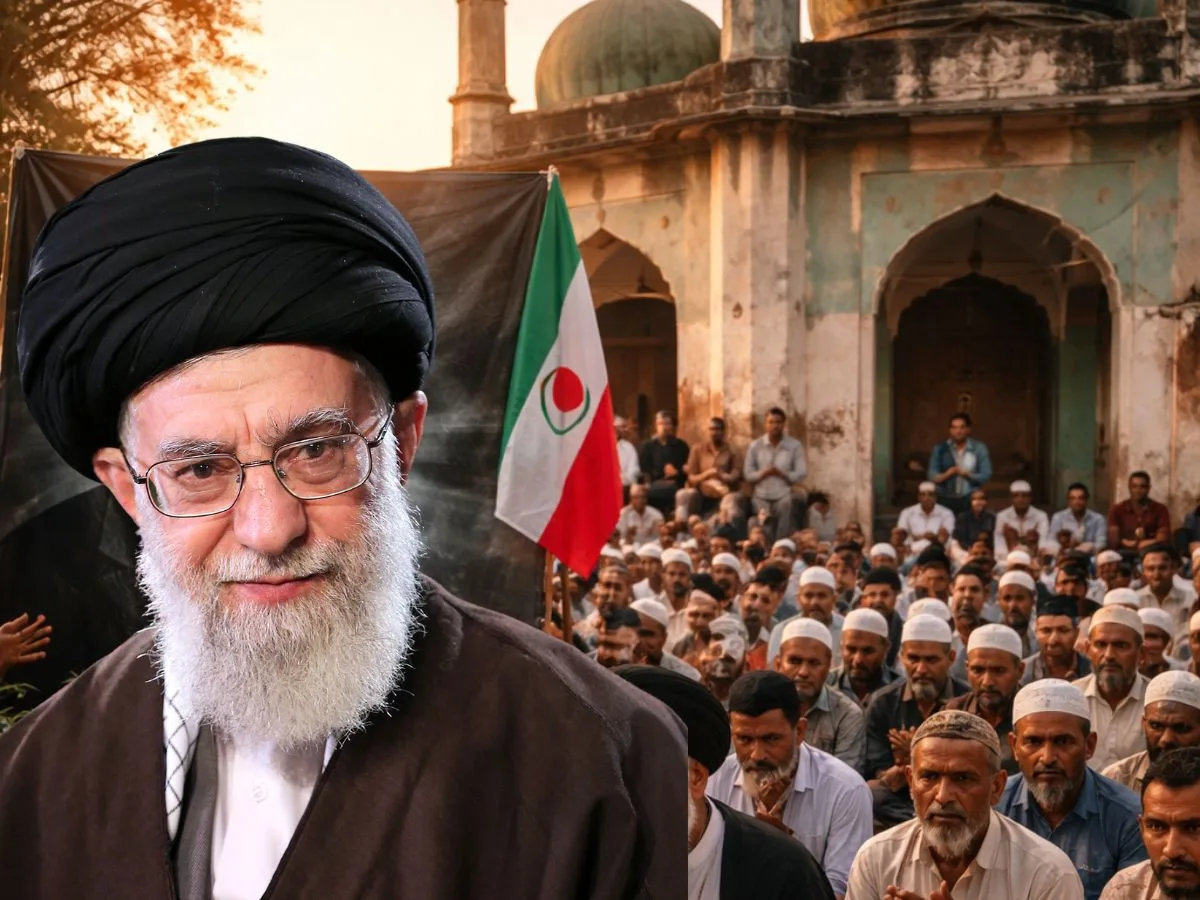
In a stark departure from nationwide celebrations, residents of Kintoor village in Uttar Pradesh observed Eid-ul-Fitr in silence, choosing mourning over festivity following the reported death of Iran’s Supreme Leader Ali Khamenei in recent airstrikes. While the rest of the country marked the festival with joy and gatherings, this village presented a contrasting picture that has now sparked a wider debate.
Locals said that traditional Eid practices such as preparing sewaiyaan, exchanging greetings and visiting relatives were largely absent. Instead, people gathered only for prayers and expressions of grief. What is usually a day of celebration turned into what residents described as a moment of collective mourning.
The day also saw a protest in the village. Residents raised slogans condemning the military strikes and voiced opposition to Israel. Though peaceful, the demonstration added a political tone to what is otherwise a religious festival. Sarwar Ali, caretaker of the local Imambara, said, “There were no celebrations this year. People came together only to pray and express their grief.”
The emotional response in Kintoor is closely tied to its long-standing connection with Iran’s clerical leadership, particularly Ruhollah Khomeini. Villagers claim ancestral links to Khomeini’s lineage, stating that his grandfather, Syed Ahmad Musavi, is believed to have originated from Kintoor before moving to Iran around 150 years ago. Over time, this connection has become a defining part of the village’s identity.
For many residents, Ali Khamenei was not just a distant leader but a continuation of Ruhollah Khomeini’s legacy. His death was therefore seen as a personal and ideological loss. This sentiment explains why Eid, a festival associated with joy and unity, was observed in silence.
However, the development has triggered a larger and sharper debate. The decision to set aside Eid celebrations for mourning a foreign leader has raised questions about the influence of global religious and political figures on local communities. It has also led to discussions on how international events shape emotions and responses within India, sometimes overshadowing local traditions and national context.
Reports point out that India’s diversity allows for a wide range of expressions. At the same time, such incidents often bring into focus the complex intersection of faith, history and geopolitics. The events in Kintoor underline how deeply global narratives can resonate at the local level, turning a festival of celebration into a moment of reflection and controversy.