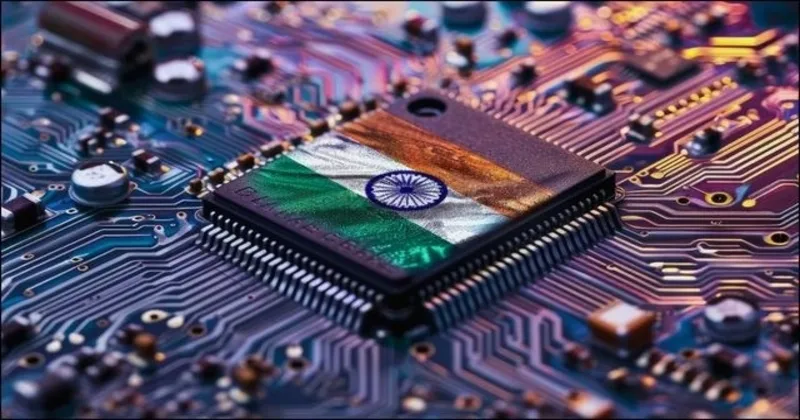
For decades, Bharat remained one of the world’s largest consumers of electronics while lacking meaningful domestic semiconductor manufacturing capacity. The chips powering mobile phones, computers, automobiles, defence platforms and digital infrastructure were largely imported. Between 2014 and 2026, however, the country began a determined shift, moving from heavy import dependence toward building its own semiconductor ecosystem.
https://twitter.com/i/broadcasts/1AxRnanvdnvxl?s=20
This transition did not occur by chance. It is the result of a sustained decade-long policy push that combines industrial strategy, technological ambition and the broader goal of national self-reliance.
The Strategic Imperative
Semiconductors form the backbone of the modern technological economy. These tiny electronic components, typically manufactured from silicon, regulate the flow of electricity and enable the functioning of microprocessors, sensors and memory chips. From smartphones and data centres to automobiles, satellites and defence systems, nearly every modern technology relies on semiconductor chips.
Recognising their strategic importance, India’s leadership began viewing semiconductors not merely as an industrial sector but as a critical pillar of technological sovereignty. The global chip shortage between 2020 and 2022 further highlighted the risks of excessive import dependence.
In response, the government launched a structured effort to develop domestic capabilities across the entire semiconductor value chain, including chip design, fabrication, packaging, testing and supply chain infrastructure.
The Sanand Milestone
A major milestone in this journey came on 1 March 2026, when Prime Minister Narendra Modi inaugurated Bharat’s first semiconductor manufacturing facility in Sanand, Gujarat. The project marked a significant step in the country’s effort to establish a domestic semiconductor industry and reduce reliance on imported chips.
The facility, established by Micron Technology, represents an investment of Rs 22,516 crore and functions as an Assembly, Testing, Marking and Packaging (ATMP) unit. It will manufacture memory products such as Solid State Drives (SSDs), DRAM and NAND storage solutions.
While it is not yet a full-scale fabrication plant, the Sanand facility marks a significant first step toward building a domestic semiconductor manufacturing ecosystem. It signals that Bharat’s semiconductor policy has moved beyond planning and is now entering the phase of tangible industrial execution.
India Semiconductor Mission: The Backbone of the Strategy
At the heart of Bharat’s semiconductor transformation is the India Semiconductor Mission (ISM), launched in 2021 with a financial outlay of Rs 76,000 crore.
The mission was conceived as a comprehensive initiative aimed at establishing a complete semiconductor ecosystem. Under its first phase, the government offered fiscal support covering up to 50 per cent of project costs for several key segments, including:
Silicon CMOS fabrication plants
Display fabrication units
Compound semiconductor fabs
ATMP and OSAT facilities
Semiconductor design initiatives
By December 2025, the government had approved ten semiconductor-related projects across six states, representing a combined investment of around Rs 1.6 lakh crore. These projects include fabrication facilities, advanced packaging units, silicon carbide fabs and specialised testing infrastructure.
ISM 2.0: Moving from Manufacturing to Mastery
In the Union Budget for 2026–27, the government announced the next phase of the mission—ISM 2.0—aimed at deepening Bharat’s semiconductor capabilities and moving beyond basic manufacturing towards technological leadership and innovation.
While the first phase focused largely on building manufacturing infrastructure, the second phase aims to deepen Bharat’s technological capabilities. Its key focus areas include:
Semiconductor equipment manufacturing
Development of materials supply chains
Creation of indigenous intellectual property (IP)
Chip design and fabless innovation
Talent development and industry-led research
By shifting the emphasis from assembly to technology development, ISM 2.0 seeks to ensure that Bharat evolves from being merely a manufacturing hub into a knowledge-driven semiconductor power.
The Indigenous Chip Milestone
Another major milestone came in September 2025, when Bharat unveiled “Vikram”, the country’s first fully indigenous 32-bit microprocessor, marking a significant step in the development of domestic chip design capabilities.
Developed by ISRO’s Semiconductor Laboratory in Mohali using 180nm CMOS technology, the chip was successfully validated during the PSLV-C60 mission in 2024.
The development of “Vikram” represents a symbolic milestone in Bharat’s technological journey. It demonstrates the country’s growing capability to design and validate advanced microprocessors domestically, strengthening confidence in indigenous semiconductor research and development.
Policy Architecture Driving the Transformation
Bharat’s progress in the semiconductor sector is anchored within a broader industrial policy framework introduced over the past decade.
The Make in India initiative, launched in 2014, aimed to transform the country into a global manufacturing hub by improving the ease of doing business and opening key sectors to foreign investment.
This was followed by several complementary initiatives, including:
-Digital India (2015) – focused on building digital public infrastructure
-Startup India (2016) – promoting entrepreneurship and innovation
-National Policy on Electronics 2019 – targeting global leadership in electronics manufacturing
In 2020, three major schemes further strengthened the electronics manufacturing ecosystem:
-Production Linked Incentive Scheme (PLI)
-Scheme for Promotion of Manufacturing of Electronic Components and Semiconductors (SPECS)
-Electronics Manufacturing Clusters 2.0 (EMC 2.0)
Together, these policies created a favourable environment for semiconductor investments and industrial growth.
Strengthening the Design Ecosystem
Semiconductor design accounts for nearly 50 per cent of the industry’s total value addition. Recognising this, the government introduced the Design Linked Incentive Scheme (DLI) in 2021.
The scheme supports fabless semiconductor startups by offering:
-Up to 50 per cent reimbursement of design costs
-Incentives of 4 to 6 per cent on net sales over a period of five years
So far, 24 chip design projects have been approved across sectors such as surveillance technology, drone detection systems, satellite communications and IoT processors.
These initiatives have already produced multiple ASIC chips, patents and tape-outs, while supporting more than 1,000 semiconductor engineers across the country.
Global Partnerships and the Expanding Semiconductor Ecosystem
Bharat’s semiconductor ambitions are also being strengthened through a growing network of international collaborations and strategic partnerships. Agreements with the European Union, Japan, Singapore and Purdue University are facilitating technology transfer, joint research initiatives, talent exchange and deeper integration into resilient global semiconductor supply chains.
Such partnerships are increasingly significant at a time when geopolitical competition is intensifying around control of advanced semiconductor technologies.
At the same time, Bharat’s semiconductor push is being driven by the rapid expansion of its electronics manufacturing sector. Electronics production has grown from Rs 1.9 lakh crore in 2014–15 to Rs 11.3 lakh crore in 2024–25. Mobile phone manufacturing has also expanded sharply, turning the country into the world’s second-largest smartphone producer.
With government initiatives aiming to build a $500 billion electronics ecosystem by 2030, domestic demand for semiconductor components is expected to increase significantly. The emerging semiconductor industry is also projected to generate substantial economic and strategic benefits, including the creation of up to one million jobs by 2026.
Indian semiconductor startups are already developing chips for areas such as artificial intelligence, automotive electronics and advanced communication systems. At the same time, reducing dependence on imported chips will strengthen Bharat’s strategic resilience in critical sectors, including defence, telecommunications and space technology.