Washington: Tulsi Gabbard, the Director of National Intelligence (DNI) of the United States, has issued a stark warning about escalating global security threats, identifying Russia, China, North Korea, and Pakistan as the most significant nuclear challenges facing the United States. Her remarks come at a time of heightened geopolitical tension and growing concern over the rapid expansion of missile capabilities among U.S. adversaries.
The statement follows recent diplomatic developments, including remarks by Shehbaz Sharif, who praised Donald Trump as a “man of peace” and “saviour of South Asia” during a summit in Washington. In her testimony before a Senate panel, Gabbard highlighted alarming projections by the US intelligence community. According to her assessment, the number of missiles capable of striking the United States is expected to rise sharply, exceeding 16,000 by 2035, compared to the current estimate of approximately 3,000. She warned that both nuclear and conventional missile technologies are advancing at an unprecedented pace.
“The intelligence community assesses that Russia, China, North Korea, Iran, and Pakistan have been researching and developing an array of novel, advanced, or traditional missile delivery systems, with nuclear and conventional payloads, that put our homeland within range,” Gabbard said.
She further pointed to shifting geopolitical alignments, particularly the strengthening ties between North Korea, Russia, and China. This growing cooperation, she noted, could signal deeper strategic coordination among nations considered adversarial by Washington, potentially complicating global security dynamics and increasing the risk of collective military posturing.
Iran, terror threats and strategic concerns
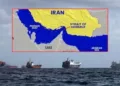
Addressing developments in West Asia, Gabbard stated that Iran’s nuclear enrichment programme had been severely impacted by US military strikes conducted in June 2025. She described the programme as having been “obliterated,” noting that key facilities suffered extensive damage and may take years to rebuild. “The Iranian regime appears to be intact, but largely degraded by US military operation,” she said.
Despite this, she cautioned that Iran continues to pose a significant regional threat through its network of proxy groups and retained military capabilities. According to her assessment, Iran still has the ability to target US forces and allied interests across West Asia. She further warned that if the current regime remains in power, it is likely to undertake a long-term effort to rebuild its missile and drone programmes.
Beyond state actors, Gabbard identified extremist organisations as persistent threats to US interests abroad. She named Al-Qaeda and ISIS as the most significant dangers, particularly in regions such as Africa, West Asia, and South Asia, where these groups continue to exploit instability.
The White House has reiterated its support for Gabbard’s leadership, with press secretary Karoline Leavitt stating that President Trump retains “full confidence” in the intelligence chief. Her remarks come amid reports of a senior security official’s resignation, linked to ongoing tensions surrounding the Iran conflict.
Overall, Gabbard’s testimony underscores mounting concerns within the U.S. intelligence establishment over the dual challenge of expanding missile arsenals and persistent regional threats, even in the aftermath of significant military interventions.