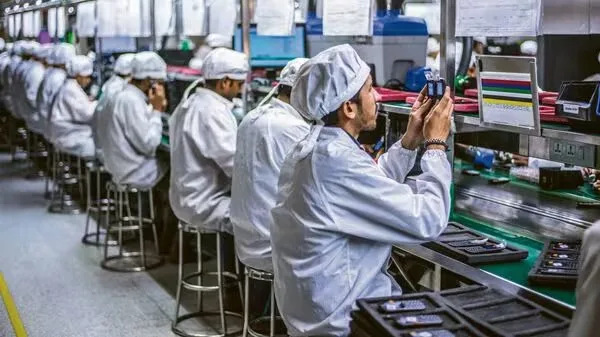
In a significant decision aimed at strengthening India’s manufacturing sector, the Union Cabinet, chaired by Prime Minister Narendra Modi, has approved the Bharat Audyogik Vikas Yojna (BHAVYA). With a total outlay of Rs 33,660 crore, the scheme plans to develop 100 modern industrial parks across the country.
The move is part of the government’s broader vision of building a ‘Viksit Bharat’ and promoting Atmanirbhar Bharat, where India becomes more self-reliant in manufacturing and reduces dependence on imports. The scheme is expected to create a strong industrial base while generating employment opportunities on a large scale.
What is the BHAVYA Scheme?
The BHAVYA scheme is designed to create world-class industrial infrastructure by developing plug-and-play industrial parks. These parks will be ready-to-use spaces where companies can start operations quickly without facing delays related to land acquisition, approvals, or infrastructure setup.
The industrial parks will be developed in partnership with state governments and private sector players. Each park will range between 100 to 1,000 acres, depending on the location and industrial demand. This flexible approach will allow the scheme to cater to both large industries and smaller enterprises.
By offering ready infrastructure and simplified processes, the scheme aims to make India an attractive destination for both domestic and global investors.
One of the key highlights of the BHAVYA scheme is its focus on creating high-quality infrastructure. Financial assistance of up to Rs 1 crore per acre will be provided for building core facilities such as roads, electricity, water supply, drainage systems, and digital infrastructure.
In addition, the scheme will support value-added infrastructure like factory sheds, testing laboratories, and warehousing facilities. Social infrastructure, including housing for workers and basic amenities, will also be developed to support the workforce.
To ensure smooth connectivity, the government will provide additional support of up to 25 per cent of the project cost for external infrastructure such as roads, rail links, and logistics connectivity. This will help industries operate more efficiently and reduce transportation costs.
Boost to ease of doing business
A major challenge faced by industries in India has been delays in approvals and complex procedures. The BHAVYA scheme addresses this issue by focusing on ease of doing business.
Under the scheme, industrial parks will offer single-window clearances, allowing companies to complete all necessary approvals through a streamlined process. Pre-approved land and ready infrastructure will further reduce the time taken to start operations.
This plug-and-play model is expected to attract investors who are looking for quick and hassle-free project execution. By removing entry barriers, the scheme aims to create a business-friendly environment and improve India’s competitiveness globally.
To ensure quality and efficiency, projects under the BHAVYA scheme will be selected through a challenge-based mechanism. This means that only well-planned and investment-ready proposals will be approved.
This competitive approach is expected to encourage states and developers to design better industrial parks with strong infrastructure, connectivity, and long-term viability. It will also ensure that public funds are used effectively for projects that have the highest potential for success.
Focus on Sustainability and Future-Ready Development
The industrial parks developed under the BHAVYA scheme will not only focus on growth but also on sustainability. They will be aligned with the principles of PM GatiShakti, ensuring integrated and efficient infrastructure planning.
Green energy solutions, such as renewable power sources, will be promoted within these parks. Efforts will also be made to manage resources efficiently, including water conservation and waste management systems.
Another important feature will be the development of underground utility corridors. This will create a “no-dig” environment, reducing maintenance disruptions and improving the overall quality of infrastructure.
Such measures will make these industrial parks future-ready, ensuring long-term sustainability and efficiency.
One of the biggest expected benefits of the BHAVYA scheme is job creation. The development of industrial parks will generate both direct and indirect employment across sectors such as manufacturing, logistics, and services.
The scheme will also attract large-scale investments, both from within India and abroad. By providing ready infrastructure and easy approvals, it will encourage companies to set up manufacturing units in the country.
Another important aspect is regional development. By spreading industrial parks across different states, the scheme will promote balanced economic growth. It will help develop industrial clusters where manufacturers, suppliers, and service providers operate in close proximity.
This cluster-based development will strengthen domestic supply chains and improve efficiency, benefiting industries of all sizes, including MSMEs and startups.
Role of NICDC in Implementation
The implementation of the BHAVYA scheme will be supported by the National Industrial Corridor Development Corporation (NICDC). This organisation has experience in developing industrial corridors and smart industrial cities across the country.
Currently, NICDC is overseeing around 20 industrial projects in 13 states. Its expertise in planning and execution will play a crucial role in ensuring that the BHAVYA scheme is implemented effectively and within timelines.
By leveraging existing experience and infrastructure, the government aims to fast-track the development of these industrial parks.
The approval of the BHAVYA scheme marks a major step in India’s journey towards becoming a global manufacturing hub. By focusing on world-class infrastructure, ease of doing business, and sustainable development, the scheme aims to address key challenges faced by industries.
If implemented effectively, it has the potential to transform India’s industrial landscape, attract investments, and create millions of jobs. It also aligns with the larger vision of building a self-reliant and economically strong India.
As the country moves forward, initiatives like BHAVYA will play a crucial role in shaping the future of manufacturing and driving long-term economic growth.