Kurds have every reason to be cautious
September 13, 2026
  • Read Ecopy
  • Circulation
  • Advertise
  • Careers
  • About Us
  • Contact Us
Android AppiPhone AppArattai
Organiser
  • ‌
  • Bharat
    • Assam
    • Bihar
    • Chhattisgarh
    • Jharkhand
    • Maharashtra
    • View All States
  • World
    • Asia
    • Europe
    • North America
    • South America
    • Africa
    • Australia
  • Editorial
  • International
  • Opinion
  • RSS @ 100
  • More
    • World Hindu Congress 2026
    • Op Sindoor
    • Analysis
    • Sports
    • Defence
    • Politics
    • Business
    • Economy
    • Culture
    • Special Report
    • Sci & Tech
    • Entertainment
    • G20
    • Azadi Ka Amrit Mahotsav
    • Vocal4Local
    • Web Stories
    • Education
    • Employment
    • Books
    • Interviews
    • Travel
    • Law
    • Health
    • Obituary
  • Subscribe
    • Subscribe Print Edition
    • Subscribe Ecopy
    • Read Ecopy
  • ‌
  • Bharat
    • Assam
    • Bihar
    • Chhattisgarh
    • Jharkhand
    • Maharashtra
    • View All States
  • World
    • Asia
    • Europe
    • North America
    • South America
    • Africa
    • Australia
  • Editorial
  • International
  • Opinion
  • RSS @ 100
  • More
    • World Hindu Congress 2026
    • Op Sindoor
    • Analysis
    • Sports
    • Defence
    • Politics
    • Business
    • Economy
    • Culture
    • Special Report
    • Sci & Tech
    • Entertainment
    • G20
    • Azadi Ka Amrit Mahotsav
    • Vocal4Local
    • Web Stories
    • Education
    • Employment
    • Books
    • Interviews
    • Travel
    • Law
    • Health
    • Obituary
  • Subscribe
    • Subscribe Print Edition
    • Subscribe Ecopy
    • Read Ecopy
Organiser
  • Home
  • Bharat
  • World
  • Operation Sindoor
  • Editorial
  • Analysis
  • Opinion
  • Culture
  • Defence
  • International Edition
  • RSS @ 100
  • Magazine
  • Read Ecopy
Home World

Kurds have every reason to be cautious

Turkey is home to the world's largest Kurdish population. Ankara regards any development that appears to bring the region closer to the establishment of a broader Kurdish state or an autonomous area as anathema and a direct challenge to Turkish territorial integrity. The Turks will not permit the establishment of another robust Kurdish entity near their frontier

Manish RaiManish Rai
Mar 15, 2026, 04:00 pm IST
inWorld, West Asia, Analysis, Opinion, Asia
Follow on Google News
Facebook
Twitter
WhatsAppTelegramEmail

Initially, Washington sought assistance from a well-known U.S. ally in West Asia, the Kurds, to assist in the destabilization of the Iranian regime, which had been subjected to relentless bombardment by the United States and Israel. The Islamic Republic has long been persecuting Iran’s Kurdish minority, which comprises between 10 per cent and 12 per cent of the nation’s total population. Much prior to the Iranian Revolution of 1979, Kurdish organizations were engaged in a conflict with the central Iranian government.

Consequently, the United States and Israel considered the possibility of deploying Kurdish forces on the ground to engage Iranian security forces. Reports have been circulating since the conflict commenced, indicating that the CIA is actively engaged in the process of arming Kurdish opposition forces with the intention of fostering a popular uprising within Iran. However, the Kurds appeared to be hesitant to engage in this conflict due to their genuine apprehensions. The United States President, Donald Trump, has recently reversed his stance on Kurdish forces. He stated that he did not wish for Kurdish fighters to participate in the war against Iran, despite having previously expressed support for the idea. This change is likely due to the Kurds’ lukewarm response. Let us examine some of the most legitimate concerns of Kurds.

Trust deficit

The Kurds have a long and bitter history of being courted by great powers during conflicts and then abandoned afterward. Iraqi forces defeated the Kurds in 1975 and President Gerald Ford neglected to safeguard them. In 1988, President Ronald Reagan failed to prevent Iraqi forces from employing chemical weapons against the Kurds. In 1990, President George W. Bush urged the Kurds to rebel against Saddam Hussein after he invaded Kuwait. However, he stood by as Iraqi forces mercilessly suppressed the rebellion.

The Mahabad Republic was established in 1946 with the assistance of Soviet forces that were occupying Azerbaijani territory and what is now Iranian Kurdistan. It lasted for ten short months. As a result of Western officials’ ability to convince the Soviets to withdraw, the Mahabad Republic collapsed rapidly. In January of this year, President Trump permitted Syrian forces to seize Kurdish territory that had been acquired during the Syrian civil war and in bloody conflicts against the Islamic State group. Kurds desired a robust, long-term strategic alliance rather than a transactional one, given their prior experiences.

Long-term commitment missing

The Kurdish forces were not provided with any assurances regarding the continuity of support in the long term by the United States and Israel. Kurds desired a more comprehensive and enduring alliance, rather than a short-term tactical alliance. The Kurdish factions were cautious because of this lack of commitment. Before fully committing, they are purportedly seeking political assurances from the Trump administration. Ambiguity about support in case of Turkish aggression—Turkey, which has been engaged in a protracted struggle against Kurdish separatist movements for decades, would also be alarmed by a potential Kurdish insurrection.

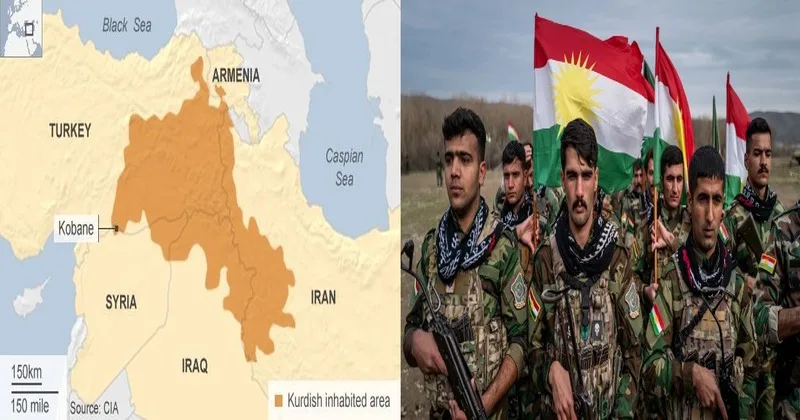
Turkey is home to the world’s largest Kurdish population. Ankara regards any development that appears to bring the region closer to the establishment of a broader Kurdish state or an autonomous area as anathema and a direct challenge to Turkish territorial integrity. The Turks will not permit the establishment of another robust Kurdish entity near their frontier. Washington and Tel Aviv did not specify whether they would offer Kurdish forces protection in the event of Turkish aggression.

Conflict expansion

Iran’s Revolutionary Guard, its primary armed service, has already initiated attacks on Kurdish positions in both Iraq and Iran during the ongoing conflict. These attacks have been conducted with a heavy bombardment of drones and missiles. The Kurdistan Regional Government and the Federal Government of Iraq have both issued statements that deny their involvement in or support of any prospective cross-border incursion by Iranian Kurds based in the Kurdistan Region of Iraq(KRI). If the Iranian Kurdish groups based in KRI launch attacks against Iran, Iranian proxies in Iraq may become more active. Tehran could mobilize Iranian-aligned militias in Iraq to target the positions of Iranian Kurdish opposition groups in KRI and to exert both political and military pressure on Kurdish authorities. Such activities will endanger the stability of Iraqi-Kurdistan.

Also Read: Kurds: The victims of international betrayal

Loss of domestic credibility

A potential propaganda advantage for the Islamic Republic is an armed Kurdish insurgency or that of any ethnic or separatist group. Iran is a nation with nearly uninterrupted territorial integrity and a history that spans 2,500 years. It is difficult to envision a strategy that is more likely to bolster a rally-around-the-flag effect, fragment the opposition and keep anti-regime Iranians at home. Although it is possible that it could become bogged down and result in the deaths of a few additional Iranian soldiers, it is exceedingly improbable that it will have a substantial effect on the battlefield.

Even though the Kurdish coalition’s involvement in the conflict may present a military challenge, it could also provide Tehran with a political opportunity. Tehran could also leverage the specter of separatism to bolster Persian nationalism, fragment the opposition and portray the war as a foreign-backed dismemberment rather than a domestic revolt, thereby providing a rationale for mass arrests and violence against Kurds within Iran.

Kurdish fighters are ferocious. They are one of the more pro-Western and pro-American ethnic groups in the region. They are partners and contributed to the stabilization of certain regions of Iraq during the U.S. invasion. They played a critical role in the defeat of ISIS in Iraq when the Iraqi state was on the brink of disintegration in 2014 and in the destruction of ISIS in Syria. They are the type of ally that many Americans wish the West Asia had more of: courageous, disciplined and willing to fight. However, the Kurds have never received the support they deserve, which is why they have decided not to participate in a perilous conflict in a hasty manner this time. Kurds know very well that they will incur substantial losses as a result of any miscalculation.

Topics: Kurdish StateIranIsraelUSATurkeyKurdsWest Asia
Manish Rai
Manish Rai
The writer is a Political Analyst for West Asia and Af-Pak Region. [Read more]
Share
Tweet
SendShareSend
✮ Subscribe Organiser YouTube Channel. ✮
✮ Join Organiser's WhatsApp channel for Nationalist views beyond the news. ✮
Previous News

RSS ABPS 2026: Every Swayamsevak of Sangh thinks with a holistic perspective for entire Bharat – Dattatreya Hosabale ji

Next News

Election Commission announces assembly poll schedule: Voting from April 9 in 5 states & Puducherry, results on May 4

Related News

PM Modi holds series of bilateral meetings;(From Left to Right): Malaysia PM Anwar Ibrahim, Ethiopian PM Abiy Ahmed Ali and Iran President Masoud Pezeshkian

BRICS Summit: PM Modi flags maritime security, seafarers safety with Iran President; Holds series of bilateral talks

AI Generated Representative Image

West Asia Conflict: Iran eyes “exclusion zone” near Hormuz, US strikes oil tankers; War escalates as truce collapses

Iran’s deepening currency crisis is squeezing households as soaring prices erode wages, savings and access to basic necessities

Iran’s Rial crashes to record low as US sanctions bite; Iranians blame Islamic regime for deepening economic crisis

Mohammad Reza Naqdi

“Flee Quickly”: Iran’s IRGC threatens Israelis with Banu Qurayza’s fate, reviving a 7th-century tribal genocide

PM Modi held bilateral discussions with Iran President Masoud Pezeshkian on the sidelines of the SCO Summit

SCO Summit: PM Modi meets Iran President; Reaffirms regional stability & freedom of navigation for global security

Sarsanghchalak Dr Mohan Bhagwat in US

Universal Oneness Celebration: How global personalities hail visit of RSS’ Dr Bhagwat as reflection of Sanatan culture

Load More

Latest News

India joins 24 nations in global 6G push

India joins 24 nations in global 6G push, endorses call for secure and resilient networks

Ministry of Defence's ten-year defence diplomacy framework “RAKSHA”, at Kartavya Bhawan in New Delhi. (Source: AI generated Image)

RAKSHA: Ten years of Defence diplomacy turned a decade boosting export and global cooperation

(Left) Naga leader Dr. S. C. Jamir: (Right) RSS Sarsanghchalak Dr Mohan Bhagwat

Bridging Perspectives: Dr SC Jamir meets RSS’ Dr Bhagwat, highlights mutual respect, secularism, and Naga aspirations

Tiger Bright coffee from Koraput’s tribal farmers featured in BRICS Summit media kits in New Delhi

From Eastern Ghats to BRICS: Koraput Coffee puts Odisha’s tribal enterprise on global map

The RSS has spent a century building influence through organisation, social networks and ideological formation beyond the electoral arena

RSS at 100: How the Sangh built a century-long network of influence beyond Indian politics

India on a Platter: BRICS Dinner Menu Celebrates Regional Culinary Heritage

BRICS Dinner Menu: From Khandvi, mushroom kebabs to pulao global leaders get a taste of Bharat’s culinary heritage

Exterior of the Lokayukta Building

Karnataka Lokayukta records 1,248 cases in four years, 887 linked to bribery

RSS Akhil Bharatiya Karyakarini Sadasya Dr Manmohan Vaidya at a Pramukh Jan Samvad Sangosthi organised by Kashi Mahanagar on the occasion of the RSS Centenary Year,

Entire society must unite with a sense of oneness; This Is the spirit of Sangh Work: Dr Manmohan Vaidya

‘Samuel Could Never Do This’: Mother Rejects Blasphemy Allegations Against Son in Lahore

Pakistan Blasphemy Case: Mother of Christian man Samuel Arif claims false implication, seeks justice

Prime Minister Narendra Modi, along with Chinese President Xi Jinping, Russian President Vladimir Putin and other world leaders, poses for a picture at a joint tree plantation initiative during the BRICS Summit

BRICS Summit 2026: India as the voice of Global South, shared responsibilities & scripting inclusive world order

Load More
  • Privacy
  • Terms
  • Cookie Policy
  • Refund and Cancellation
  • Delivery and Shipping

© Bharat Prakashan (Delhi) Limited.
Tech-enabled by Ananthapuri Technologies

  • Home
  • Search Organiser
  • Bharat
    • Assam
    • Bihar
    • Chhattisgarh
    • Jharkhand
    • Maharashtra
    • View All States
  • World
    • Asia
    • Africa
    • North America
    • South America
    • Europe
    • Australia
  • Editorial
  • Operation Sindoor
  • Opinion
  • Analysis
  • Defence
  • Culture
  • Sports
  • Business
  • RSS @ 100
  • Entertainment
  • More ..
    • Sci & Tech
    • Vocal4Local
    • Special Report
    • Education
    • Employment
    • Books
    • Interviews
    • Travel
    • Health
    • Politics
    • Law
    • Economy
    • Obituary
  • Subscribe Magazine
  • Read Ecopy
  • Advertise
  • Circulation
  • Careers
  • About Us
  • Contact Us
  • Policies & Terms
    • Privacy Policy
    • Cookie Policy
    • Refund and Cancellation
    • Terms of Use

© Bharat Prakashan (Delhi) Limited.
Tech-enabled by Ananthapuri Technologies