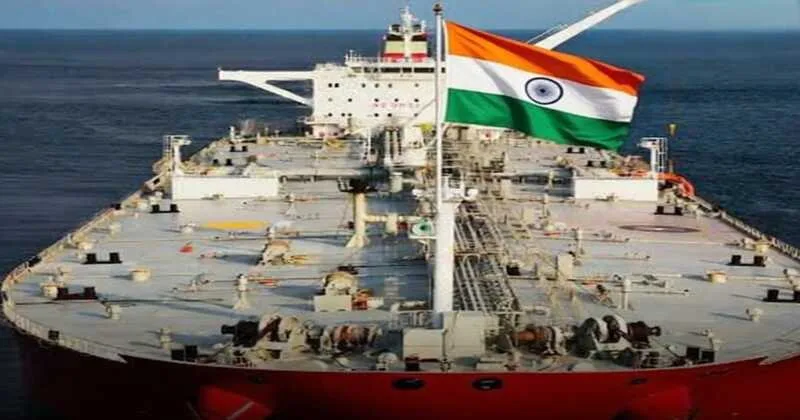
NEW DELHI: Amid the increasingly complex security situation in West Asia, the Indian vessel Shiwalik, carrying more than 40,000 metric tonnes of LPG, has departed from the Strait of Hormuz. The ship is currently crossing the strategically vital waterway under security escort from the Indian Navy.
According to reports, the Indian Navy is directly guiding the vessel to ensure its safe passage through the region, taking into account heightened tensions and security concerns. The move comes at a time when maritime routes in the Gulf have become increasingly sensitive due to geopolitical developments.
Reports also indicate that another LPG vessel is expected to set sail within the next six hours after Shiwalik. India is reportedly moving its ships through the Strait of Hormuz in phases to avoid disrupting the country’s fuel supply chain. The strait remains one of the world’s most critical energy corridors, with nearly 20 per cent of global oil and gas shipments passing through the narrow waterway.
Government sources have stated that the current operation was initiated following diplomatic discussions with Iran to ensure the safe passage of Indian vessels through the region. Officials have also assured the public that India currently has sufficient fuel reserves, urging them not to panic over a possible LPG shortage.
Diplomatic coordination with Iran
The Iranian Ambassador to India, Mohammad Fatali, had earlier suggested that positive developments could be expected regarding the passage of Indian ships through the Strait of Hormuz. Speaking to the media, the envoy hinted that good news could emerge within hours, indicating that discussions between the two countries were progressing constructively.
Fatali emphasised that India and Iran share longstanding ties of friendship and cooperation. According to him, the relationship between the two nations has historically been based on mutual support and shared interests. He also noted that India had extended assistance to Iran in various ways since the conflict in the region began.
Earlier, Iran had already permitted two Indian ships, Parimal and Pushpa, to pass through the Strait of Hormuz following diplomatic negotiations between the two countries. The permission was granted despite restrictions remaining in place for ships from the United States, Israel and several European countries. Iran had also reportedly assured India that Indian oil vessels would not be targeted, providing a measure of security for the country’s energy supply lines.
Concerns over fuel supply
The Strait of Hormuz plays a critical role in ensuring the steady supply of crude oil and cooking gas to India, and any disruption to maritime traffic through the channel could affect the country’s energy security. The uncertainty surrounding cargo movement through the strait had earlier raised concerns about possible shortages of petrol and LPG in the domestic market.
The Strait of Hormuz plays a critical role in ensuring the steady supply of crude oil and cooking gas to India, and any disruption to maritime traffic through the channel could affect the country’s energy security. The uncertainty surrounding cargo movement through the strait had earlier raised concerns about possible shortages of petrol and LPG in the domestic market.
However, the latest diplomatic engagements are expected to ease the crisis and ensure smoother passage for Indian vessels. To further safeguard its energy needs, India has also increased imports of Russian crude oil, with shipments reportedly rising by nearly 45 per cent over the past week. Officials maintain that the government is closely monitoring developments in the region and is taking necessary steps to ensure that India’s fuel supplies remain stable despite the ongoing tensions in West Asia.