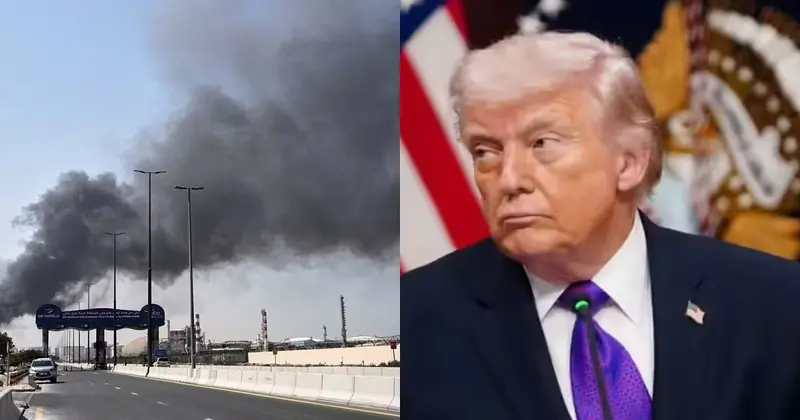
Gulf nations aim to pull back from US investments
July 13, 2026
  • Read Ecopy
  • Circulation
  • Advertise
  • Careers
  • About Us
  • Contact Us
Android AppiPhone AppArattai
Organiser
  • ‌
  • Bharat
    • Assam
    • Bihar
    • Chhattisgarh
    • Jharkhand
    • Maharashtra
    • View All States
  • World
    • Asia
    • Europe
    • North America
    • South America
    • Africa
    • Australia
  • Editorial
  • International
  • Opinion
  • RSS @ 100
  • More
    • Op Sindoor
    • Analysis
    • Sports
    • Defence
    • Politics
    • Business
    • Economy
    • Culture
    • Special Report
    • Sci & Tech
    • Entertainment
    • G20
    • Azadi Ka Amrit Mahotsav
    • Vocal4Local
    • Web Stories
    • Education
    • Employment
    • Books
    • Interviews
    • Travel
    • Law
    • Health
    • Obituary
  • Subscribe
    • Subscribe Print Edition
    • Subscribe Ecopy
    • Read Ecopy
  • ‌
  • Bharat
    • Assam
    • Bihar
    • Chhattisgarh
    • Jharkhand
    • Maharashtra
    • View All States
  • World
    • Asia
    • Europe
    • North America
    • South America
    • Africa
    • Australia
  • Editorial
  • International
  • Opinion
  • RSS @ 100
  • More
    • Op Sindoor
    • Analysis
    • Sports
    • Defence
    • Politics
    • Business
    • Economy
    • Culture
    • Special Report
    • Sci & Tech
    • Entertainment
    • G20
    • Azadi Ka Amrit Mahotsav
    • Vocal4Local
    • Web Stories
    • Education
    • Employment
    • Books
    • Interviews
    • Travel
    • Law
    • Health
    • Obituary
  • Subscribe
    • Subscribe Print Edition
    • Subscribe Ecopy
    • Read Ecopy
Organiser
  • Home
  • Bharat
  • World
  • Operation Sindoor
  • Editorial
  • Analysis
  • Opinion
  • Culture
  • Defence
  • International Edition
  • RSS @ 100
  • Magazine
  • Read Ecopy
Home International Edition America USA

Strategic backlash to US dollar hegemony: Gulf nations aim to retreat from US investments amid West Asia conflict

As West Asia is entangled in a massive conflict, the sparks of the war have spread beyond the geopolitical latitude of the region. The war ignited by the historical contestation between Israel-US and Iran is now set to fracture the global dollar dominance and the US hegemony as the gulf nations are reassessing their US investments and aiming to withdraw from the portfolios. This reflects a deep strategic rift and trust deficit in the gulf nations towards the American financial market

WEBDESKWEBDESK
Mar 13, 2026, 06:30 pm IST
in USA, World, West Asia, Analysis, Asia
Follow on Google News
FacebookTwitterWhatsAppTelegramEmail

The sparks of the West Asia conflict triggered by the face-off between the US-Israel axis and Iran is now igniting repercussions beyond the geopolitical landscape. The impact of the war is dismantling the very foundations of the US hegemony in terms of dollar dominance. This is however not a sudden rupture of the dollar hegemony. But the emerging scenario is reflecting a massive trust deficit in the gulf nations towards the United States and its financial markets as a stable, credible and reliable investment platform.

As the geopolitical landscape of West Asia is embroiled with massive escalation and cascading effect across the region, the gulf countries are entangled with severe economic and military loss. For example, the oil refineries of the region are hit, trade has been disrupted, energy transportation has been dwindling as the strategic waterways and sensitive chokepoints are blocked. Also, the airports in major West Asian cities have been shut and the economic activities are severely ruptured. Thus, the Israel-Iran friction has altered the economic map of West Asia incurring huge losses.

At such a challenging juncture, as per the reports, several countries of the Gulf Cooperation Council(GCC) including Saudi Arabia, UAE, Qatar, Kuwait are reviewing their overseas investment and aiming to withdraw the major chunk of investments in the American financial market. This financial and economic reassessment is deemed as a solution to cope up with the war time losses. Currently, as mentioned, the gulf economies are shattered due to multi-sector loss. The trust on the US market and dollar-pegged economy is depleting. The US is no more considered as a safe-haven for investment given the war time losses and reduced stability of the American portfolios.

West Asia conflict accelerates fiscal cliff & reduces trust on US for investment

The US economy is hitherto entailed with massive fiscal deficit and gradual subsidence of the dollar dominance. The latest massive escalation in West Asia causes further economic pressure and severe strain on the US fiscal balance. The war incurs huge losses on the US economy in terms of military losses that will indeed have a ripple effect on the US Federal Reserves. For example, the losses in terms of aircraft, missiles, energy etc. causes strain on the economy. The reduced economic activities during war time causes further stress on the economy.

Also, under President Donald Trump regime, there is a massive trust deficit on the US economy as an impact of tariff war, spiking inflation and soaring fiscal deficit. Cumulating all these factors, the trust of the gulf nations on the US federal reserves as a stable investment hub and safe-haven is depleting. Thus, the countries of West Asia are reassessing their investment strategy in the US economy. Another vital aspect is that the Israel-Iran conflict is mounting economic pressure on the gulf economies, depleting their resources and the channels of income generating economic activities are severely scuffled.

Amidst such an economic and geopolitical skirmish, the West Asian economies are rethinking their investment calculations and assessing whether the US is a safe-haven and credible income generating destination. Will the investments in American portfolios act as a credible tool to bridge the fiscal deficit and help to cope up with the economic stress created during the war? The question ponders among gulf economies. If the gulf nations embark on such a pivotal and overarching strategic decision to withdraw considerable investments from the US financial market, it will indeed be a major blow to the dollar dominance and the solid US footprint or hegemony in West Asia.

The intensity of gulf investments in the US market

The Gulf nations have collectively invested over two trillion dollars in the sovereign wealth funds of the United States. The West Asian economies have invested in the US assets which includes, treasury bonds, stock markets, technology companies, businesses and in the real estate portfolios. However, as an impact of the ongoing confrontation, the major revenue sources of the Gulf countries have been fractured. Energy infrastructures such as oil refineries in Saudi Arabia, Bahrain, UAE, Qatar have been hit leading to severe economic loss for the countries. The closure of airspaces and strategic chokepoints such as the Strait of Hormuz have been blocked causing further economic pressure to the gulf economies and their revenue sources.

Along with the fracturing of primary sources of revenue, the costs of security have been spiking due to the escalating conflict. Military expenditure is soaring. Thus, with reduced revenue and soaring expenditure, the gulf economies are weighing the cost-benefit of investing in the US portfolios as a stable source. If the gulf states disinvest from the US financial market, the repercussions might trigger global volatility.

Also Read: PM Modi speaks to Iranian President Pezeshkian, voices concern over escalating West Asia conflict

What happens if Gulf economies withdraw from the American markets

As discussed, if the gulf economies sell their US federal bonds and disinvest from the American financial market, the wave of repercussions will spread across the globe. The dollar hegemony will dwindle gradually, the dollar as a reserve and stable foreign exchange currency will lose its potential. The large-scale withdrawal from the US stocks and treasury bonds will indeed create turbulence across the global financial market, as the borrowing costs for Washington DC will spike.

The oil rich economies of the gulf region predominantly trade oil in dollars thus rendering the synonym petro-dollar. The oil exporting nations sell crude oil in dollars and the excess or surplus US currency they possess will be reinvested in the American treasury bonds and other federal holdings. This cycle of purchasing dollars and reinvesting it back in the US economy has been running for decades and this indeed has sustained the dollar hegemony coupled with the geopolitical influence of the United States.

However, with the latest conflict in West Asia, the gulf economies are reassessing the density of their financial exposure to the US economy. If consolidated, the move might drastically alter the global economic architecture. As the conflict between the US-Israel axis and Iran escalates, to what extent the war redraws the geopolitical and geoeconomic map of West Asia and beyond is an enigma!


Topics: IsraelDollarUSAinvestmentWest AsiaHegemonyIran
ShareTweetSendShareSend
✮ Subscribe Organiser YouTube Channel. ✮
✮ Join Organiser's WhatsApp channel for Nationalist views beyond the news. ✮
Previous News

The Great LPG Deception: How Bharat shattered scarcity and why the “panic” is a manufactured lie

Next News

Assam: PM Modi flags off three new train services, unveils projects worth over Rs 4,570 crore in the state

Related News

Commerce and Industry Minister Piyush Goyal

Fact Check: Piyush Goyal rejects Reuters report on India-US trade deal as “false & misleading”; Reaffirms balanced pact

Prime Minister Narendra Modi and New Zealand Prime Minister Christopher Luxon

India-New Zealand Strategic Partnership: A new horizon for New Delhi’s economic diplomacy

The Fragile Truce: Why the US-Iran peace deal mediated by puppet Pakistan is primed for collapse

Prime Minister Modi pitches greater economic partnership during his visit to Australia

PM Modi’s Australia Visit: Critical minerals, clean energy, semiconductors & AI power futuristic economic partnership

Representative Image

Failure of the US–Iran Peace Process: Why lasting peace in West Asia remains elusive

Turkish President Recep Tayyip Erdogan meets a Hamas delegation in Turkey as the late Hamas political chief Ismail Haniyeh (left) looks on

Inside the Hamas-Turkey Link: Israeli reports put Ankara’s regional role under fresh spotlight

Load More

Latest News

500-year-old murti recovered from Bay Of Bengal after fishermen find it in fishing net

500-year-old murti recovered from Bay of Bengal by fishermen; Authorities probe origin & possible smuggling link

Commerce and Industry Minister Piyush Goyal

Fact Check: Piyush Goyal rejects Reuters report on India-US trade deal as “false & misleading”; Reaffirms balanced pact

Representative Image

West Bengal: 48 girls, including minors, rescued from Islampur red-light area in major anti-trafficking crackdown

Great Nicobar is emerging as a strategic gateway that strengthens India's maritime reach while increasing pressure on China's Malacca Dilemma

Great Nicobar Project to boost India’s Indo-Pacific leverage, deepen China’s Malacca Dilemma: Report

PM POSHAN

PM POSHAN Scheme: Yogi government launches massive drive to recruit 3.53 lakh cooks in Uttar Pradesh

Uttar Pradesh: US national claiming special forces past held near Indo-Nepal border without passport

Rajaprasad Bije Ritual: Servitors Convey Mahaprabhu's Recovery Message to Gajapati Maharaja Divya Singh Dev

Odisha: Rajaprasad Bije ritual held at Puri Jagannath Temple; Gajapati Maharaja informed of Mahaprabhu’s recovery

Mukhyamantri Majhi Ladki Bahin Yojana

Maharashtra: Kirit Somaiya exposes 92 lakh ‘Bogus’ Ladki Bahin beneficiaries after verification

KPSC Chief Shivashankarappa Sahukar suspended as Governor orders inquiry

Karnataka Governor suspends KPSC Chief Shivashankarappa Sahukar over recruitment scam allegations, seeks SC probe

Rs 100 Crore Palani Temple land registered in private names, probe demanded

Tamil Nadu: Palani temple land worth Rs 100 crore illegally registered in names of two individuals, sparks outrage

Load More
  • Privacy
  • Terms
  • Cookie Policy
  • Refund and Cancellation
  • Delivery and Shipping

© Bharat Prakashan (Delhi) Limited.
Tech-enabled by Ananthapuri Technologies

  • Home
  • Search Organiser
  • Bharat
    • Assam
    • Bihar
    • Chhattisgarh
    • Jharkhand
    • Maharashtra
    • View All States
  • World
    • Asia
    • Africa
    • North America
    • South America
    • Europe
    • Australia
  • Editorial
  • Operation Sindoor
  • Opinion
  • Analysis
  • Defence
  • Culture
  • Sports
  • Business
  • RSS @ 100
  • Entertainment
  • More ..
    • Sci & Tech
    • Vocal4Local
    • Special Report
    • Education
    • Employment
    • Books
    • Interviews
    • Travel
    • Health
    • Politics
    • Law
    • Economy
    • Obituary
  • Subscribe Magazine
  • Read Ecopy
  • Advertise
  • Circulation
  • Careers
  • About Us
  • Contact Us
  • Policies & Terms
    • Privacy Policy
    • Cookie Policy
    • Refund and Cancellation
    • Terms of Use

© Bharat Prakashan (Delhi) Limited.
Tech-enabled by Ananthapuri Technologies