India's Rare Earth Resources: Deposits, extraction challenges
June 6, 2026
  • Read Ecopy
  • Circulation
  • Advertise
  • Careers
  • About Us
  • Contact Us
Android AppiPhone AppArattai
Organiser
  • ‌
  • Bharat
    • Assam
    • Bihar
    • Chhattisgarh
    • Jharkhand
    • Maharashtra
    • View All States
  • World
    • Asia
    • Europe
    • North America
    • South America
    • Africa
    • Australia
  • Editorial
  • International
  • Opinion
  • RSS @ 100
  • More
    • Op Sindoor
    • Analysis
    • Sports
    • Defence
    • Politics
    • Business
    • Economy
    • Culture
    • Special Report
    • Sci & Tech
    • Entertainment
    • G20
    • Azadi Ka Amrit Mahotsav
    • Vocal4Local
    • Web Stories
    • Education
    • Employment
    • Books
    • Interviews
    • Travel
    • Law
    • Health
    • Obituary
  • Subscribe
    • Subscribe Print Edition
    • Subscribe Ecopy
    • Read Ecopy
  • ‌
  • Bharat
    • Assam
    • Bihar
    • Chhattisgarh
    • Jharkhand
    • Maharashtra
    • View All States
  • World
    • Asia
    • Europe
    • North America
    • South America
    • Africa
    • Australia
  • Editorial
  • International
  • Opinion
  • RSS @ 100
  • More
    • Op Sindoor
    • Analysis
    • Sports
    • Defence
    • Politics
    • Business
    • Economy
    • Culture
    • Special Report
    • Sci & Tech
    • Entertainment
    • G20
    • Azadi Ka Amrit Mahotsav
    • Vocal4Local
    • Web Stories
    • Education
    • Employment
    • Books
    • Interviews
    • Travel
    • Law
    • Health
    • Obituary
  • Subscribe
    • Subscribe Print Edition
    • Subscribe Ecopy
    • Read Ecopy
Organiser
  • Home
  • Bharat
  • World
  • Operation Sindoor
  • Editorial
  • Analysis
  • Opinion
  • Culture
  • Defence
  • International Edition
  • RSS @ 100
  • Magazine
  • Read Ecopy
Home Bharat

From Monazite Sands to Permanent Magnets: How India plans to unlock its rare earth resources & strengthen value chain

Rare earth elements have become crucial for modern technologies ranging from electric vehicles and renewable energy systems to advanced electronics and defence equipment. Although India holds the world’s third-largest rare earth resources, the sector still faces significant challenges in extraction, processing and industrial-scale utilisation

WEBDESKWEBDESK
Mar 13, 2026, 12:30 pm IST
in Bharat
Follow on Google News
Representative image

Representative image

FacebookTwitterWhatsAppTelegramEmail

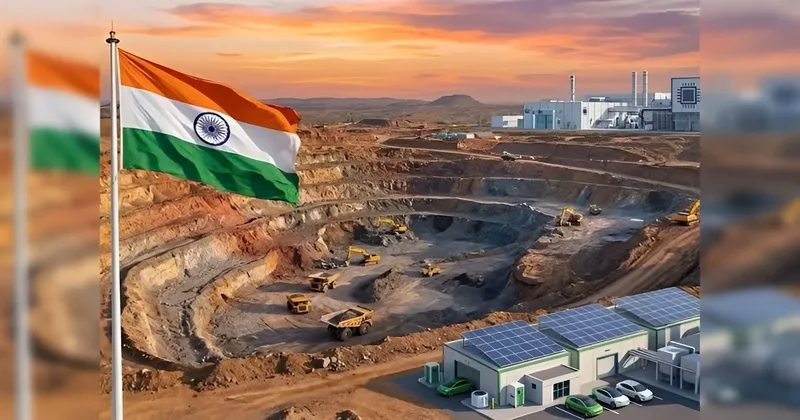
India possesses one of the world’s largest rare earth resource bases, ranking third globally in rare earth resources, according to the USGS Mineral Commodity Summaries (January 2025). These resources are vital for advanced technologies such as electric vehicles, electronics, renewable energy systems and defence equipment. However, despite significant reserves, India’s rare earth sector still faces structural challenges in extraction, processing and industrial utilisation.

India’s rare earth resources occur across a variety of geological settings. The country has around 7.23 million tonnes of Rare Earth Oxide (REO) equivalent contained within 13.15 million tonnes of monazite resources, primarily found in coastal beach and teri/red sand deposits across parts of Kerala, Tamil Nadu, Odisha, Andhra Pradesh, Maharashtra, and Gujarat, as well as in inland alluvial deposits in parts of Jharkhand, West Bengal, and Tamil Nadu.

Additionally, about 1.29 million tonnes of in-situ Rare Earth Oxides have been identified in hard rock terrains in the Ambadungar area of Chhota Udepur district in Gujarat and the Bhatikhera and Dantala areas of Balotra district in Rajasthan. Riverine placer deposits in Chhattisgarh and Jharkhand also contain around 2,000 tonnes of heavy mineral concentrates, including roughly 2 per cent xenotime, a phosphate mineral rich in yttrium and other heavy rare earth elements.

India’s rare earth resources are primarily low in grade and are often associated with radioactive elements, making extraction a long, complex, and expensive process. Moreover, monazite, the principal rare earth-bearing mineral in India, predominantly contains light rare earth elements, while heavy rare earth elements are not available in economically extractable quantities. Although India has established facilities for mining, separation, and refining rare earths into oxide form, and has also developed the capability for metal extraction, industrial-scale intermediate facilities, such as those for producing alloys and permanent magnets, remain largely absent. As a result, despite having substantial rare earth resources, production capacity remains limited due to the lack of midstream and downstream industries in the rare earth value chain.

Government Initiatives and Roadmap for the Rare Earth Sector

The Government of India has undertaken several measures in recent years to strengthen the rare earth sector and develop a robust critical minerals ecosystem. These initiatives focus on enhancing exploration, improving processing capacity, promoting recycling, and building downstream manufacturing capabilities.

A major step in this direction was the approval of the National Critical Mineral Mission (NCMM) by the Union Cabinet on January 29, 2025. The mission aims to ensure a long-term and sustainable supply of critical minerals, including rare earth elements, while strengthening India’s value chain across all stages, from mineral exploration and mining to beneficiation, processing, and recovery from end-of-life products.

The Ministry of Mines has also made progress in resource allocation by successfully auctioning 46 critical mineral blocks, including seven blocks containing rare earth elements (REE). In addition, the central government has auctioned seven Exploration Licence blocks, two of which include rare earth resources.

Under the NCMM framework, the government issued guidelines on 14 November 2025 to support pilot projects for recovering critical minerals from industrial waste and residues, including overburden, tailings, fly ash and red mud. As part of this initiative, a project by the Non-Ferrous Technology Development Centre (NFTDC) focusing on the separation of rare earth elements from multiple feedstocks has already been approved.

To encourage recycling and circular use of resources, the Union Cabinet approved a Rs 1,500 crore incentive scheme to promote critical mineral recycling, including rare earth elements, under the NCMM. The scheme guidelines were issued, and the programme was formally launched on 2 October 2025.

The Ministry of Mines has also introduced a policy in December 2025 to facilitate the exploration of critical minerals in new projects and the recovery of such minerals from overburden, dumps and tailings of existing mines. The policy aims to support systematic identification, assessment and recovery of critical and strategic minerals across both new and existing mining operations.

Also Read: UK: Rising Islamist hostility? Hindu festival disrupted & shops of Indians vandalised at Wembley

To secure access to overseas mineral resources, the government established Khanij Bidesh India Limited (KABIL), a joint venture company operating under the Ministry of Mines. KABIL has been tasked with acquiring and developing international mineral assets, including lithium, cobalt and rare earth elements.

In addition, the government has introduced customs duty reforms to support the domestic critical minerals industry. Duties on 25 minerals were eliminated, and Basic Customs Duty (BCD) on two minerals was reduced in the Union Budget 2024–25. In the Union Budget 2025–26, cobalt powder and waste, scrap of lithium-ion batteries, lead, zinc and 12 other critical minerals were exempted from BCD. Furthermore, the Union Budget 2026–27 proposed duty exemptions on the import of capital goods required for processing critical minerals in India.

Another key initiative is the ‘Scheme to Promote Manufacturing of Sintered Rare Earth Permanent Magnet’, approved by the Union Cabinet on 26 November 2025 and notified on 15 December 2025. The scheme aims to establish 6,000 metric tonnes per annum (MTPA) of integrated Rare Earth Permanent Magnet (REPM) manufacturing capacity in India, thereby enhancing self-reliance and strengthening India’s position in the global REPM market.

The scheme has a total financial outlay of Rs 7,280 crore, which includes Rs 6,450 crore in sales-linked incentives for REPM sales over five years and Rs 750 crore in capital subsidies for setting up manufacturing facilities with an aggregate capacity of 6,000 MTPA.

The government is also establishing a Rare Earth Permanent Magnet plant in Visakhapatnam to enable the indigenous production of samarium-cobalt (Sm-Co) magnets, which are crucial for applications in the atomic energy and defence sectors.

In addition, amendments have been introduced to the Mines and Minerals (Development and Regulation) Act, 1957, to accelerate mineral exploration and production, encourage private investment and strengthen India’s long-term energy security.

Furthermore, mining projects involving atomic minerals listed in Part B and critical and strategic minerals listed in Part D of the First Schedule of the MMDR Act have been exempted from public consultation requirements under sub-clause (f) of clause 7(III)(i) of the Environmental Impact Assessment Notification, 2006, in order to expedite project approvals.

 

Topics: Rare earth miningRare earth reservesCritical minerals IndiaMonazite deposits IndiaREPM manufacturingStrategic minerals policyrare-earth elementsNational Critical Mineral Mission
ShareTweetSendShareSend
✮ Subscribe Organiser YouTube Channel. ✮
✮ Join Organiser's WhatsApp channel for Nationalist views beyond the news. ✮
Previous News

Red camp in turmoil as veteran CPI(M) leaders walk out ahead of Kerala assembly polls

Next News

Uttar Pradesh: State police recover 55 LPG cylinders from Samajwadi Party leader Abdul Rehman’s residence in Hapur

Related News

US Secretary of State Marco Rubio and External Affairs Minister Dr. S. Jaishankar

India-US Critical Mineral Cooperation: Deal aims to diversify supply chain & seek strategic resilience in emerging tech

PM Modi in a bilateral meeting with the Prime Minister of Japan, Ms. Sanae Takaichi on the sidelines of the 20th G20 Leaders’ Summit in Johannesburg, South Africa on November 23, 2025

India and Japan explore strategic partnership for rare earth mining in Rajasthan

Representative image

US includes India in critical minerals push as China tightens control over global strategic supply chains

US President Donald Trump (left) and Chinese President Xi Jinping (right) shake hands as they depart from a bilateral meeting at Gimhae Air Base in Busan, South Korea, on Oct. 30

Trump–Xi meeting in Busan yields fragile truce amid deep strategic tensions

US President Donald Trump

“No reason to meet Xi”: Trump lashes out at China’s ‘hostile’ export control plan, threatens new tariffs

PM Modi's big swadeshi push

‘Make in India, Make for World’: PM Modi big Swadeshi push at Maruti Suzuki e Vitara launch

Load More

Latest News

A representative image

The Middle Class Story: How governance reforms are powering India’s next growth engine

From Armenia and Greece to Cyprus, India's defence diplomacy is creating new pressure points for Turkey

How India’s Mediterranean Push and Indo-Pacific rise unsettle Turkey’s strategic calculus

Gadag seer enters 33-day Shiva Yoga Samadhi for world peace and welfare

Karnataka: Sri Rachoteshwara Shivacharya Mahaswamiji begins rare 33-day sealed Shiva Yoga Samadhi in Gadag

Indian surgeon conducts world’s longest cardiac telesurgery; Made-in-India robot echoes indigenous medical prowess

Pro-Khalistan slogans raised, Bhindranwale posters displayed at Sri Akal Takht Sahib

Operation Blue Star Anniversary: Pro-Khalistan slogans raised, Bhindranwale posters displayed at Sri Akal Takht Sahib

Inspired by Bhagwan Shiva's teachings, this ancient breathing practice helps calm the mind and reduce stress

Ancient Yogic Breathing for Modern Stress: How the Shiva method cultivates peace & self-awareness

The Vedic age saw remarkable women sages, known as Rishikas, who composed hymns and shaped India's spiritual and philosophical heritage

Rishikas of Vedic Age: How Gargi, Maitreyi & other women shaped ancient India’s spiritual and philosophical tradition

Police in AAP-Ruled state of Punjab lathi charge sit-in protesters

Punjab: ITI candidates seeking jobs lathi-charged outside PSPCL HQ; opposition slams AAP Govt over police action

From constables to DGP, India's police system follows a structured chain of command that governs law enforcement across the country

From Constable to DGP: Understanding India’s police hierarchy, powers & recruitment system

The terracotta dice that challenges historical assumptions and highlights India's millennia-old civilisational heritage

How a 4,500-year-old terracotta dice is reviving the debate on India’s civilisational continuity & Vedic heritage

Load More
  • Privacy
  • Terms
  • Cookie Policy
  • Refund and Cancellation
  • Delivery and Shipping

© Bharat Prakashan (Delhi) Limited.
Tech-enabled by Ananthapuri Technologies

  • Home
  • Search Organiser
  • Bharat
    • Assam
    • Bihar
    • Chhattisgarh
    • Jharkhand
    • Maharashtra
    • View All States
  • World
    • Asia
    • Africa
    • North America
    • South America
    • Europe
    • Australia
  • Editorial
  • Operation Sindoor
  • Opinion
  • Analysis
  • Defence
  • Culture
  • Sports
  • Business
  • RSS @ 100
  • Entertainment
  • More ..
    • Sci & Tech
    • Vocal4Local
    • Special Report
    • Education
    • Employment
    • Books
    • Interviews
    • Travel
    • Health
    • Politics
    • Law
    • Economy
    • Obituary
  • Subscribe Magazine
  • Read Ecopy
  • Advertise
  • Circulation
  • Careers
  • About Us
  • Contact Us
  • Policies & Terms
    • Privacy Policy
    • Cookie Policy
    • Refund and Cancellation
    • Terms of Use

© Bharat Prakashan (Delhi) Limited.
Tech-enabled by Ananthapuri Technologies