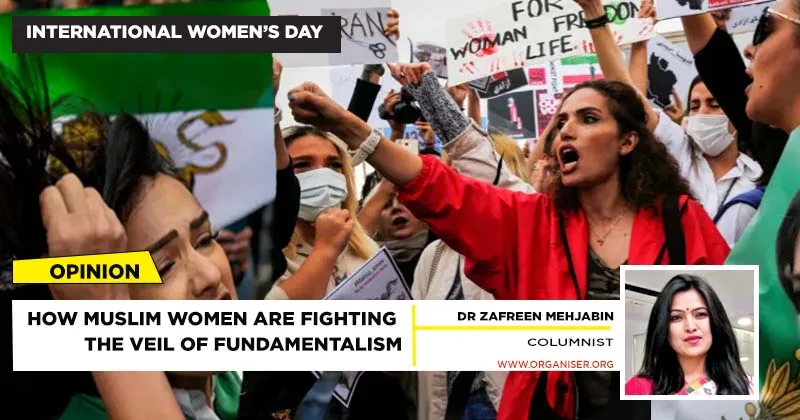
History has a peculiar habit of underestimating Muslim women. It underestimated them in revolutions, in intellectual movements, and in political transformations. For decades, global discourse compressed them into simplistic archetypes: either oppressed victims awaiting liberation or cultural symbols to be regulated and debated. The complexity of their lives, their agency, their scholarship, and their resistance rarely entered mainstream narratives. Yet across Kabul, Tehran, Jakarta, Delhi, London, and Washington, Muslim women have quietly rewritten the script. They have moved away from being spoken about to speaking for themselves. And history offers a consistent lesson, ie when institutions attempt to silence women, the result is rarely silence. It is resonance. Today, Muslim women are shaping political debates, redefining religious interpretation, challenging authoritarian regimes, and recalibrating economic structures. Their story is not one of passive endurance. It is a story of strategic resistance.
Afghanistan: When Existence Becomes Defiance
Few places illustrate the stakes of women’s rights more starkly than Afghanistan. When the Taliban returned to power in August 2021, the rollback of women’s rights was swift and systematic. What followed was not merely policy adjustment but the near-erasure of women from public life. Among the most consequential decrees, the following are the starkest: banning of girls’ education beyond sixth grade; prohibition of women from attending universities and also from working in NGOs and international organisations; closing down of beauty salons; non accessibility of public spaces including parks and gyms; and imposing of strict mobility rules that requires women to travel with only male guardians.
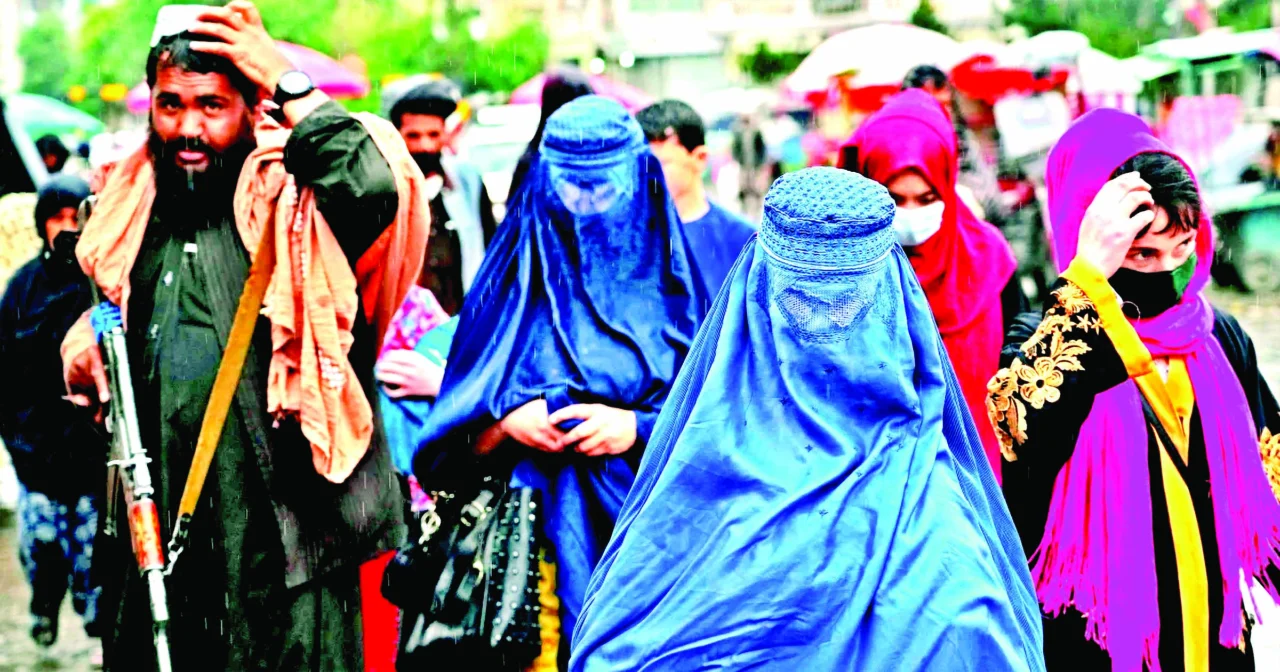
According to UNESCO, more than 1.4 million Afghan girls have been excluded from secondary education since the Taliban takeover. The United Nations Development Programme (UNDP) estimates that the removal of women from the workforce could cost Afghanistan nearly $1 billion annually in lost economic productivity.
The numbers are stark, but statistics alone do not capture the human defiance unfolding beneath the surface. Women activists like Mahbouba Seraj, a prominent Afghan civil society leader, and journalists such as Zahra Nader have continued documenting violations and organising advocacy despite threats and restrictions. In Kabul, small groups of women have staged protests carrying placards that read: “Bread, Work, Freedom.” The phrase is deceptively simple but intellectually precise. These women are not asking for symbolic concessions. They are demanding structural rights: education, employment, and participation in shaping Afghanistan’s future. Many protests are livestreamed moments before security forces intervene. In doing so, Afghan women have turned repression into documentation. When education is criminalised, attending a classroom becomes an act of rebellion. When speech is restricted, conversation becomes revolution.
Iran: When a Veil Becomes a Political Question
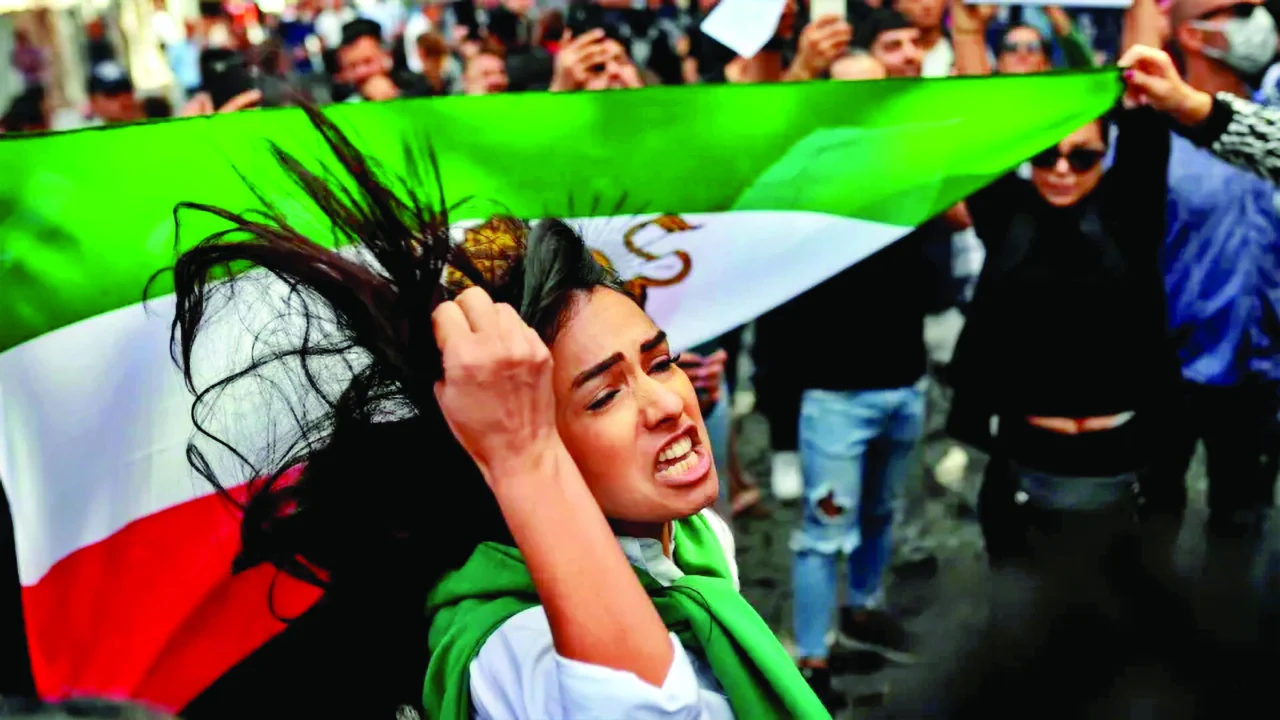
If Afghanistan represents the politics of prohibition, Iran represents the politics of compulsion. In September 2022, the death of Mahsa Amini, a 22-year-old Kurdish Iranian woman detained by the morality police for allegedly violating dress regulations, ignited one of the most significant protest movements in Iran’s modern history. The slogan that emerged from the protests was, “Woman, Life, Freedom” and it rapidly spread across the country. Within weeks, demonstrations had appeared in more than 160 cities. University campuses became centres of resistance. Women publicly removed or burned their hijabs, cut their hair, and marched alongside men demanding broader civil liberties.
Human rights organisations estimate that hundreds of protesters were killed during the crackdown with thousands of arrests. Students, artists, athletes, and professionals joined the demonstrations. Activists such as Masih Alinejad, whose digital campaign “My Stealthy Freedom” began in 2014, helped internationalise the movement. Years before the protests erupted, Iranian women had already built an online ecosystem of resistance, sharing images and stories challenging compulsory hijab laws. When protests finally erupted, the infrastructure of dissent was already in place. What began as outrage over a single death evolved into a deeper philosophical question; who owns the female body, the state or the individual? Iranian women answered unequivocally that autonomy cannot be legislated away.
Silent Transformation
While headlines often focus on conflict zones, a quieter revolution has been unfolding across the Muslim world ie the educational ascent of women. Over the past three decades, female educational attainment in many Muslim-majority countries has risen dramatically. According to the World Bank, in Indonesia and Malaysia, women now constitute more than half of university graduates. In several West Asian countries, female tertiary enrollment exceeds male enrollment. Literacy rates among women in Bangladesh, Jordan, and Morocco have risen steadily.
Education rarely produces instant political change. Its influence is slower but far more durable. A university degree alters economic opportunities, expands intellectual horizons, and reshapes expectations within families and communities. In other words, education quietly rewrites the architecture of power.
The Underrated Revolution
Despite educational gains, women’s labour force participation in many Muslim-majority societies remains below global averages. The World Economic Forum’s Global Gender Gap Report consistently identifies the West Asia and North Africa as regions with significant gender gaps in economic participation. But economists view this gap not simply as inequality but as untapped economic potential. Studies by institutions such as the World Bank and the McKinsey Global Institute estimate that closing gender employment gaps worldwide could add trillions of dollars to global GDP. Across the Muslim world, new patterns are already emerging such as women entrepreneurs are expanding startups in Turkey, Indonesia, and the United Arab Emirates. Microfinance initiatives in Bangladesh have enabled millions of women to launch small enterprises. Digital platforms have opened new pathways for women in e-commerce, education, and creative industries. When a woman earns, she negotiates differently within households, markets, and political structures. Economic agency is the most understated revolution of the modern era.
Beyond Simplistic Narratives
Perhaps the most profound change is conceptual. Muslim women increasingly reject the binary narratives imposed upon them. They refuse to be defined either as helpless victims of tradition or as exotic cultural symbols for global debate. Instead, they articulate a more sophisticated position such as wearing and removing the veil can be a conscious choice; faith and feminism need not be mutually exclusive. Scholars such as Leila Ahmed, author of Women and Gender in Islam, and theologians like Amina Wadud, who advocates gender-inclusive interpretations of Islamic scripture, have helped expand these debates. Their work challenges patriarchal interpretations while remaining rooted in Islamic intellectual traditions. This complexity unsettles the extremists. Religious hardliners claim doctrinal authority. Muslim women increasingly dismantle these claims through lived reality.
There is also a pragmatic dimension often overlooked in ideological debates: repression is economically irrational. The World Bank repeatedly demonstrates that societies with higher female workforce participation exhibit stronger long-term growth. Excluding women from education and employment reduces productivity, innovation, tax revenues and social stability. In short, suppressing half the population is not merely unjust, it is economically self-destructive.
A Generation That Refuses Silence
Demographics suggest that these transformations will accelerate. A large share of populations in Muslim-majority countries is under the age of thirty. Young women today are digitally literate, globally connected, and politically aware. They compare policies across nations. They debate interpretations of religion. They organise online and offline networks of solidarity. The twenty-first century Muslim woman does not simply inherit tradition. She interrogates it, which is often the beginning of reform.
Bharat: A Different Trajectory
While debates around Muslim women in many parts of the world are framed through the lens of restriction or resistance, Bharat presents a markedly different trajectory. The Bharatiya constitutional framework rooted in liberty, equality, and democratic pluralism has enabled Muslim women to gradually expand their presence in education, employment, public discourse, and civic participation. Contrary to the narrative that Muslim women are socially abandoned or politically marginalised, empirical data suggests a steady, if uneven, process of empowerment unfolding within Bharat’s democratic structure.
Bharat’s Muslim population is estimated at approximately 200–210 million people, constituting about 14–15 per cent of the national population. Within this demographic, Muslim women represent nearly 100 million citizens, making them one of the largest communities of women in the world operating within a democratic framework. Their transformation is increasingly visible in three critical domains: education, legal rights, and economic participation.
Closing Historical Gaps
Educational access has been one of the most decisive drivers of change among Bharatiya Muslim women. According to National Sample Survey (NSS) and Government educational statistics, female literacy among Muslim women has risen significantly over the past two decades. Muslim female literacy now stands at around 68–70 per cent, compared to roughly 50 per cent in the early 2000s. Enrollment of Muslim girls in primary education exceeds 90 per cent in many States. Participation in higher education has steadily increased, particularly in urban areas. Scholarship programmes, residential schooling initiatives, and increased awareness within communities have played a role in narrowing historical educational disparities. In many universities across Bharat, Muslim women are increasingly visible in fields such as Medicine, Law, Engineering, Social Sciences, and Public Administration. Education has quietly altered social expectations. Families that once prioritised early marriage increasingly prioritise professional stability for daughters.
Bharat’s legal framework has also undergone important reforms affecting Muslim women. One of the most significant developments in recent years was the abolition of instant triple talaq (talaq-e-biddat) through legislation enacted in 2019. Prior to this reform, the practice allowed a unilateral and instantaneous divorce, often leaving women with little legal protection. Its criminalisation created a stronger legal safeguard for marital rights and economic security. The reform sparked extensive debate across political and religious circles, but surveys and field reports suggest that a large section of Muslim women welcomed stronger legal protection within marriage. Legal awareness campaigns and community outreach programmes have also contributed to a gradual rise in women seeking legal remedies in cases involving divorce, maintenance, and domestic rights. Bharat’s constitutional structure, guaranteeing equality before law and access to courts, provides Muslim women with institutional avenues for justice that remain unavailable in many societies governed by rigid religious codes.
Participation: Slow but Expanding
Economic participation among Muslim women in Bharat remains lower than the national female average, but the trajectory is changing. Recent labour and employment surveys indicate: Muslim women’s workforce participation is estimated at around 15–18 per cent, depending on rural–urban variation. Urban self-employment and micro-enterprises have seen noticeable growth. Women-led small businesses are expanding in sectors such as textiles, handicrafts, food processing, online retail, and education services. Digital platforms have accelerated this shift. Home-based entrepreneurs increasingly use e-commerce and social media marketplaces to reach customers far beyond local communities. Microfinance institutions and self-help group networks have also created pathways for financial independence, particularly in rural regions. While structural barriers remain such as limited mobility in certain areas and socio-economic constraints, the long-term trend indicates gradual integration into Bharat’s expanding economic ecosystem. Another important transformation is occurring in the realm of public participation. Muslim women in Bharat are increasingly visible in civil society organisations, legal activism, local governance bodies, academic institutions, media and journalism. Participation in democratic processes from voting to public protest demonstrates that Muslim women are not passive subjects of policy but active participants in shaping national discourse. Voter turnout data in several States indicates that female Muslim voter participation often matches or exceeds male turnout, reflecting growing political awareness and engagement.
A Democratic Context
What distinguishes Bharat in the global context is its constitutional pluralism. Unlike societies where women’s rights debates occur under authoritarian regimes or theocratic structures, Bharatiya Muslim women operate within a democratic system that allows freedom of expression, legal recourse through courts, participation in elections, access to education and employment, and civil society activism. This democratic environment does not eliminate challenges. Social reform is rarely instantaneous but it creates institutional space for gradual transformation.