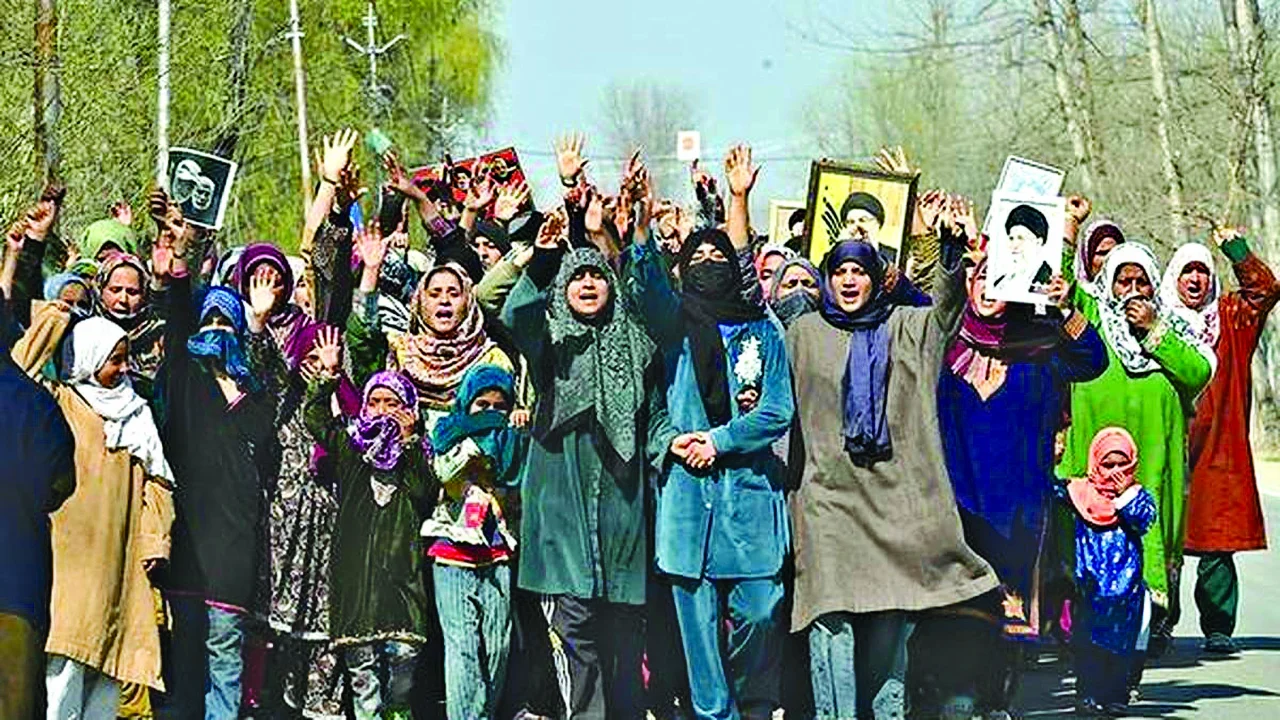
Large-scale mourning by Shia communities was palpable as massive gatherings and protests erupted across several countries following the reported death of Iran’s Supreme Leader Ayatollah Seyed Ali Hosseini Khamenei on February 28. The protesters took to the streets in grief and anger.
In Tehran and other Iranian cities, millions were reported to have mourned the leader of the Islamic Republic of Iran. Crowds filled streets in Isfahan and Zanjan, while chants of “Death to America” and “Death to Israel” echoed at the Hazrat Masoumeh Shrine in Qom. This was reported by Press TV.
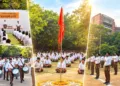
In a symbolic gesture signalling retaliation, a red “flag of revenge” was raised over the dome of the Jamkaran Mosque, a site of religious significance in Iran. The flag is traditionally associated with calls for justice and retribution in Shia symbolism.
In India, visuals showed people assembling outside the Iran Cultural House in Delhi, where a meeting was scheduled to mourn Khamenei’s death.
In Srinagar, members of the Shia community in Jammu and Kashmir on Sunday (March 1) staged a massive protest outside the United Nations Military Observer Group in India following the news of the death of Iranian Supreme Leader Ayatollah Ali Khamenei in the US and Israel-led strikes.
The protests saw participants carrying pictures of Khamenei and banners supporting Iran. Black flags, portraits of the Ayatollah, and traditional mourning chants (Nauha) were witnessed on the streets of Srinagar. Protests
were also held in Bandipore and Ramban.
The protests mourning the killing of Iranian leader Ali Hosseini Khamenei turned violent at several places in Kashmir after angry protesters resorted to heavy stone throwing on security forces when they were stopped from marching to the city centre, Lal Chowk. Police used tear gas shells and batons to disperse the crowd.
Protesters in Ramban raised slogans “Tum kitne Hosseini maroge…har ghar se Hosseini niklega (How many Hosseini will you kill, from every home, a Hosseini will rise.” They also burnt an effigy of US President Donald Trump during demonstrations.
In Bandipore, protesters carried portraits of the late cleric, expressing grief and condemnation over the incident. Earlier, similar protests were carried out in Budgam and Srinagar over the killing of Iran’s Supreme Leader.
Protesters raised anti-US and anti-Israel slogans, expressing solidarity with Iran and condemning the attack.
In a symbolic gesture signalling retaliation, a red “flag of revenge” was raised over the dome of the Jamkaran Mosque, a site of religious significance in Iran. The flag is traditionally associated with calls for justice and retribution in Shia symbolism.
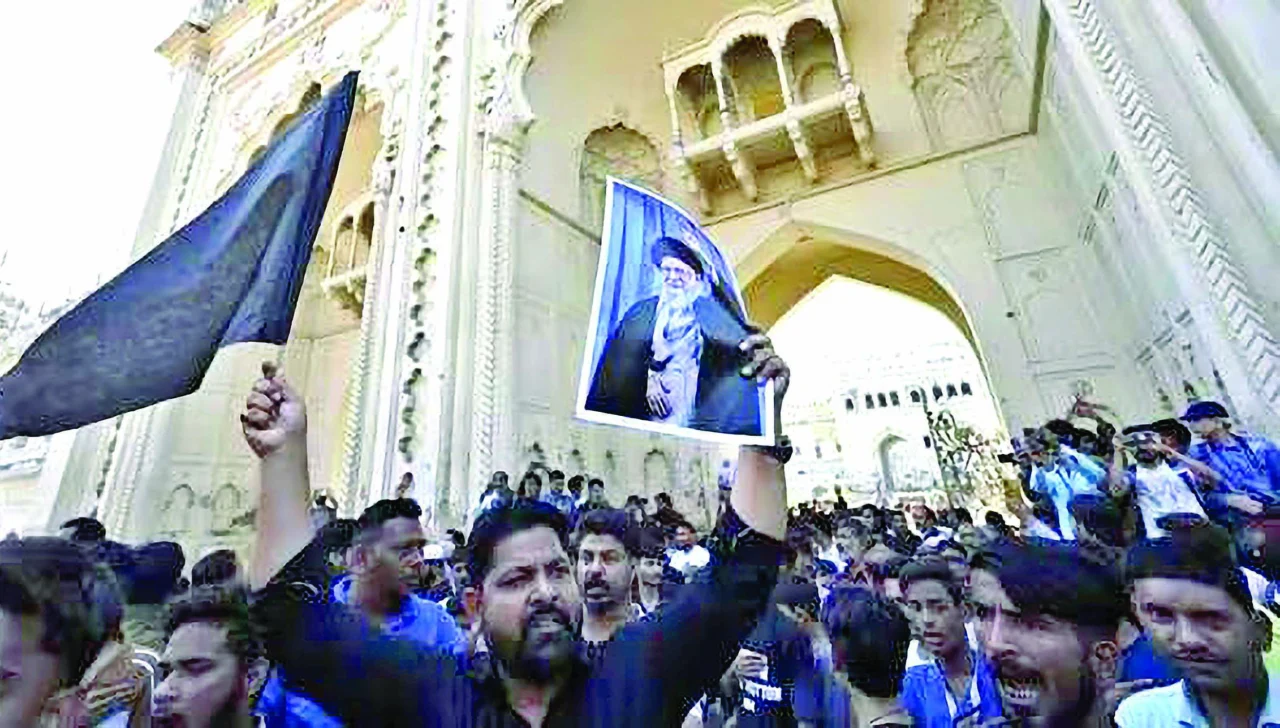
Not only in India, demonstrations were also reported across several countries following the death of Iran’s Supreme Leader, Ali Khamenei, with protests reflecting political, ideological and religious reactions to the development.
In Baghdad, hundreds gathered in the streets to mourn the Iranian leader, with demonstrators expressing solidarity with Iran and condemning the strikes that led to his death.
In Athens, more than 1,300 protesters, many affiliated with the Communist Party of Greece, marched through the city carrying banners and placards reading “Hands off Iran” and “Close Souda base”, referring to the US military facility in Crete.
In the United States, demonstrations took place in several cities on February 28. In Washington, D.C., hundreds gathered near the White House to protest against the strikes on Iran. In New York City, pro-Iran demonstrators assembled in Times Square. Similar protests were reported in multiple cities including Atlanta, Baltimore, Boston, Chicago, Denver, Los Angeles, Miami, Minneapolis, San Francisco and Philadelphia.
In Dhaka, a demonstration was organised by the Bangladesh Jamaat-e-Islami at the Baitul Mukarram National Mosque on March 1. Protesters condemned Khamenei’s death and demanded intervention from the Organisation of Islamic Cooperation. In Kano, Shia Muslim demonstrators affiliated with the Islamic Movement in Nigeria gathered to mourn Khamenei. Participants were seen waving Iranian and Palestinian flags while dragging US and Israeli flags on the ground during the demonstration.
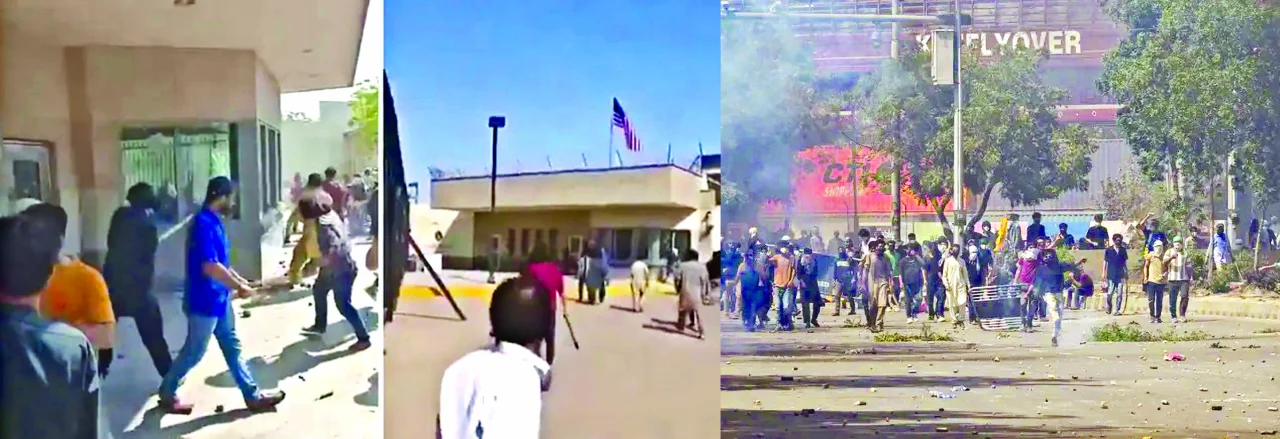
Demonstrations against the strikes were also reported in Izmir, Turkey while in London, anti-strike protests took place on February 28, with demonstrators calling for de-escalation and an end to military action against Iran. Meanwhile, protests in Pakistan turned violent in some areas. Thousands reportedly gathered in Skardu, where the United Nations office was set on fire. In Karachi, angry demonstrators stormed the US consulate, leading to clashes with Pakistani security forces. Reports indicated that more than 10 people were killed after soldiers opened fire on protesters outside the consulate.
Pakistani forces were seen confronting demonstrators amid heightened tensions following what protesters described as US and Israeli aggression.