In a development highlighting the legal pathway created under the Citizenship (Amendment) Act, authorities have granted Indian citizenship to Deepali Das (60), a resident of Dholai in Cachar district of Assam.
Das had earlier been declared a foreigner by a Foreigners’ Tribunal, following an investigation into her nationality. However, after applying under the provisions of the CAA, she has now been officially recognised as an Indian citizen.
Officials confirmed that the decision came after authorities carefully scrutinised documents submitted during the verification process.
Deepali Das’s case dates back to May 5, 2019, when she was arrested on suspicion of being an illegal immigrant.
The arrest followed an investigation report submitted by police officer Ajmal Hossain Laskar, which led to proceedings before a Foreigners’ Tribunal.
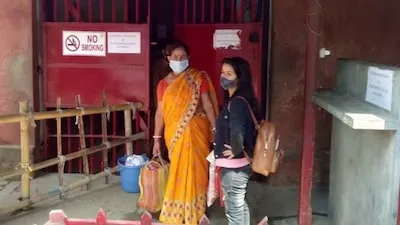
After the tribunal declared her a foreigner, Das was lodged in a detention camp located inside Silchar Central Jail in southern Assam.
She remained in the detention facility for nearly two years.
In 2021, Das was released after the Supreme Court of India directed authorities to grant bail to detainees who had spent two years in detention centres.
The measure was introduced during the COVID-19 pandemic as part of broader steps to reduce overcrowding in prisons and detention facilities.
Following her release, Das continued to pursue legal avenues to secure citizenship.
In February 2025, Deepali Das applied for Indian citizenship under the Citizenship (Amendment) Act.
Her case was handled by Dharmananda Deb, a Silchar-based advocate, while social activist Kamal Chakraborty assisted her during the legal process.
According to advocate Deb, Das had migrated to India in 1988 after facing religious persecution in Bangladesh.
Under the CAA, individuals belonging to certain religious minority communities from neighbouring countries—who entered India before December 31, 2014—are eligible to apply for Indian citizenship.
During the verification process, documents were presented establishing that Das was originally from Sylhet in Bangladesh and had entered India well before the stipulated cut-off date.
Authorities also verified evidence confirming her identity as a member of a persecuted Hindu minority community.
After examining the submitted documents, authorities approved her application.
The official order recognises Deepali Das as an Indian citizen with effect from February 8, 1988, effectively regularising her long stay in the country.
The decision also validates the legal status of all her existing documents, including her voter identity card and Aadhaar card, confirming them as legitimate.
Officials confirmed that similar cases have emerged in Assam under the CAA framework.
Earlier, a 40-year-old woman from Sribhumi district was also granted Indian citizenship after entering India from Bangladesh in 2007.
She had travelled to Silchar to accompany a relative seeking treatment at Silchar Medical College and Hospital. During her stay, she met and married a man from the district and later settled permanently in Assam.
Initially, her citizenship application was reportedly rejected due to administrative confusion linked to the delimitation exercise ahead of the 2024 Indian general election.
She was eventually granted citizenship under Section 5(1)(c) read with Section 6B of the Citizenship Act, 1955, which allows a person married to an Indian citizen to register as an Indian citizen after residing in India for seven years.
Officials also confirmed that a 61-year-old man from Cachar district has received Indian citizenship under the CAA provisions.
The development comes amid continuing efforts by the Government of Assam to address illegal immigration in the state.
According to official data, more than 32,000 foreigners have been detected in Assam since 2021, while 1,416 individuals have been deported.
The state continues to follow its policy of “detect, deport and delete” to deal with illegal infiltration.
Chief Minister Himanta Biswa Sarma has repeatedly emphasised a zero-tolerance policy against illegal immigration from Bangladesh.
Recent operations conducted in late 2025 and early 2026 resulted in the apprehension and pushback of several illegal migrants.
Authorities have been using legal tools such as the Immigrants (Expulsion from Assam) Act, 1950 and the National Register of Citizens (NRC) framework to identify and remove declared foreigners from the state.