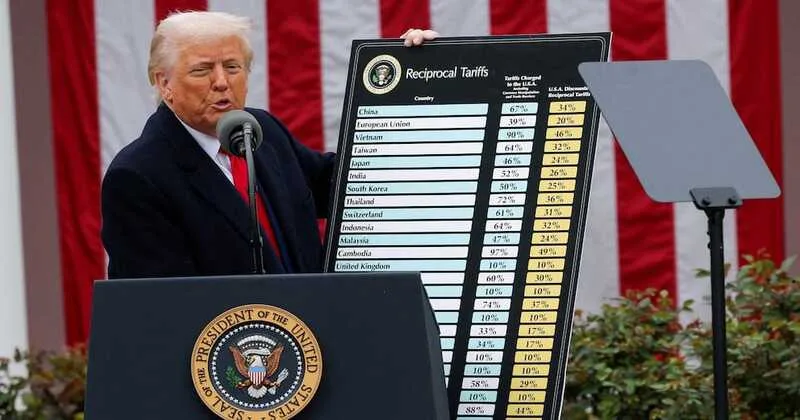
WASHINGTON: The United States Customs and Border Protection (CBP) is preparing to establish a system to refund tariffs imposed under US President Donald Trump within 45 days, following a Supreme Court ruling that declared the duties illegal. In a court filing, CBP official Brandon Lord stated that the agency is developing a process that will allow importers to recover payments made under the now-invalid tariffs.
The declaration was submitted just before government lawyers met with a federal trade judge to work out a broad settlement framework aimed at returning approximately $166 billion in tariff payments to around 330,000 importers.
“This new process will require minimal submission from importers,” Lord wrote in his declaration filed with the US Court of International Trade. Government lawyers also began discussions with Judge Richard Eaton, who is overseeing nearly 2,000 lawsuits filed by importers seeking repayment of the tariffs. Major companies, including FedEx and L’Oréal, are among those pursuing legal claims to recover the duties.
After concluding the meeting with government lawyers on Friday, Judge Eaton stated in a court filing that he was amending an earlier order that had required “immediate compliance.” The change appeared to provide CBP with additional time to establish the new refund system. Eaton noted that he revised his order after reviewing the “declaration of Brandon Lord.”
How the refund system will work
Under the proposed system, importers would submit a declaration through CBP’s Automated Commercial Environment (ACE) platform detailing the tariff payments they made under the invalidated policy. The agency would then verify the claims before issuing refunds along with applicable interest.
Each importer would receive a single payment from the US Treasury Department, regardless of how many individual shipments were involved. The system is intended to allow companies to recover the tariffs without the need to pursue individual lawsuits.
According to Lord’s declaration, the customs agency expects importers to submit a declaration through the ACE system outlining the tariff payments they made. After verification, refunds would be processed and issued with interest.
Importers would not be required to initiate legal proceedings to obtain the repayments, which the government hopes will streamline the process and reduce the burden on courts.
Logistical challenges and industry response
However, Lord also acknowledged that the agency cannot immediately comply with Judge Eaton’s earlier directive to automatically return the funds using existing systems. “Its existing administrative procedures and technology are not well-suited to a task of this scale,” he stated in the filing.
Lord explained that processing the refunds manually through the current system would require more than four million hours of labour, as each shipment’s paperwork would need to be reviewed individually. The declaration also revealed that relatively few importers have registered for CBP’s electronic refund system so far. Of the roughly 330,000 importers affected by the tariffs, only 21,423 had enrolled in the system as of early February.
Business groups have largely welcomed the government’s proposal to implement a 45-day refund mechanism. The US Chamber of Commerce, the country’s largest business lobbying organisation, described the plan as a practical step toward resolving the issue.
Neil Bradley, the Chamber’s chief policy officer, called the proposal “a constructive and practical approach” for administering the repayments.
“Most importantly, this proposal would spare the hundreds of thousands of small businesses who are owed refunds from having to litigate to obtain them,” Bradley said in a statement, while also encouraging further refinements to improve the process.
If implemented successfully, the refund programme would represent one of the largest tariff repayment efforts in US trade history, potentially returning billions of dollars to businesses affected by the now-invalid duties.