Iran’s widening missile and drone campaign across the Gulf and neighbouring regions has taken a striking turn, with attacks now affecting countries that themselves have significant Shia populations. On Thursday, an Iranian missile strike triggered a fire at Bahrain’s state-run oil refinery, while Azerbaijan accused Tehran of carrying out a drone strike near its territory. The incidents underline how the expanding conflict is reshaping alliances and tensions across the region.
Iranian strike ignites fire at Bahrain refinery
An Iranian missile strike ignited a fire at Bahrain’s state-operated oil refinery on Thursday, though authorities said the blaze was quickly brought under control. The Gulf nation’s communications department confirmed that the incident occurred at a unit of the refinery operated by Bahrain’s national petroleum company, Bapco Energies. The refinery is located on the island of Sitra along Bahrain’s eastern shoreline, south of the capital Manama. According to the government’s National Communication Centre, emergency teams responded rapidly and contained the fire before it could spread further. “A fire broke out at a unit of the Bapco Energies refinery following an Iranian missile strike. The fire has been fully contained,” the centre said in an official statement.
Authorities said there were no reported injuries and that refinery operations continued despite the incident. Officials have begun assessing the extent of the damage caused by the strike.
Earlier in the day, Bahrain’s Interior Ministry confirmed that a facility in the area had been hit, while reports from international media showed plumes of smoke rising from the refinery complex. Emergency sirens were heard across several parts of the country during the afternoon as defence systems were activated. Bahrain’s Defence Ministry later stated that its armed forces had intercepted a large number of Iranian projectiles since the conflict erupted earlier in the week. According to the ministry, Bahrain’s air defence systems have shot down 75 Iranian ballistic missiles and 124 unmanned aerial vehicles since hostilities began on Saturday.
The attack carries particular significance because Bahrain itself has a large Shia population. Shia Muslims are estimated to constitute roughly 45–49 percent of Bahrain’s population, making the Iranian strike politically sensitive in the region.
The escalation follows a dramatic expansion of the conflict after the United States and Israel launched large-scale strikes inside Iran that killed the country’s supreme leader last weekend. Tehran has since retaliated with missile and drone attacks across the Gulf, targeting both American military assets and strategic energy infrastructure.
Azerbaijan accuses Iran of drone strike
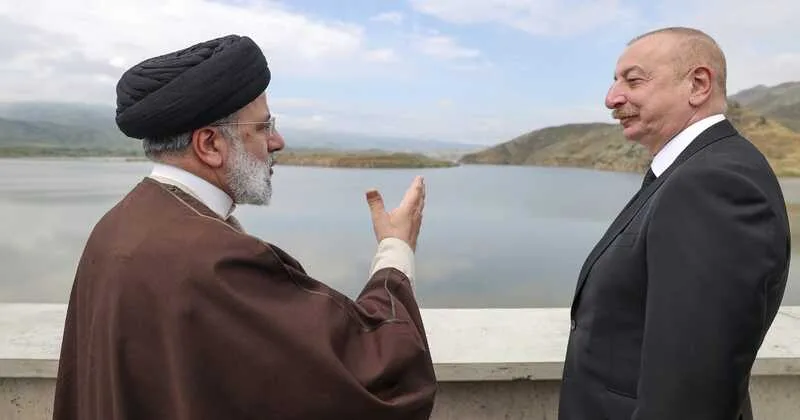
The conflict also spread northward on Thursday when Azerbaijan accused Iran of carrying out a drone strike near its territory. Azerbaijani President Ilham Aliyev described the incident as “a groundless act of terror and aggression” after a drone crashed near Nakhchivan airport, an Azerbaijani enclave bordering Iran. Tehran, however, dismissed the accusation and denied involvement in the incident. Azerbaijan’s reaction is notable given the country’s own demographic composition. Despite its secular political system, Azerbaijan has one of the largest Shia populations in the Muslim world, with Shia Muslims estimated to make up between 55 and 65 percent of the population.
The broader conflict has now drawn in at least 14 countries across the Middle East and surrounding regions. Military actions are unfolding simultaneously on several fronts, intensifying fears of a wider regional war. Earlier this week, the United States said one of its submarines had sunk an Iranian warship in waters near Sri Lanka. At the same time, Israel issued a mass evacuation warning for southern districts of Beirut as fighting escalated with Hezbollah, the Iran-aligned militant group based in Lebanon.
United Nations observers reported ground engagements in southern Lebanon as additional Israeli battalions crossed the border. Meanwhile, U.S. and Israeli forces have continued extensive aerial strikes across Iran, targeting military bases, leadership structures and nuclear facilities.
The offensive began after coordinated American and Israeli attacks that killed Iranian Supreme Leader Ayatollah Ali Khamenei. Since then, both governments have signalled that the campaign could continue until broader strategic objectives are achieved.
US President Donald Trump told Axios on Thursday that Washington intends to play a role in determining Iran’s next supreme leader. He stated that Mojtaba Khamenei, widely seen as a possible successor to his father, would be “an unacceptable candidate.”
The White House said the military campaign would continue until all objectives related to regional security and the dismantling of Iran’s nuclear programme are fully accomplished, suggesting the conflict may continue for an extended period.