The Siege of Cinema: Judicial Authority vs Street Hegemony in Kerala
June 28, 2026
  • Read Ecopy
  • Circulation
  • Advertise
  • Careers
  • About Us
  • Contact Us
Android AppiPhone AppArattai
Organiser
  • ‌
  • Bharat
    • Assam
    • Bihar
    • Chhattisgarh
    • Jharkhand
    • Maharashtra
    • View All States
  • World
    • Asia
    • Europe
    • North America
    • South America
    • Africa
    • Australia
  • Editorial
  • International
  • Opinion
  • RSS @ 100
  • More
    • Op Sindoor
    • Analysis
    • Sports
    • Defence
    • Politics
    • Business
    • Economy
    • Culture
    • Special Report
    • Sci & Tech
    • Entertainment
    • G20
    • Azadi Ka Amrit Mahotsav
    • Vocal4Local
    • Web Stories
    • Education
    • Employment
    • Books
    • Interviews
    • Travel
    • Law
    • Health
    • Obituary
  • Subscribe
    • Subscribe Print Edition
    • Subscribe Ecopy
    • Read Ecopy
  • ‌
  • Bharat
    • Assam
    • Bihar
    • Chhattisgarh
    • Jharkhand
    • Maharashtra
    • View All States
  • World
    • Asia
    • Europe
    • North America
    • South America
    • Africa
    • Australia
  • Editorial
  • International
  • Opinion
  • RSS @ 100
  • More
    • Op Sindoor
    • Analysis
    • Sports
    • Defence
    • Politics
    • Business
    • Economy
    • Culture
    • Special Report
    • Sci & Tech
    • Entertainment
    • G20
    • Azadi Ka Amrit Mahotsav
    • Vocal4Local
    • Web Stories
    • Education
    • Employment
    • Books
    • Interviews
    • Travel
    • Law
    • Health
    • Obituary
  • Subscribe
    • Subscribe Print Edition
    • Subscribe Ecopy
    • Read Ecopy
Organiser
  • Home
  • Bharat
  • World
  • Operation Sindoor
  • Editorial
  • Analysis
  • Opinion
  • Culture
  • Defence
  • International Edition
  • RSS @ 100
  • Magazine
  • Read Ecopy
Home Politics

The Siege of Cinema: Judicial Authority vs Street Hegemony in Kerala

The court’s logic was clear: once a film has undergone the rigorous scrutiny of a national censor board and received a certificate, the state government has a constitutional obligation to protect its screening. To allow a ban based on the threat of violence is to reward the "heckler’s veto"—a concept where the loudest and most aggressive voices dictate what the rest of society is allowed to see.

Sudhir Kumar E SSudhir Kumar E S
Mar 4, 2026, 05:00 pm IST
in Politics, Bharat, Analysis, Kerala
Follow on Google News
The Siege of Cinema: Judicial Authority vs. Street Hegemony in Kerala

The Siege of Cinema: Judicial Authority vs. Street Hegemony in Kerala

FacebookTwitterWhatsAppTelegramEmail

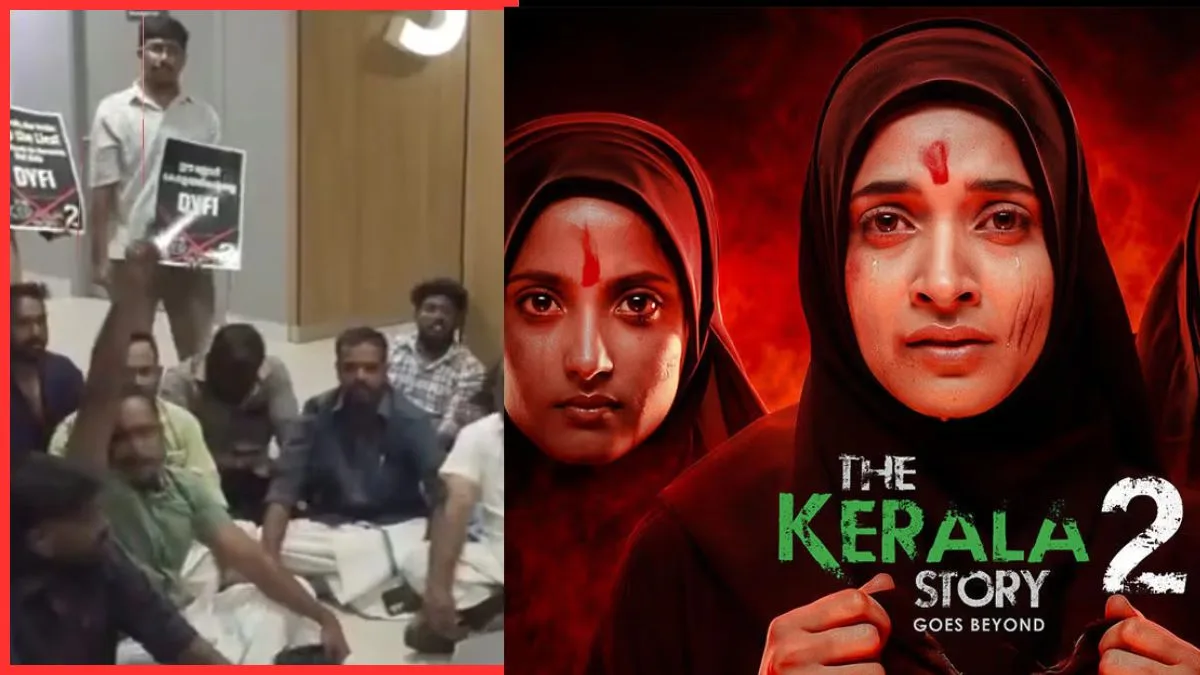
The unfolding saga surrounding the release of The Kerala Story 2 has transitioned from a cinematic debut into a profound constitutional crisis. What began as a legal debate over the limits of creative expression has devolved into a physical confrontation on the streets of Kerala, raising uncomfortable questions about the state’s commitment to the rule of law. In a democracy, the theater is meant to be a space of cultural exchange; currently, in Kerala, it has become a battlefield where the “green light” of the judiciary is being dimmed by the red flags of political intimidation.

The Judicial U-Turn: A Victory for Procedure

The legal journey of The Kerala Story 2 was contentious from the start. Initially, a single bench of the Kerala High Court moved to ban the screening, echoing concerns from the state administration regarding communal sensitivities. However, the subsequent reversal by a higher bench was a landmark moment for the Central Board of Film Certification (CBFC).
The court’s logic was clear: once a film has undergone the rigorous scrutiny of a national censor board and received a certificate, the state government has a constitutional obligation to protect its screening. To allow a ban based on the threat of violence is to reward the “heckler’s veto”—a concept where the loudest and most aggressive voices dictate what the rest of society is allowed to see.

The Breakdown of Law and Order

Despite the High Court’s clear directive to provide police protection for theaters, the reality on the ground has been marked by what many describe as “leftist-jihadi fascism.” In major hubs like Thiruvananthapuram, Kozhikode, and Palakkad, the presence of the police has been described by theatergoers as “ornamental.”
Witness accounts suggest a chilling pattern of disruption:

  • The Mid-Screening Siege: In several instances, groups belonging to the DYFI (Democratic Youth Federation of India) and other radical cadres entered theaters while the film was playing. They didn’t just protest outside; they stormed the halls, threatened audiences—including women and families—and forced theater managers to shut down the projectors.
  • Post-Vandalism and Intimidation: The visual landscape of Kerala’s cities is currently marred by the shredded remains of the film’s posters. In many districts, distributors have been “quietly advised” by local political leaders that screening the film would result in “irreparable damage” to their property, a euphemism for political violence.

The Silent Police Force: The most harrowing aspect for the common citizen is the perceived complicity of the law enforcement machinery. When the High Court orders protection, it implies proactive security. Instead, reports indicate that police often stand by as mobs disrupt the peace, only intervening to “escort the audience out for their own safety”—thereby achieving the mob’s goal of stopping the film.
The “Commissar” Culture and Selective Freedom

The rhetoric used by the ruling dispensation and its allied organizations highlights a deep-seated hypocrisy. The very groups that scream “freedom of expression” when it concerns films that criticize national identity or religious traditions of the majority are the first to demand bans and employ muscle power when a film challenges their own political narrative.

By labeling The Kerala Story 2 as “anti-national” or “hate speech,” the state apparatus attempts to moralize what is essentially an act of illegal censorship. The term “Commissar-Jihadi-Kongi” alliance, used by local activists, reflects a growing sentiment that different political factions are converging to suppress any narrative that exposes the underbelly of radicalization in the state.

Economic Sabotage and the Right to Compensation

The theater owners find themselves in a pincer movement. On one hand, they have taken money from the public for tickets; on the other, they are facing physical threats to their infrastructure. However, the decision to stop a film halfway after accepting payment is a breach of contract and a violation of consumer rights.

There is a growing demand for:

  • Direct Compensation: Theater owners who buckle under political pressure without putting up a legal or security fight should be held liable to refund audiences, with additional compensation for the harassment faced.
  • Accountability for Negligence: Legal experts are calling for Contempt of Court petitions against police officials who failed to implement the High Court’s protection order. If the police cannot secure a single building (the theater) against a known group of protesters, it signals a deliberate collapse of the administrative will.

The National Implication: A Warning to the Republic

What is happening in Kerala is not just a regional skirmish; it is a blueprint for how constitutional rights can be bypassed through “street-level vetoes.” If the state government can effectively bypass a High Court order by allowing its cadre to create a security vacuum, then no judicial ruling in India is safe from political nullification.
The propaganda against the film at a national level has been intense, but the counter-response must be equally robust. Documentation of these attacks, videos of the goons entering theaters, and evidence of police inaction must be presented to the Supreme Court and the Ministry of Home Affairs.

Conclusion: The Future of Expression

The “real” Kerala story is no longer just about the content of the film; it is about the state’s inability (or refusal) to protect the democratic right to dissent and the right to consume art. If the “commissars” are allowed to win this round through intimidation, they lose the right to complain when the pendulum swings back. True freedom of expression is not a one-way street—it must protect the speech we hate just as much as the speech we love.
Unless the silent majority and the judicial system take a stand against this “Left-Jihadi” nexus, the theaters of Kerala will remain dark, not for lack of electricity, but for lack of courage.

Topics: DYFIThe Kerala Story 2Left Protest against Kerala Story
ShareTweetSendShareSend
✮ Subscribe Organiser YouTube Channel. ✮
✮ Join Organiser's WhatsApp channel for Nationalist views beyond the news. ✮
Previous News

Israel Air Force says “extensive” wave of strikes against Iranian regime targets in Tehran

Next News

BJP questions ‘empty treasury’ claim, demands white paper as CM Revanth Reddy ready to give Rs 1000 Cr to Sonia Gandhi

Related News

Poster of the movie The Kerala Story 2

Threats to women volunteers after screening of The Kerala Story 2 show in Puttur, probe sought

The Kerala Story 2: When Courts Halt a Film, But Statistics Refuse to Die

The Kerala Story 2: When Courts Halt a Film, But Statistics Refuse to Die!

Kerala High Court stays release of “The Kerala Story 2”, a film based on true events; orders CBFC re-examination

Poster of the film 'The Kerala Story 2'

The Kerala Story 2 faces legal setback as Kerala High Court halts release rights transfer

Tara Shahdeo at the event in Delhi organised by the makers of Kerala Story 2: Goes Beyond

“My pain must become awareness”: Tara Shahdeo opens up against Love Jihad as film ‘Kerala Story-2’ nears release

Poster of the film 'The Kerala Story 2'

The Kerala Story 2 – Goes beyond faces legal hurdle as Kerala HC issues notice to producers

Load More

Latest News

One Nation, Many Paths: The message of RSS Ekatmata Stotra

Ancient Wisdom, Modern Resolve: How Jal Sanchay Jan Bhagidari is preparing Bharat for a weak monsoon

A representative image

How MoSPI and GRAAM plan to use young researchers to improve policy making and governance

For the first time, NCERT adds Emergency to class 9 curriculum, highlights suspension of rights and democratic struggles

NCERT refutes claims of dropping preamble from class 9 textbook, says reports are misleading

Maharashtra CM Devendra Fadnavis

Maharashtra TET 2026 Paper Leak: CM Fadnavis orders SIT probe after exam postponed; Multi-state hunt launched

Amit Shah Launches Bharat Taxi In Gujarat, Positions Cooperative Model As Alternative to private players

Bharat Taxi launched in Gujarat: What is India’s cooperative ride-hailing platform & How it challenges private players?

West Bengal Govt set to table UCC Bill on Monday

West Bengal UCC Bill Explained: What Uniform Civil Code covers, Why Govt is bringing it, What it means for state

Prime Minister Narendra Modi: A sincere effort to translate Gandhi’s philosophy of antyodaya into practice

Chief Minister Mohan Charan Majhi at the launch of the Udyami Odisha MSME Programme and the Odisha Women Entrepreneurship Platform (WEP).

Odisha: CM Majhi unveils major MSME drive, launches women entrepreneurship platform and new industrial clusters

'Respect Must Be Reciprocal': Masih Alinejad, Kasparov Attack Iran's FIFA Pride Flag Demand

Iranian Activist Masih Alinejad & Garry Kasparov urge FIFA,” Do not bend to radical Islamist demands on pride symbols”

Load More
  • Privacy
  • Terms
  • Cookie Policy
  • Refund and Cancellation
  • Delivery and Shipping

© Bharat Prakashan (Delhi) Limited.
Tech-enabled by Ananthapuri Technologies

  • Home
  • Search Organiser
  • Bharat
    • Assam
    • Bihar
    • Chhattisgarh
    • Jharkhand
    • Maharashtra
    • View All States
  • World
    • Asia
    • Africa
    • North America
    • South America
    • Europe
    • Australia
  • Editorial
  • Operation Sindoor
  • Opinion
  • Analysis
  • Defence
  • Culture
  • Sports
  • Business
  • RSS @ 100
  • Entertainment
  • More ..
    • Sci & Tech
    • Vocal4Local
    • Special Report
    • Education
    • Employment
    • Books
    • Interviews
    • Travel
    • Health
    • Politics
    • Law
    • Economy
    • Obituary
  • Subscribe Magazine
  • Read Ecopy
  • Advertise
  • Circulation
  • Careers
  • About Us
  • Contact Us
  • Policies & Terms
    • Privacy Policy
    • Cookie Policy
    • Refund and Cancellation
    • Terms of Use

© Bharat Prakashan (Delhi) Limited.
Tech-enabled by Ananthapuri Technologies