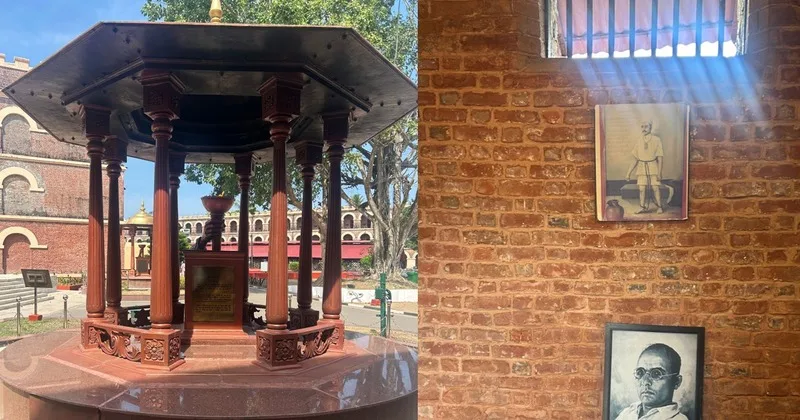
A visit to Cellular Jail at Sri Vijaya Puram(infamously known as Kala Pani) transports you into the dungeon of tyrannical British colonial occupation of Bhārat. Constructed on the recommendations of the Lyall-Lethbridge commission and made from red bricks produced in Minnie Bay and Dundas Point brick kilns, the structure now stands as a monument of national importance. It is a national memorial that houses collective consciousness of our freedom fighters who were imprisoned for their nationalistic fervour and struggle for freedom. The Bhāratiya tricolour now proudly flutters where the Union Jack was once hoisted.
As I entered the three-storey prison, I was drawn to the museum instantaneously- a treasure trove of testimonials and historical records that exposed inhumane atrocities inflicted on the inmates in this colossal edifice. Tears rolled down as I kept reading and was completely consumed by the horrific tales. Pre-independence, Kala Pani became resonant with the penal settlement of death as it was a journey from one could never return. Considered a death warrant, this dreaded deportation to Kala Pani meant a life of extreme tribulations. If in the month of February, one found the heat unbearable, it’s painful to imagine freedom fighters toiling in the scorching heat of peak summers. On top of it, they were subjected to merciless severity as per jail manual of 1874 for breaking prison rules.
As we moved further, the arduous struggle of revolutionaries became clearer. Names and pictures of political prisoners adorned the walls. What became more apparent was the horrendous punishments. Prisoners were expected to meet the daily quota of thirty pounds of coconut oil and ten pounds of mustard oil. Flogging and shackling were common practices. Dissent was crushed through solitary confinement. As I wondered what motivated them to go on, I came across Veer Savarkar’s wisdom on “Swadharma” and “Swadesh”. The conviction to lay down one’s life for freedom also shook the brutal core of David Barry- the dreaded jailor. In his autobiography, Savarkar mentioned “Of all the hardships of prison-life in the Cellular Jail of the Andamans-gruelling work, scanty food and clothing, occasional thrashing and others-none was so annoying and disgusting as its provision for urinals and lavatories. The prison had to control the demands of nature for hours together for want of this arrangement in the cell itself”.
Not only were the cells ill-equipped and unhygienic as described above, they were witnesses to the ugliest side of colonialism. The British, when they sermonise the world today on human rights, must remember this tainted chapter from their own historical deeds. The martyrdom of Indu Bhushan Roy on 29th April 1912 was never investigated. Other deaths were also left to the oblivion. As I stood before the neck ring and uniform of political prisoners, a wave of despondency moved me. Instead of collectively criticising the colonial enterprise in unambiguous terms, even today we remain divided by ideologies.
Climbing up the flight of stairs, in the far end of the storey was Veer Savarkar’s cell. He was an inmate from 1911-1921 at the cellular jail. A portrait in prison uniform, a picture and a pot along with ragged clothing were kept in the prison as souvenirs of his long-drawn struggle against the foreign rule. A dark and dingy confinement with poor ventilation did not enfeeble his determination. At Swatantrya Jyot (Flame of Freedom), his eternal words are engraved: “We have not taken this vow of patriotism blindly. In the radiant light of history, we have examined this path. We have taken a vow — of self-sacrifice”.
The pilgrimage to Cellular Jail would have been incomplete without examining the gallery dedicated to Netaji Subhash Chandra Bose. His visit to the cellular jail, his last available photograph and his resolute words- all reiterating the sacred oath of the revolutionaries and reminding the future generations of the sacredness of the space.