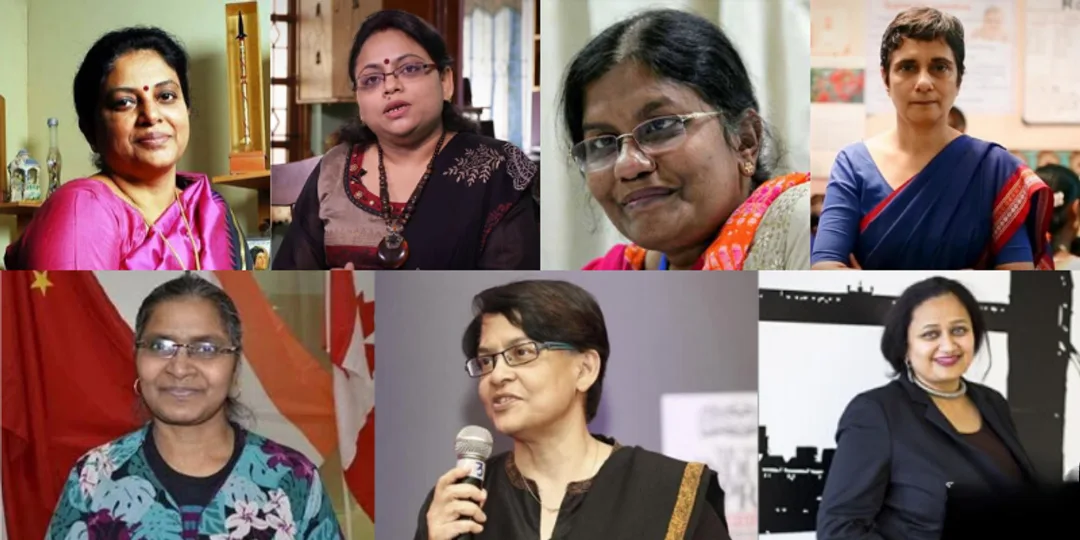
Every year, National Science Day on February 28 serves as more than just a tribute to the discovery of the ‘Raman Effect’ by Sir C.V. Raman in 1928; it stands as a testament to modern India’s resolve, where science serves as the bedrock of the nation’s destiny. As the country marches towards the ambitious milestone of ‘Viksit Bharat @2047,’ it is increasingly evident that our global identity will be forged not through material resources alone, but through the formidable power of knowledge. However, this vision of a knowledge-based superpower remains fundamentally incomplete unless the nation’s women scientists transition from being participants to becoming the primary charioteers of this revolution.
The narrative of Indian science is shifting. Women are no longer just working within the laboratory; they are leading the missions that define our national pride. In the rigorous corridors of space exploration, “Rocket Women” such as Ritu Karidhal and Muthayya Vanitha have successfully navigated the complexities of the Chandrayaan missions, proving India’s technical excellence to a global audience. Similarly, in the realm of strategic defense, “Missile Woman” Dr. Tessy Thomas has been instrumental in the Agni missile programs, ensuring India’s strategic self-reliance.
This leadership extends into the high-stakes world of biotechnology and entrepreneurship. The legacy of Kiran Mazumdar-Shaw stands as a global benchmark; through Biocon, she did more than to put India on the international biopharmaceutical map. She has demonstrated that scientific innovation can be a powerful engine for economic sustainability. This spirit of innovation was further echoed during recent global health crises, where leaders like Dr. Priya Abraham and Dr. Gagandeep Kang anchored indigenous research and vaccine development, cementing India’s reputation as the “Pharmacy of the World”.
Statistically, the foundation is strong. Data from the All India Survey on Higher Education shows that women’s enrollment in STEM (Science, Technology, Engineering, and Mathematics) courses in India is approximately 43 per cent, a figure that remarkably outpaces several developed nations, including the US and the UK. Yet, a critical hurdle remains: the “Leaky Pipeline”. While enrollment is high, women’s representation in active Research and Development (R&D) and senior leadership hovers around 20 per cent. Addressing this gap requires more than just inspiration; it requires the sustained institutional support provided by government initiatives like KIRAN, Vigyan Jyoti and GATI, which are designed to ensure career continuity and break the glass ceiling in research.
The necessity of this shift is as much economic as it is social. A knowledge-based society thrives when problems are solved through data, logic and diverse perspectives. Increasing female participation in science brings a unique human and social lens to innovation. According to World Bank estimates, achieving gender parity in the workforce and innovation sectors could potentially boost India’s GDP by up to 27 per cent. Empowering women scientists, therefore, is an economic and strategic imperative for any nation aspiring to lead the 21st century.
Ultimately, the dream of a developed India will reach its fruition only when the nation’s daughters are recognized as Lead Investigators and Chief Inventors. When the torch of science is firmly held by female leadership, India’s progress will become invincible, inclusive and truly global. Scientific institutions, both public and private, must commit to an ecosystem where talent is nurtured without bias. For India to reclaim its status as a Vishwaguru, Nari Shakti must not just follow the path of discovery, it must lead it.