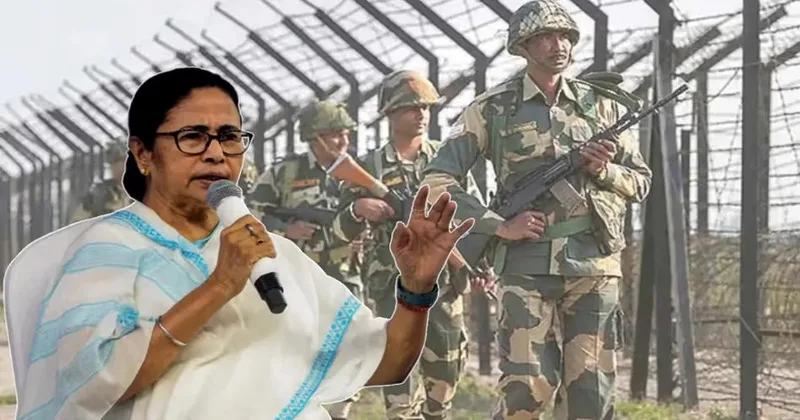
Infiltration of illegal immigrants across West Bengal–Bangladesh border was first red flagged by Mamata Banerjee in 2005 in the Indian Parliament. However, post 2011, she herself too engaged in pro-infiltration politics and is at loggerheads at present with the Government of India in order for letting the West Bengal–Bangladesh border remain perforated in around 450 kms length.
Infiltration into West Bengal started tentatively from end-1960s in West Bengal. This piece enlists the Muslim-represented assemblies of the State & attempts to depict the evolution of all such assembly segments viewing critically the role of Congress, CPM & the TMC in handing many assemblies of West Bengal over to Muslim representatives, endorsing cross-border infiltration paving the path of Islamic politics in the concerned areas while the State of West Bengal was historically & electorally created for the Hindus of Bengal. Not to mention the ruling dispensation and the power corridor at New Delhi too, before the NDA’s term from 2014, never red flagged such strategic infiltration-politics by the West Bengal State parties.
Amongst the 43 on-border assembly constituencies of West Bengal, 12 have Muslim MLAs at present such as Chopra, Islampur, Goalpokhar, Kumarganj, Samserganj, Suti, Raghunathganj, Lalgola, Bhagabangola, Raninagar, Jalangi and Chapra. Apart from these 12, West Bengal has 32 more Muslim-represented assemblies making it a total of 44 seats which would be categorized into segments below from historical perspectives.
Before going into such categorization, it seems indispensable to mention that West Bengal faced an atypical post-partition phenomenon (unlike Punjab) which may be described as ‘The Return of Displaced Muslims’, henceforth referred to as RoDM, that happened in West Bengal as then Prime Minister of India Jawaharlal Nehru halted the process of population exchange with East Pakistan in April 1950 by signing the infamous agreement with then Prime Minister of Pakistan Liyaqat Ali. Muslims of West Bengal went away to Pakistan, but gradually returned back after Nehru-Liyaqat Agreement (Delhi Pact) was signed. Such scope of reverse-migration of Muslims created the opportunity of infiltration for East Pakistani Muslims as reverse-migration camouflaged illegal immigration, thus implanting the root of the infiltration industry through West Bengal, Assam, Tripura, Mizoram. Nehru-Liyaqat Pact may be logically marked as the root cause thereof.
On the other hand, the displaced Hindus of East Pakistan did not get their properties back on return to East Pakistan as Pakistan didn’t hesitate to violate the Agreement. Many assemblies of West Bengal, hence, apparently displayed RoDM which would be mentioned during categorization of Muslim-represented assemblies hereunder. It also has to be underscored that Muslims who migrated to Pakistan and reverse-migrated to Bharat were not Indian Citizens as per the Citizenship Act of India 1955.
West Bengal Assemblies Represented by Muslim Leaders from the First Election thereof
- Assemblies namely Islampur and Goalpokhar of Uttar Dinajpur & Bhagabangola of Murshidabad didn’t exist during the first general election of independent India in 1951 but came into existence in 1957 and got represented by Muslim leaders since then. Similarly, Lalgola, Suti, Farakka & Hariharpara assemblies of Murshidabad were represented by Muslim MLAs from the very first election in 1951.
RoDM in Islampur & Goalpokhar
Both Islampur & Goalpokhar were Muslim-inhabited parts of Purnea district of Bihar. The Muslims thereof migrated to Pakistan after partition & both Islampur & Goalpokhar areas were represented by Hindu candidates in 1951 general election in Bihar. The Muslims, however, returned back (RoDM) post inking of the Nehru-Liyaqat Agreement and both Islampur & Goalpokhar were re-organized inti two separate Muslim-heavy assemblies of West Bengal by 1956 delimitation & got represented by Muslims from the very first election in 1957 after their formation in 1956.
RoDM in Bhagabangola
Bhagabangola of Murshidabad too was established in 1957 apparently due to the same RoDM phenomenon.
2. While Jalangi assembly of Murshidabad was represented by Muslim MLAs all through from 1951, Jan Sangha MLA Prafulla Kumar Sarkar won the assembly in 1971 & 1972 West Bengal elections.
3. Being established in 1967, Domkal of Murshidabad too was represented by Muslim MLAs all through. Domkal seems to be the first such assembly of Murshidabad that was established to accommodate undue population pressure due to infiltration from East Pakistan.
4. Baduria of Uttar 24 Parganas didn’t exist during the first election in 1951 but came into being in 1957 and was represented by Muslims all through since then.
RoDM in Baduria
Baduria was a part of Basirhat assembly in 1951 election & was represented by a Hindu leader. However, due to the same apparent RoDM, Baduria became a separate Muslim-heavy assembly in 1957 & got represented by Muslim MLAs since then.
5. Deganga of Uttar 24 Parganas was ever represented by Muslims from 1951 till date.
6. Magrahat Pashchim of South 24 Parganas was represented by Muslims since 1951. However, the assembly got represented by non-Muslims of Bangla Congress in the tenure from 1969 to 1977. Again in 1991, Magrahat Pashchim was represented by Anuradha Putatunda of CPM till 1996. All the rest of the time, Magrahat Pashchim was a constituency represented by Muslim MLAs.
7. Naoda of Murshidabad was represented by Muslim leaders since 1951. However, the RSP of the Left Front fielded Hindu candidates in Naoda from 1977 to 1991 & then again from 1996 to 2001. All the rest of the time Naoda was represented by Muslim MLAs.
8. Murarai assembly of Birbhum was represented in the 1951-1957 tenure by a Hindu and the assembly got dissolved in 1957. The assembly came into being in 1962 again & got represented by Muslims since then till date.
RoDM in Murarai
Murarai assembly got reestablished in 1962 due to the apparent RoDM phenomenon which was ever represented by Muslims thereafter.
9. Kolkata Port assembly of Kolkata district, earlier called Gardenreach, was represented by Muslims all through from 1951 except the term of Ram Pyare Ram of the Congress Party from 1972 to 1982. The assembly was renamed as ‘Kolkata Port’ in 2011 & got represented by Firhad Hakim of TMC since then.
10. Sujapur assembly of Maldah was ever represented by Muslims from the very 1951.
Hence, considering the original post-partition Muslim population of West Bengal, the Muslims could have had 10 assemblies in West Bengal while the community have 44 in their possession at present.
New Muslim-represented Assemblies created for Bangladeshi infiltrators in 1977 facilitating Left Front’s Gain
Steady entry of Hindu refugees & infiltration of Bengali-speaking Muslims in large numbers from East Pakistan before, during & after the Bangladesh Liberation War yielded population inflation in West Bengal. Bengali-speaking Muslims of Bangladesh in large numbers, didn’t, however, return back to Bangladesh later because the CPM retained them in West Bengal gifting with pieces of lands (“Operation Barga”) owned by Hindu land owners of West Bengal. The 3 new assemblies were established to accommodate both refugees and infiltrators in 1977 while the CPM handed the new assemblies over to Muslim representatives.
1. Chopra assembly of Uttar Dinajpur district was created in 1977 & was represented first by Bachcha Munshi (Majitullah) of CPM in 1977 who himself entered into West Bengal from Nilphamari of East Bengal aka East Pakistan.
2. Amdanga of Uttar 24 Parganas too was established in 1977 and got represented by Muslims all through since then.
3. Canning assembly of the South 24 Parganas was represented by Hindus till 1977 from 1951 which underwent division into Purba and Pashchim in 1977 when CPM fielded a Muslim candidate from Canning Purba in 1977. The assembly got represented by Muslim leaders since then till date.
Left Front’s political move making inroads for Muslims in Hindu-represented areas
Several Hindu-represented assemblies of West Bengal received a Muslim representative for the first time as the Communists fielded Muslim candidates reflecting the Left Front’s (especially the communists’) pro-Muslim & pro-infiltration pose under the garb of pseudo-atheism. 7 assemblies of West Bengal got their first Muslim representatives from the CPM & the CPI.
1. Kumarganj of Dakshin Dinajpur was represented by a Muslim MLA for first time ever in 2001 by the CPM before which the assembly was represented by various non-Muslim leaders since 1951.
2. Chapra assembly of Nadia district, being established in 1962, was represented by non-Muslim MLAs of Bangla Congress till 1971 after which the CPM first fielded a Muslim in Chapra in 1971. The assembly continued to be represented by a Muslim MLA since then, indicating a pro-infiltration pose of the CPIM till 2011 & of TMC thereafter.
3. Bharatpur of Murshidabad was represented by Hindu leaders for the first 20 years from 1951 to 1971 till CPM fielded a Muslim candidate there in 1971. But the assembly again elected a Hindu leader in 1972 & remained represented by non-Muslims till 1991. From 1991 to 2016 the assembly was represented by Muslim leaders while in 2016, it again went to a Hindu & in 2021, it went to Humayun Kabir of TMC. Here too, the CPM made the first inroad for Muslims into the politics of Bharatpur.
4. Debra assembly of Pashchim Medinipur was established in 1957 and represented by Hindus till 1977. In 1977 CPM fielded a Muslim for the first time in Debra whereafter the assembly was represented by Muslim MLAs as yet.
5. Monteswar assembly of Purba Bardhaman was represented by Hindus from 1951 to 1962. In 1962, the CPI fielded a Muslim candidate for the first time who represented Monteswar till 1967. From 1967 to 1991, Monteswar elected non-Muslims while in 1991, CPI again fielded a Muslim who represented the assembly till 2016. In 2016, Monteswar elected a Hindu candidate fielded by the TMC while in 2021, TMC fielded a Muslim (Siddiqullah Choudhury) and won.
6. Nakashipara assembly of Nadia district was represented by Hindus till 1977. CPI first fielded a Muslim candidate in 1977 till 1987. Then again CPI fielded a Muslim leader for the 1991-2001 tenure. Then, from 2001 till date, Nakashipara is represented by Muslim leaders of TMC.
7. Panskura Pashchim of Purba Medinipur district was represented by Hindu leaders from 1951 to 1971. In 1971, CPI fielded a Muslim candidate for the first time there. Till 1996 the assembly had a Muslim MLA. However, from 1996 to 2011, CPI fielded Hindu leaders from Panskura Pashchim while from 2011, TMC fielded Muslims there till date.
Communists facilitated illegal immigration that created new assemblies in 2011, all went to Muslim representatives
Several new assemblies were established in 2011 presumably as a result of steady rise in population due to ceaseless cross-border infiltration of Bangladeshi Muslims (along with religiously persecuted Hindus) throughout the Left Front’s tenure of 34 years. While 11 new assemblies were established in 2011 for the incremental population grown out of Left Front-backed cross-border infiltration, each one voted for the TMC & the Left Front lost.
From the Hindu-represented areas, Muslim-represented assemblies were established one after another handing parts of the Hindu Homeland over to Muslim representatives while they got a share of the land as per demand in 1947 precisely at the same proportion of their 1947 population forming Pakistan. Yet, the Left Front worked steadily to hand parts of West Bengal piece by piece over to Muslim representatives.
1. Samserganj, Raghunathganj & Rejinagar assemblies of Murshidabad were established in 2011 reflecting huge apparent infiltration through this district.
2. Basirhat Uttar of Uttar 24 Parganas was established in 2011 by dividing the original Basirhat Assembly which was represented by non-Muslims all through from 1951. Due to steady rise in population, Basirhat assembly got divided into Basirhat Uttar & Basirhat Dakshin, Uttar being represented by a Muslim MLA since 2011.
3. Chakulia Assembly of Uttar Dinajpur too was established in 2011 on account of apparent cross-border infiltration & got represented by Muslim MLAs since then.
4. Kasba assembly of Dakshin Kolkata was established in 2011 due to undue rise in population in the environmentally crucial East Kolkata Wet Land areas during Left Front rule & got represented by Javed Ahmed Khan of TMC since the beginning till date.
5. Malatipur assembly of Maldah district was established in 2011 & got represented by Muslim candidates of TMC since then.
6. Metiaburuz assembly of South 24 Parganas was established in 2011 & is being represented by Muslim leaders since then.
7. Mothabari assembly of Maldah was established in 2011 & got represented by Muslims since then.
8. Sonarpur assembly was represented by Hindus ever since 1962 when established (due to infiltration of religiously persecuted Hindus). The assembly got divided into Sonarpur Uttar & Sonarpur Dakshin in 2011 & Sonarpur Uttar got represented by Muslims since then. Along with persecuted Hindus, Muslims too infiltrated into Sonarpur representing Sonarpur Uttar Assembly from 2011.
Congress politics of introducing Muslims in Hindu areas
Not only the Left Front & the TMC but the Congress Party too engaged in the politics of Muslim appeasement by pushing in Muslim candidates in Hindu-represented areas.
1. Beldanga was represented by Hindu leaders since 1951 up to 1967. Congress fielded a Muslim candidate in Beldanga first time ever in 1967 & again in 1969. It again went to Hindus from 1971 till 1982. In 1982, Congress again fielded a Muslim in Beldanga who continued till 1996. In 1996, Beldanga again elected a Hindu leader & from 2001 onwards Beldanga remained represented by Muslim MLAs. Being a place of frequent communal conflict and now the venue of the controversial Babri Masjid by Humayun Kabir, Beldanga appears to showcase a conflict for the hold on the territory by the people of both the communities, the Hindus and the Muslims.
2. Bhangar assembly was represented by Hindus from 1952 to 1962 while Congress fielded a Muslim candidate there in 1962 for the first time ever after which Bhangar remained represented by Muslim leaders till this time.
RoDM in Bhangar
Muslims of Bhangar appears to have shifted to East Pakistan and hence, the assembly was represented by Hindus in 1952. However, due to RoDM, Bhangar turned Muslim-heavy again & got represented by Muslim leaders ever since 1962.
3. Itahar of Uttar Dinajpur was represented by Hindu leaders till 1962 while the Congress Party fielded Zainal Abedin in 1962 who represented Itahar till 1987. Dr. Abedin was elected back for 1991-1996 term too. Rest of the years from 1951 till 2021, Itahar elected non-Muslims while in 2021, TMC fielded a Muslim candidate and won.
4. Panchla assembly of Howrah was established in 1962 & was represented by Hindu leaders till 1972 when the Congress Party fielded a Muslim candidate for the first time who represented Panchla till 1977. He was elected back for 1982-1987 term with a Congress ticket again. The Congress repeated to field another Muslim candidate, Gulshan Mullick in 1996 who represented the assembly till 2001. Then, the TMC had fielded the same Gulshan Mullick from Panchla in 2011 who is still representing the assembly. Ever since its establishment in 1962 till date for 64 years, Panchla was represented by Muslim leaders of Congress for 15 years & of TMC for another 15 years.
TMC’s handover of Hindu-represented assemblies to Muslims leaders
1. Haroa assembly of Uttar 24 Parganas was represented by Hindus all through except from 1957 to 1962 when the Congress Party fielded a Muslim candidate there. From 2011, however, the TMC continued to field Muslims from Haroa from 2011 till date.
2. Kaliganj assembly of Nadia district was alternatively represented by both Hindus & Muslims. From 2011, however, the assembly was represented only by TMC’s Muslim candidates apparently displaying unapologetic appeasement and pro-infiltration politics.
3. Ketugram assembly of Purba Bardhaman was always represented by Hindus except once between 1957 & 1962, when the Congress Party fielded one Muslim candidate for only 2 years. From 2011, however, the TMC handed Ketugram over to a Muslim MLA.
RoDM in Chanditala & Harishchandrapur
1. Chanditala assembly of Hooghly district was part of Sreerampore assembly in 1951 and of Jangipara assembly in 1957 election. In 1962 election, Chanditala turned a separate assembly and got represented by an Independent candidate Mahammad Abdul Latif. This apparently indicated both RoDM and infiltration of Muslims in Chanditala. In last 63 years since 1962, Chanditala remained represented by Muslim MLAs for more than 50% of the time till date.
2. Harishchandrapur Assembly of Maldah district was represented by Hindus in 1951 whereas in 1957, the assembly went to an independent Muslim leader apparently displaying RoDM. In 1962, however, Harishchandrapur was won back by Birendra Kumar Moitra of the Congress Party while in 1967 the assembly again went to the independent Muslim leader Md. Elias Razi. In 1972, the assembly elected a Hindu leader while after 10 years thereafter in 1982, Harishchandrapur elected a Muslim leader again who continued till 1987 & elected Hindu representatives from 1987 to 2001. From 2001 onwards the assembly got represented only by Muslim leaders till the present time. Like Beldanga, Harishchandrapur too displayed a fight for a grip on the territory by both the Hindus and the Muslims of the place.
The TMC not only carried forward the legacy of the Communists & the Congress facilitating the ground for the infiltrator Muslims in West Bengal, the party proceeded quite a few steps further by helping build-up of sleeper cells of dreadful terror organizations in various places of the State. Such issue of infiltration, as a result, appears to be the prime impediment against any kind of progress in West Bengal.