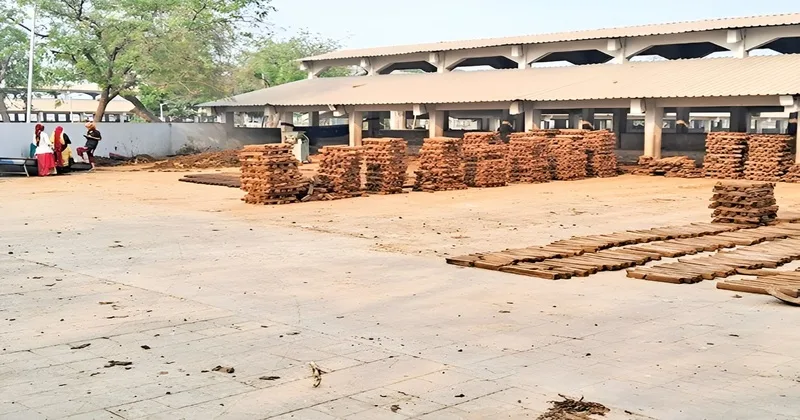
Ahmedabad: In a unique blend of tradition and sustainability, Holika Dahan celebrations in Ahmedabad are set to go green this year. Over the past two years, Holika Dahans (Holi bonfires) at 53 locations across the city have been lit using cow dung sticks manufactured by the Amdavad Municipal Corporation (AMC), replacing conventional wood.
Watch | Holika Dahans (Holi bonfire) at 53 places in Ahmedabad took place in last 2 years using cow dung sticks made by Amdavad Municipal Corporation (AMC) from its stray cows shelters. Even more dispatches of cow dung stick boxes are underway this year ahead of Holi due to… pic.twitter.com/0Lh2vDGbk2
— DeshGujarat (@DeshGujarat) February 23, 2026
With rising awareness and demand for eco-friendly alternatives, the civic body has already begun dispatching more boxes of cow dung sticks ahead of this year’s Holi celebrations. The initiative is closely linked to AMC’s Stray Cattle Prevention and Control Policy-2023, under which stray cattle are housed in municipal shelters. Currently, AMC’s cattle shelters accommodate around 1,090 cattle. These shelters generate nearly 2,800 kg of cow dung and green waste daily. Instead of treating this as waste, the corporation has developed a structured system to convert it into valuable and sustainable products. Cow dung collected from shelters is processed into dung sticks that serve as a cleaner and environmentally responsible substitute for wooden logs traditionally used during Holika Dahan.
Large-scale use of firewood during Holi often leads to tree cutting and air pollution. By promoting dung sticks, AMC is helping reduce pressure on forests while also ensuring better waste management within the city. The impact of this initiative extends beyond Holi. The processed dung is also converted into organic fertilisers, which are being used across nearly 250 AMC-maintained gardens in Ahmedabad. This reduces dependence on chemical fertilisers and supports greener urban landscaping. Additionally, soil enrichers produced from cattle waste are supplied for horticulture and agricultural purposes, promoting sustainable farming practices. AMC has further diversified the use of cattle waste by channelling it into biogas production. Biogas generated from dung is used as a renewable fuel source, contributing to lower carbon emissions and efficient energy utilisation. Cow dung is also supplied as raw material to micro, small, and medium enterprises (MSMEs), encouraging circular economy practices and supporting local businesses. Another notable use is in crematoriums, where dung sticks are being utilised as an alternative to wooden logs. This move not only cuts down wood consumption but also lowers the cost of cremation and reduces environmental impact. By integrating dung-based products into multiple civic and community functions, AMC has demonstrated how traditional resources can be modernised for sustainable urban management.
The growing demand for dung sticks for Holika Dahan reflects a shift in the public mindset. Residents, housing societies, and community organisers are increasingly opting for environmentally friendly options without compromising on religious traditions. The initiative showcases how civic policy, waste management, and cultural practices can align to create meaningful environmental impact. Ahmedabad’s model presents a replicable framework for other cities grappling with stray cattle management and waste disposal challenges.
By transforming daily cattle waste into useful products, AMC has turned a civic concern into an opportunity for sustainability, revenue generation, and environmental conservation. As Holi approaches, the sight of Holika fires lit with eco-friendly dung sticks stands as a symbol of responsible celebration, one that honours tradition while protecting nature.