A fresh controversy has erupted at Lucknow University and NIT Warangal after students alleged that Hanuman Chalisa recitations were stopped by authorities, even as space continued to be facilitated for Namaz within campus premises. What began as a localised administrative action has now triggered a larger debate on whether Hindu religious practices are being subjected to selective restrictions in public educational institutions.
Student groups have questioned why peaceful chanting of Hanuman Chalisa is treated as a violation of campus norms, while other religious observances are reportedly accommodated. The developments have intensified calls for equal application of rules and non-discriminatory treatment of all faith-based activities on university campuses.
What Happened in Lucknow University?
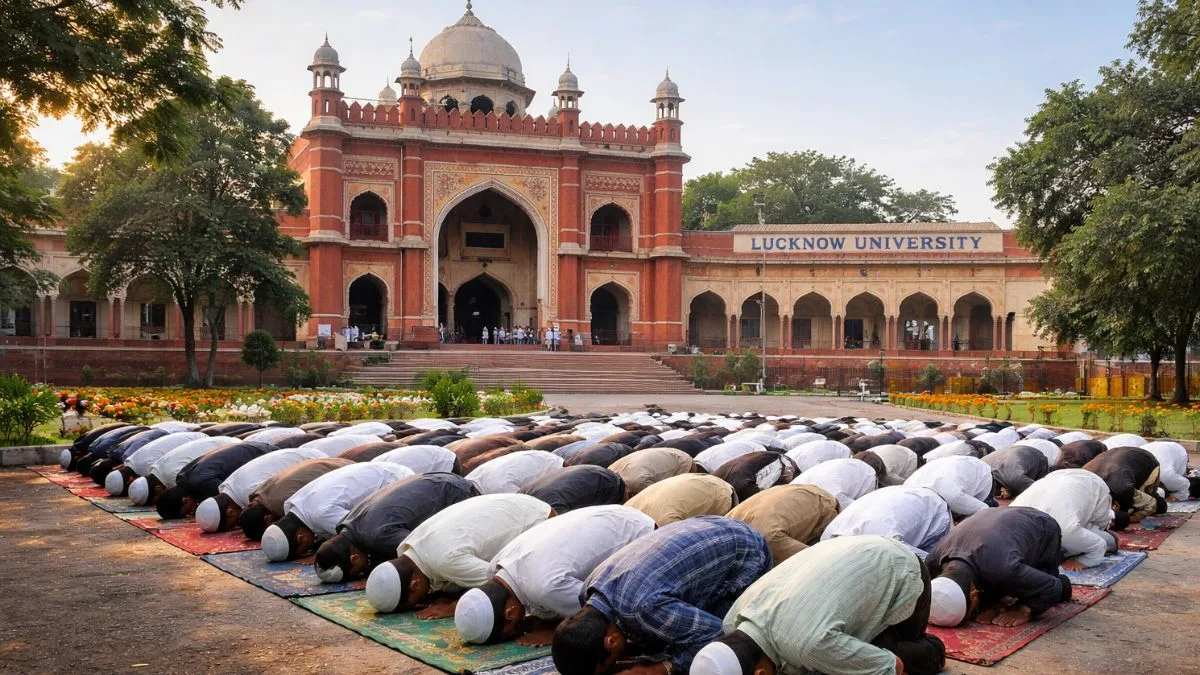
Anger erupted among Hindu organisations over reports of Namaz being offered at the Lal Baradari premises of Lucknow University. On Tuesday, they recited the Hanuman Chalisa near the university in protest, which heated up the atmosphere. Heavy police deployment was in place during the demonstration. There was a minor scuffle between protesters and police personnel. After considerable effort, the crowd was dispersed. Some agitated protesters attempted to break barricades and enter the campus.
Lucknow Police have issued notices to 13 students for allegedly offering Namaz and raising slogans near Lal Baradari.
₹50,000 Bond and Two Sureties Required for Accused Students
At Lucknow University, members associated with the Akhil Bharatiya Vidyarthi Parishad (ABVP) protested what they described as “selective enforcement” of campus rules. ABVP activists argued that if space could be facilitated for Namaz or other religious observances, similar accommodation should be extended for Hindu prayers. The administration has directed the students to furnish a bond of ₹50,000 each and present two sureties as a guarantee to maintain peace for one year.
Telangana: LRPF moves NHRC seeking probe into NIT Warangal officials
At NIT Warangal, students claimed that weekly Hanuman Chalisa recitations had been taking place peacefully for months without objection. However, following circulation of a video on social media, the administration reportedly intervened and halted the activity, cautioning students about possible disciplinary consequences.
Legal Rights Protection Forum (LRPF), a legal advocacy organisation, has submitted a complaint to the National Human Rights Commission (NHRC) in New Delhi alleging violation of fundamental rights and discriminatory treatment of religious activities at the National Institute of Technology (NIT) Warangal in Telangana.
According to the complaint, NIT students residing in the 1.8K Hostel had been voluntarily assembling every Tuesday evening for about 15 minutes to recite the Hanuman Chalisa, described as a peaceful, student-initiated activity without political or organisational backing.
LRPF stated that the recitation had reportedly continued for nearly a year without complaints and was viewed by participants as spiritually meaningful.
We have filed a petition before the National Human Rights Commission seeking an independent inquiry into the reported suppression of Hindu students’ Fundamental Rights at National Institute of Technology, Warangal.
As per information received, students at Hostel 1.8K had been… pic.twitter.com/DOloKoyY7X
— Legal Rights Protection Forum (@lawinforce) February 23, 2026
If Namaz is permitted why not Hanuman Chalisa?
A pointed question is now being raised on campus: if Namaz can be offered in designated spaces, why should Hanuman Chalisa recitation be stopped? The issue has triggered a wider debate over equal rights and uniform enforcement of rules in public universities.
Students supporting the Hanuman Chalisa recitation say the chanting was peaceful and voluntary, conducted without disrupting academic activities. They argue that if other religious practices are being facilitated or accommodated, then similar space should be available for Hindu prayers as well. For them, the matter is not about confrontation but about parity.
Critics of the administration’s action claim that stopping Hanuman Chalisa while allowing other faith-based gatherings creates a perception of selective enforcement. They insist that either all religious activities should follow the same approval process and restrictions, or equal accommodation should be extended across communities.
The controversy has thus moved beyond a single recitation and into a larger constitutional debate: in publicly funded institutions, how should freedom of religious expression be balanced with secular governance—and are those standards being applied consistently?