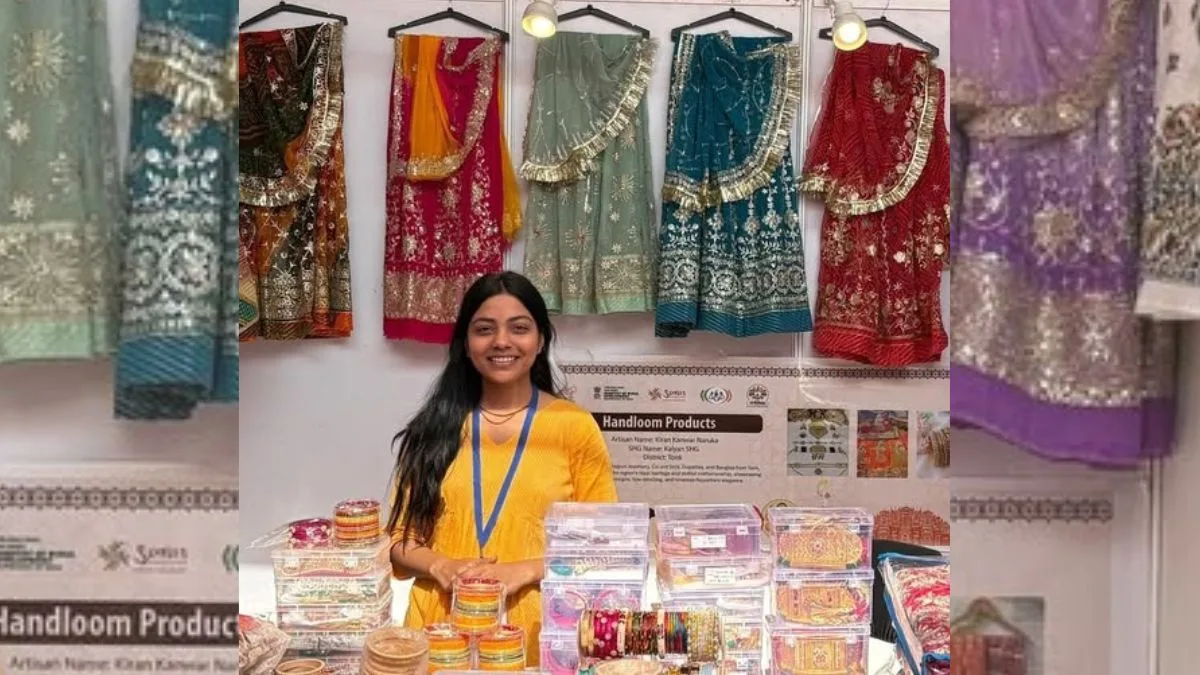
The SARAS Aajeevika Mela 2026 turned Gurugram’s Leisure Valley Park into a vibrant representation of rural India, where traditional crafts, local cuisines and cultural heritage came together in a unique national exhibition. Organised from February 10 to February 26, the mela brought together more than 900 women entrepreneurs from 28 states representing Self-Help Groups (SHGs), creating a large platform for rural producers to directly connect with urban consumers.
As the gates opened each morning, visitors encountered a different atmosphere from the usual corporate pace of Gurugram. The skyline of glass buildings gave way to colourful stalls displaying handwoven textiles, bamboo crafts, spices and regional delicacies. Folk music performances and live craft demonstrations created a cultural environment that reflected India’s diverse traditions.
With more than 450 stalls arranged across state pavilions, the mela offered a miniature representation of India’s cultural and economic diversity. Visitors could explore Pashmina shawls from Kashmir, silk textiles from southern India, embroidered garments from Rajasthan and bamboo products from northeastern states, alongside handmade household goods and processed food items.
The fair functioned not merely as an exhibition but as a structured marketplace designed to strengthen rural livelihoods. By enabling direct interaction between producers and consumers, the mela helped eliminate intermediaries and improve profit margins for rural entrepreneurs.
Market linkages and economic opportunities
The SARAS Aajeevika Mela demonstrated the importance of market linkages in promoting sustainable livelihoods. Many Self-Help Groups rely on such exhibitions to expand their customer base and increase visibility for their products.
Urban exhibitions provide rural entrepreneurs with an opportunity to understand consumer preferences, pricing patterns and market trends. Participation in such events also helps Self-Help Groups develop brand recognition and establish long-term customer relationships.
Direct-to-consumer sales allow women entrepreneurs to retain a larger share of their earnings compared to traditional supply chains. The mela therefore plays a significant role in strengthening women-led micro-enterprises.
The event also highlighted how organised market access can transform small household-level activities into structured business enterprises.
Stories of transformation behind the stalls
Behind each stall at the mela were stories of personal struggle, community cooperation and economic transformation.
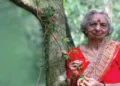
One of the most striking displays featured the golden sheen of Assam’s Muga silk, a Geographical Indication-recognised textile unique to the region. The stall was managed by Najitra Didi from Lakhimpur district, representing the Hariyani Mising Gaon Mohila Self-Help Group.
For decades, she has been involved in training rural women in weaving. Since the 1980s, she has helped thousands of artisans learn weaving techniques and obtain artisan identification cards that enable them to access formal markets.
Her work extends beyond technical training. She also helps artisans understand pricing strategies, customer preferences and market behaviour. Many of the women she mentors come from remote villages and have limited exposure to urban environments. By accompanying them to exhibitions, she helps bridge communication and marketing gaps.
The stall displayed handwoven Muga silk sarees priced between Rs 30,000 and Rs 70,000. Within the first few days of the mela, sales crossed Rs 3 lakh, reflecting strong demand for authentic handloom products.
For the artisans involved, these textiles represent not only economic value but also the preservation of traditional skills passed down through generations.
From home based work to collective enterprises
Another stall that attracted significant attention was managed by Suparna Didi from West Bengal, where visitors gathered to sample traditional snacks and food products.
Her journey into entrepreneurship began with the desire for financial stability. Initially balancing household responsibilities with irregular work in the insurance sector, she sought a more dependable source of income.
In 2011, she mobilised ten women to form a Self-Help Group and began small-scale production of papads and traditional food items from their homes.
Over time, the enterprise expanded and now includes multiple Self-Help Groups within the local gram panchayat. Production remains decentralised, with women preparing goods in their homes. The products are later collected, packaged and marketed collectively.
Within a week at the mela, her group recorded sales exceeding Rs 50,000 with profit margins between 60 and 70 percent.
Participation in exhibitions across several cities has enabled average earnings of nearly Rs 1 lakh per event.
However, the impact of the Self-Help Group extends beyond income generation. Group meetings have become spaces where women discuss family issues, social challenges and personal aspirations.
Suparna Didi also described how the enterprise has influenced the next generation. Her daughter has developed skills in pottery and now participates in exhibitions, demonstrating how economic empowerment can lead to intergenerational progress.
Building local production ecosystems
Another example of enterprise development came from Shobhita Didi of West Bengal, who displayed jute mats, wooden kitchen tools and handcrafted household items.
She formed her Self-Help Group in 2006 with ten members and gradually expanded her leadership to include hundreds of Self-Help Groups across the district.
Training under the Deendayal Antyodaya Yojana-National Rural Livelihoods Mission enabled her to develop technical skills in jute craftsmanship.
She later established a production unit employing local women and sourcing raw jute directly from nearby farmers. This created an integrated local supply chain linking agriculture and handicraft production.
In recent years, she expanded into wooden handicrafts such as combs and kitchen utensils.
Access to institutional credit and government support helped expand her business operations. Digital payment systems have simplified financial transactions and improved record keeping.
Her products are now sold not only at exhibitions but also through partnerships with organisations that distribute handicrafts in urban markets.
Her enterprise demonstrates how skill training can evolve into a decentralised rural production ecosystem.
Innovation from traditional materials
Creativity and innovation were also visible in the work of Jyotsna Didi from West Bengal, who specialises in paddy straw art.
After joining a Self-Help Group and receiving handicraft training, she began experimenting with rice straw as an artistic medium.
Over time, she developed intricate decorative designs using agricultural residue.
Today she trains a group of women artisans who produce artwork from their homes. The finished products are collected and sold at exhibitions across the country.
Her enterprise demonstrates how innovation can emerge from traditional materials, transforming agricultural waste into valuable artistic products.
The mela included live demonstration areas where visitors could observe artisans at work.
Potters shaped clay on spinning wheels while embroidery artists created intricate patterns and bamboo weavers demonstrated traditional techniques.
These demonstrations allowed visitors to understand the effort and skill required to produce handmade goods.
For many urban visitors, the experience offered a rare opportunity to witness traditional craftsmanship.
Structured enterprises from rural areas
The Maharashtra pavilion showcased cotton garments produced by the Sanjeevani Mahila Self-Help Group from Nagpur.
What began as a small tailoring activity has developed into a structured enterprise employing more than 30 women.
With support from the rural livelihood mission and local administration, the group received training, machinery and market access.
The enterprise sources cotton from local farmers and processes it into finished garments.
Cotton shirts are sold at affordable prices while sarees are marketed as premium products.
Participation in major exhibitions has enabled seasonal revenues running into several lakh rupees.
Members describe empowerment in terms of stable incomes, technical skills and confidence gained through business operations.
Reviving traditional bamboo crafts
Another notable example came from Assam, where bamboo products combining traditional craftsmanship with modern design were displayed.
Vishakha Didi revitalised a family bamboo craft business after joining a Self-Help Group.
With government support and exposure through exhibitions, she introduced new product designs and expanded production.
Her participation in national exhibitions helped increase sales significantly.
The enterprise demonstrates how traditional crafts can be modernised through innovation and market access.
Training and capacity building
Beyond sales and exhibitions, the SARAS Aajeevika Mela also functioned as a capacity-building platform.
Workshops were organised to train women entrepreneurs in packaging, branding and marketing.
Sessions on logistics and supply chain management helped participants learn how to distribute products more efficiently.
Training programmes also introduced participants to digital marketing and online sales platforms.
Awareness about e-commerce initiatives aims to ensure that business opportunities continue even after the mela ends.
Such initiatives help transform temporary exhibitions into long-term economic opportunities.
Platform for women’s empowerment
The mela highlighted the role of Self-Help Groups in promoting women’s empowerment.
Participation in collective enterprises provides women with financial independence and decision-making power.
Many participants described increased confidence and social recognition after joining Self-Help Groups.
The economic benefits of SHGs often extend to entire families by improving education and living standards.
The mela therefore represents not only economic activity but also social transformation.
As evening lights illuminated the park, the SARAS Aajeevika Mela emerged as a vibrant symbol of rural enterprise and collective aspiration.
Visitors left with handcrafted products and regional foods but also with stories of resilience and entrepreneurship.
The fair demonstrated how traditional skills can coexist with modern markets.
In a rapidly urbanising society, the mela provided a space to recognise the labour and creativity of rural artisans.
The SARAS Aajeevika Mela 2026 ultimately reflected the growing strength of women-led enterprises and the expanding role of rural entrepreneurship in India’s development.