In global affairs, dialogue, discourse and general sittings has been viewed as the most important and ethical ground possible since it represents the belief that continuous interaction might dissolve hostility and bring about eternal peace. Even in situations of grave provocations, India is not an anomaly due to its adherence to strategic prudence and civic restraint. A dispassionate reexamination of history, however, exposes an obvious discrepancy.
The chronic terrorism that is funded and supported exclusively by Islamabad to impede these very efforts is a prime instance of how dialogue cannot be continued when it is marred by rejection, lies, disbelieves and extreme cruelty. One of the most blatant instances of this dishonesty is the Kargil battle in 1999. A secret infiltration across the Line of Control(LoC) in Kashmir was carried out by the Pakistani forces and auxiliary troops, defying the Lahore Declaration’s assurances of mutual respect for the sovereignty and integrity of nations and a peace negotiated settlement.
The capturing of Captain Saurabh Kalia, an Indian Army officer, was one of the darkest and horrific events of that conflict. As per publicly available documents, including frequently referred to summaries, Captain Kalia and his crew were captured by Pakistani forces, captain and his boys were patrolling on the Indian soil to check points which was under control of India since declarations of UN seizefire in 1947- 48 India – Pak kashmir conflict and treated as starting point of the Indian territory. This abduction of Indian officers marked before the starting of war. Prisoners of war have the right to be treated humanely according to the Geneva Convention.
However, as revealed through analysis of the recovered remains and medical reports of military personnel, Captain Kalia was subjected to prolonged physical ill treatment, such as multiple fractures and internal injuries, before being killed. Such acts, carried out without any prior provocation on the Indian side, represent grave violation of humanitarian law. The inability of Pakistan to allow independent inquiry and take responsibility for its actions also reflects denial on its part. Despite being betrayed by Pakistan in this way, India continued to engage with the latter diplomatically.
What India got in return for this diplomacy was not moderation but a series of terror inducements again and again. In December 2001, terrorists attacked the Indian Parliament, martyring security personnel and bringing India and Pakistan to the gates of war. The investigation into the attack by terrorists showed that extremist groups based in Pakistan were responsible for this attack on India’s Parliament house. In the mid-2000s, a period generally characterized by the ‘peace process’, India faced a series of bombings carried out in prominent cities like –
- Delhi (September 13, 2008, approx 13 people killed by the Pakistani backed Lashkar-e-Taiba in support of the Students Islamic Movement of India)
- Mumbai (1993 a series bomb blast 257 killed and 1400+ injured by pakistani backed D-company)
- Varanasi (March 2006, 28 people death and 100+ injured by Lashkar-e-Taiba)
- Jaipur (series bomb blast at 9 location 63 died 216+ injured done by pakistani backed Lashkar-e-Taiba in support of Indian Mujahideen offshoot of Students Islamic Movement of India
- Ahmedabad(July 28, 2008, 56 death and 200+ injured done by the Pakistani islamic terrorist group Harkat-ul-Jihad_al-Islami)
These atrocities caused the murder of hundreds of its citizen-civilians. The culmination of this series of terror attacks was the Mumbai attack of 2008, where ten terrorists of LeT carried out a coordinated assault on Mumbai, martyring over 160 people, including foreigners.
The Pahalgam terror attack & continuance of violence by Pakistan
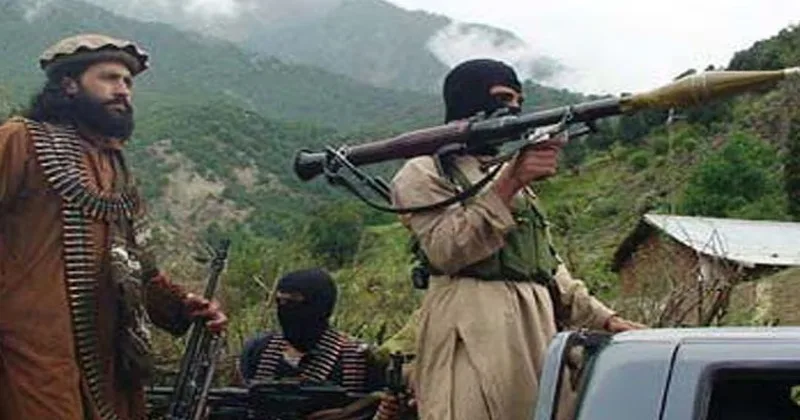
More recently, in April 2025, the area of Pahalgam—a well-known tourist location in the state of Jammu and Kashmir—in India became the site of another cruel act of terrorism. On April 22, 2025, militants with weapons from the shadowy outfit of the Pakistan-based terror group known as Lashkar-e-Taiba, under the banner of the Kashmiri sepratist group called “The Resistance Front” (TRF), began indiscriminate firing on tourists in the picturesque Baisaran Valley of Pahalgam, killing 26 civilians and injuring more than 20 others. The victims included both Hindu and Christian tourists.
The attackers targeted people of specific religions and checked the religion of people prior to shooting them—a chilling aspect of the terrorist attack. This terrorist outrage on tourists in the region was the worst in the past some years since the 2008 Mumbai terror assault and at a time when tensions between India and Pakistan remained high. The massacre at Pahalgam did not just lead to a tragic loss of life; it also delivered a fatal blow to the tourism-dependent economy of Jammu & Kashmir. Reports spoke of mass cancellations of travel plans, with flight bookings sharply falling after the attack, thereby jeopardizing thousands of jobs in the tourism sector.
The attack drew international condemnation, and in July 2025, the U.S. designated TRF as an FTO linked to Lashkar-e-Taiba-a rare diplomatic acknowledgment of the nexus between terror groups and cross-border sponsorship. The persistent excuse that Pakistan has only dealt with “non-state actors” does not stand to scrutiny either. Outfits like Lashkar-e-Taiba and its offshoots have been operating in open view in Pakistani territory for decades now. The cyclical process of crackdowns on these groups has been temporary and episodic to say the least. Pakistan has been put on the grey list by the Financial Action Task Force(FATF) repeatedly due to its failure to address terror financing networks—it is not accidental but rather reflective of ambiguity in the Pakistani response.
Dialogue not possible until Pakistan uses terrorism as a policy tool
The effects of militancy in Jammu and Kashmir have been sentirimately felt. The effect of Pakistan-sponsored militancy in Kashmir over the last two decades, particularly since the late 1980s, is highly tragic, as tens of thousands of persons have lost their lives. The episodes of violence have time and again disrupted democratic norms. There have been repeated appeals for restraint after each episode of violence, which India has respected, though the rationale for aggression never subsided. People who recommend unconditional dialogue often say this based on historical examples of reconciliation between enemies. True reconciliation, however, goes beyond talking. It also necessitates a commitment to accountability. Dialogue, therefore, does not stand a chance when agreements are made in public and commitments are implemented in private.
Under those circumstances, it becomes a form of performance. India’s actions reflects remarkable but non resulting discipline rather than weakness and frailty. Several mass-casualty strikes would deter most democracies from seeking diplomatic engagement. However, unconditional forbearance gives license for more aggression. A discussion that has no connection to specific steps toward combating violence fails to encourage peace; instead, it legitimates duplicity and decreases deterrence. While tranquility is a legitimate objective, it cannot be based on ethical romanticism or selective amnesia. Discussions and dialogue without accountability will continue to be an instrument of tactical deceitful behavior rather than a means for establishing reconciliation until Pakistan exhibits a clear and verifiable departure from using terrorism as a tool of policy.