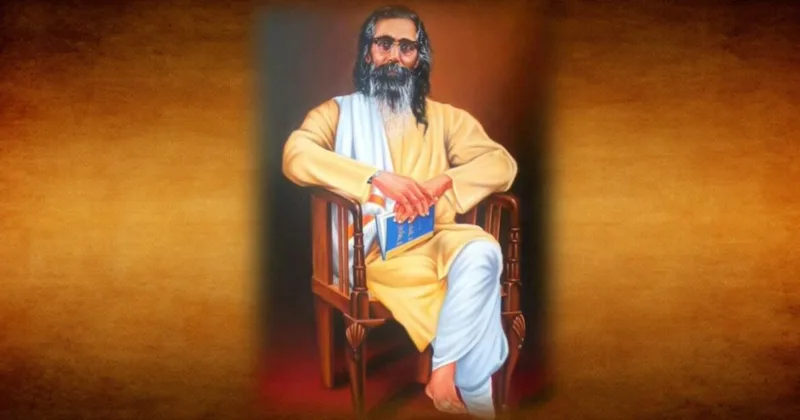
On the auspicious birth anniversary of Param Pujaniya Guruji, Madhav Sadashiv Golwalkar, swayamsevaks across Bharat bow in reverence to a life that combined spiritual depth, intellectual clarity, and unparalleled organisational vision. As the second Sarsanghchalak of the Rashtriya Swayamsevak Sangh, Guruji carried forward the sacred mission entrusted by K. B. Hedgewar and ensured that the flame of national awakening reached every corner of Bharat. Among the many regions shaped by his far-sighted guidance, Kerala stands as a remarkable chapter, a land where ideological contest was intense, yet where Guruji’s conviction, patience, and discipline laid enduring foundations.
The Relentless Traveller: A Pulse on the Pranth
His tireless physical presence defined Param Pujaniya Guruji’s connection to Kerala. In an era of gruelling travel, he visited every province twice a year; for over three decades, the soil of Kerala was sanctified by his presence more than 60 times. These were masterclasses in discipline. Whether navigating Alappuzha’s backwaters or the rugged High Ranges, he never missed a Baithak. This consistency signalled that no worker was insignificant, providing a rhythmic heartbeat of ideological vigour against a hostile political tide.
Mentoring the Architects of Awakening
Guruji’s greatest gift was the leadership he nurtured. Identifying talent capable of translating a national vision into the Malayali psyche, he mentored stalwarts like Ranga Hari and P. Parameswaran. By encouraging these scholars to become Pracharaks, he ensured the Sangh grew deep roots in local scholarship rather than remaining a “Nagpur-imported” entity. Guided by his “Man-making” mission, they built institutions like the Bharatiya Vichara Kendra, proving that while the organisation was the body, the cultural identity of Bharat was the soul.
The Malabar Frontier and Intellectual Courage
In the Marxist strongholds of Kannur and Kozhikode, Guruji saw a frontier of faith rather than a lost cause. He urged Pracharaks toward Guna-Vikas (development of virtues) and extreme simplicity, establishing the Shakha as a sanctuary of character. This “Tapasya-based” model allowed the Sangh to sprout within the heartlands of its adversaries. Marked by intellectual courage, Guruji engaged deeply with Kerala’s history from Adi Shankara to complex community structures, challenging materialist interpretations. To him, Kerala was a “Sacred Geography” vital to Dharma. By 1973, he had transformed a fledgling group into a disciplined, socially integrated force that remains the bedrock of nationalistic thought in Bharat today.
Kerala: Depth, Ferment and Civilizational Significance
Mid-twentieth century Kerala was intellectually vibrant and socially dynamic. Temple reform movements, assertive community organisations, missionary educational institutions, and the growing influence of Marxist thought had transformed public life. Political awareness was sharp; ideological debates were passionate. To many observers, Kerala appeared distant and difficult terrain for a cultural organisation headquartered in Nagpur. Guruji saw no distance. He saw only duty. He understood that Bharat’s unity is not geographic convenience but civilizational continuity. Kerala, with its ancient temples, philosophical traditions, devotional literature, and reformist currents, was integral to that continuity. For Guruji, there could be no awakening of Bharat that excluded Kerala.
The Spiritual Foundation: Sree Narayana Guru and Sivagiri
Param Pujaniya Guruji viewed the social renaissance of Kerala not as a political shift, but as a vital restoration of Dharma. His reverence for Sree Narayana Guru was profound; he saw the Guru as a “Yugapurusha” whose mission was identical to the Sangh’s goal of social integration. Guruji frequently visited the Sivagiri Mutt, treating the site with the devotion of a pilgrim. He interpreted the Guru’s clarion call of “One Caste, One Religion, One God” as the ultimate blueprint for a unified Hindu society. To Guruji, the “One Caste” was a call to dissolve internal hierarchies into a single, organic whole, replacing the fragmentation of the past with a lived experience of brotherhood.
Reclaiming Dignity: The Legacy of Mahatma Ayyankali
Guruji’s respect extended deeply to Mahatma Ayyankali, whom he regarded as a symbol of indomitable courage. He viewed Ayyankali’s struggle for the rights of the marginalised as a heroic effort to strengthen the Hindu social fabric from within. To Guruji, Ayyankali’s actions were a masterclass in reclaiming dignity without abandoning one’s cultural roots. He often reminded swayamsevaks that the work of the Sangh was to fulfil the unfinished task of such reformers, ensuring that the doors of temples and the hearts of society were open to every child of Bharat. He believed that Ayyankali’s resilience was a testament to the inherent strength of the Bharatiya spirit.
From Community Reform to Civilizational Integration
The twentieth century in Kerala was defined by powerful movements of social upliftment, most notably the Nair Service Society under Mannathu Padmanabhan. Guruji respected these reforms deeply, yet he envisioned a path beyond mere community consolidation. For him, Hindu society was an organic whole bound by sacred geography and shared memory. He believed that while community strength was essential, it must ultimately serve the broader goal of civilizational integration. In Kerala’s intricate social landscape, the daily shakha became a quiet yet revolutionary instrument of this unity. Beyond caste lines, young men stood in disciplined formation, transforming the theoretical idea of oneness into a lived experience through collective prayer and physical training. This vision of unity was exemplified by Guruji’s profound relationship with Mannam. Their bond was not one of political negotiation but of mutual reverence between two devoted servants of Bharat. Archival recollections of Guruji visiting Mannam’s residence in Changanassery, and later personally inquiring after his health, underscore a sacred maryada. Though their organisations differed in scope, their shared concern for society’s cohesion proved that while structures may vary, the soul of the nation remains indivisible.
Samarasata: Translating Reform into Organisation
In his interactions with community organisations like the SNDP and the Nair Service Society, Guruji emphasised that community consolidation was a precursor to civilizational unity. He introduced the concept of Samarasata (social harmony), which he defined as an equality of emotion and spirit that went beyond mere legalistic rights. He famously stated that “no one is superior or inferior; all are brothers,” echoing the Rigvedic ideal of collective progress. By integrating the teachings of Kerala’s reformers into the daily discipline of the shakha, Guruji ensured that the Sangh became a laboratory where the visions of Narayana Guru and Ayyankali were transformed from theoretical ideals into a tangible, nationalistic reality.
The Marxist Moment and the Test of Conviction
Kerala entered global attention in 1957 when a Communist government led by E. M. S. Namboodiripad assumed office through democratic means. For many, this was a historic political development. For Guruji, it signified an ideological moment that required clarity rather than reaction. Marxism, in his understanding, reduced society to material categories and dismissed the spiritual foundations that had sustained Bharat for millennia. In a land so deeply rooted in tradition, this ideological shift carried long-term implications.
Guruji’s response was steady and principled. He did not advocate agitation without organisation. Instead, he strengthened the Sangh’s foundational work, cadre training, intellectual clarity, and disciplined expansion. Pracharaks lived simply and worked tirelessly in districts such as Kannur and Kozhikode. Shakhas multiplied quietly. Young swayamsevaks were trained not in hostility, but in conviction and character. When the Vimochana Samaram arose in 1959, various sections of society expressed opposition to the policies of the Communist ministry. Sangh workers participated at the grassroots while maintaining organisational discipline. Guruji’s guidance was clear: movements must strengthen society’s moral fibre, not erode it through uncontrolled passion.
Hindu Rashtra in Kerala’s Living Reality
Guruji’s articulation of Hindu Rashtra has often been misunderstood by critics who approach it through narrow political frameworks. For him, it was a cultural affirmation, a recognition that Bharat’s national life springs from a shared civilizational ethos. Kerala’s own history bore witness to that ethos. Temple traditions, philosophical schools, devotional movements, and social reform currents all flowed from a common spiritual source. Even amid ideological contestation, these rhythms endured.
Guruji perceived in Kerala both vulnerability and vitality. Vulnerability to fragmentation through imported ideological frameworks; vitality in its enduring cultural practices. His task was to fortify the latter so that the former would lose its disruptive appeal. In his reflections collected in Bunch of Thoughts, he repeatedly emphasised the necessity of internal cohesion and moral character. Applied to Kerala, this meant nurturing a generation capable of engaging ideological adversaries without losing cultural self-confidence.
Organisation as Tapasya
Building the Sangh in Kerala required perseverance akin to tapasya. Attendance at early shakhas was modest. Suspicion and resistance were real. Yet pracharaks persevered, guided by Guruji’s unwavering faith. He reminded swayamsevaks that true transformation is not measured in immediate political gains but in the steady shaping of character. Kerala’s cadre culture, known today for resilience and commitment, is rooted in those formative decades. Political alignments have shifted over time. Governments have changed. Yet the organisational foundation laid during Guruji’s tenure has endured, quiet, disciplined, and firm.
Cultural Confidence and National Unity
Kerala’s plural social fabric demanded confidence rather than insecurity. Guruji believed that a society secure in its heritage contributes to harmony. Cultural rootedness strengthens unity; it does not weaken it. Service initiatives, educational outreach, and youth mobilisation became instruments through which the Sangh expressed this conviction in Kerala. In classrooms and community spaces, swayamsevaks articulated their worldview with clarity and civility. Even in regions where ideological confrontation later intensified, they were trained to remain steadfast without surrendering dignity.
A Vision Vindicated
Kerala today remains ideologically vibrant and politically dynamic. Debates are sharp; public discourse is energetic. Yet the presence of the Sangh across districts reflects decades of disciplined groundwork. The seeds sown under Guruji’s stewardship in the 1940s and 1950s have matured into a network of dedicated volunteers engaged in service, education, and social outreach. That continuity is a testament to his strategic foresight. He recognised that difficult terrain must not be avoided. It must be embraced with patience and faith.
The Enduring Lesson
On this sacred birth anniversary of Param Pujaniya Guruji, Kerala stands as a living chapter in his legacy. His respectful engagement with leaders like Mannam, his steady response to ideological challenges, and his insistence on character above clamour together form a message of enduring relevance. Kerala tested conviction; Guruji answered with patience. Kerala demanded clarity; he offered vision. Kerala required discipline; he nurtured an organisation. As swayamsevaks gather in shakhas across Kerala and throughout Bharat, the memory of his visits, his guidance, and his reverential courtesy toward fellow servants of society continues to inspire. We remember him not merely as an organiser of rare ability, but as a Rishi in public life, one who saw Bharat as an indivisible cultural whole and worked tirelessly to awaken that consciousness. On this birth anniversary, we reaffirm the path he illuminated. Kerala remains a testimony to steadfast faith, disciplined organisation, and unwavering devotion to Dharma.