Islamabad: The Balochistan Liberation Army (BLA) has issued a threat to execute seven Pakistani security personnel currently in its custody unless the government releases Baloch prisoners within a seven-day deadline. In a statement dated February 15, the group said the ultimatum expires on February 22. The warning was delivered through a written statement and video message released by the BLA’s media wing, Haqqal. The group claimed that the soldiers were captured during the second phase of what it described as “Operation Hero.”
According to the BLA, a total of 17 security personnel were detained from different locations. Of these, 10 were of Baloch origin and affiliated with local police units. The group said they were later released “after warnings,” citing local conditions and what it described as the interests of the Baloch people.
The remaining seven detainees, the BLA said, belong to regular units of the Pakistani army. The group claimed that its so-called Baloch National Court has initiated proceedings against them, accusing the soldiers of involvement in civilian abuses and enforced disappearances. The BLA also alleged that similar demands made in the past were ignored by Pakistani authorities.
Capture claims and unverified video
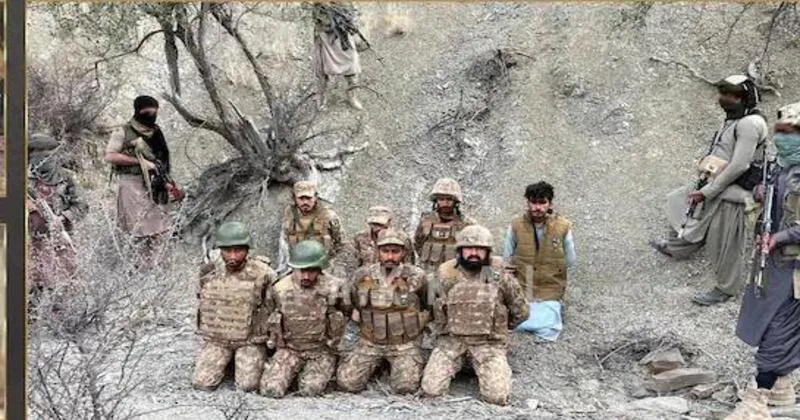
The BLA stated that the soldiers were seized from the Orange Area of Khuzdar district in Pakistan’s Balochistan province. In a video released by the group, seven men dressed in Pakistani military uniforms are seen kneeling. One individual identifies himself as a Pakistani soldier and says he was abducted while travelling home on leave. He appeals to the government and the army to accept the BLA’s demands in order to save their lives.
The group also claimed to have confiscated a large cache of weapons and ammunition from those captured. Pakistani authorities, however, have not independently verified the authenticity of the video or confirmed the details of the alleged seizure. Meanwhile, Punjab Chief Minister Maryam Nawaz Sharif visited the families of soldiers killed in the Balochistan conflict. She paid a visit to the Lahore residence of Captain Muhammad Ali Qureshi, who died while on duty in the province, and spoke about the sacrifices made by security personnel.
A conflict rooted in long-standing grievances
The current standoff is part of a decades-long conflict in Balochistan, where armed groups have been demanding greater autonomy and, in some cases, outright independence. The region has remained volatile due to disputes over political rights, control of natural resources, and the heavy presence of Pakistani security forces.
The latest episode has reignited debate over the security situation in the province and raised several constitutional and political questions highlighted by the BLA. These include demands for greater regional autonomy, control over Balochistan’s natural resources, and opposition to what the group describes as excessive military deployment.
The BLA has also reiterated allegations of enforced disappearances and staged encounters, while questioning the legality of the prisoner releases it is demanding. Another key point of contention remains large infrastructure projects, including the China–Pakistan Economic Corridor (CPEC), which insurgent groups argue have failed to benefit local communities. The group further claims that Baloch people face discrimination within Pakistan’s security forces, adding to broader grievances over political representation and economic marginalisation.
As the February 22 deadline approaches, uncertainty remains over how the Pakistani government will respond to the threat against the detained soldiers. The crisis has intensified scrutiny of Islamabad’s strategy in Balochistan, where security operations continue alongside unresolved demands for rights, development, and political inclusion.