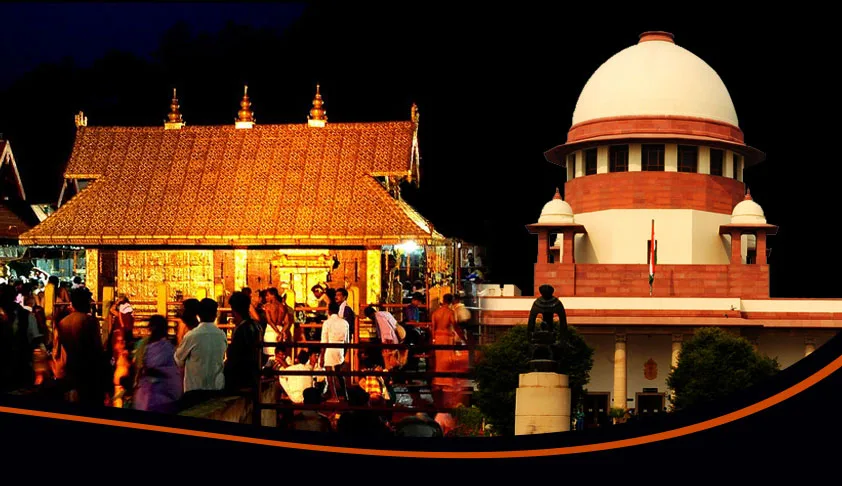
New Delhi: The Supreme Court of India is set to review petitions challenging its landmark 2018 verdict that allowed women of all age groups to enter the Sabarimala Temple.
A three-judge bench headed by Chief Justice Surya Kant will consider the review pleas on Monday, reopening one of the most contentious religious and constitutional debates in recent years.
Six years after historic verdict, case returns to top court
The 2018 judgment had sparked nationwide debate and intense protests in Kerala and beyond. In a 4:1 majority ruling delivered on September 28, 2018, the apex court held that the exclusion of women between the ages of 10 and 50 from the Sabarimala shrine was unconstitutional, terming the practice discriminatory and violative of fundamental rights.
Following the verdict, women of all age groups were permitted entry into the hill shrine dedicated to Lord Ayyappa. However, the decision triggered widespread protests and counter-protests across Kerala, with traditionalists opposing the ruling and citing centuries-old customs.
Protests and aftermath in Kerala
Before the 2018 verdict, menstruating-age women were barred from entering the sanctum sanctorum of the temple. After the court’s order, the temple gates were opened to women on October 17, 2018, amid heavy security arrangements and large-scale demonstrations.
Several women, including journalists, activists, and devotees attempting to enter the shrine, faced resistance from protestors and were turned back. The developments led to heightened tensions and a law-and-order challenge in the state.
Review petitions and constitutional questions
In response to the ruling, the National Association of Ayyappa Devotees, the Nair Service Society, along with 17 other organisations, filed review petitions seeking recall of the judgment.
In 2019, a larger nine-judge Constitution Bench briefly took up related issues involving the interplay between essential religious practices and constitutional morality. However, proceedings were deferred amid the outbreak of the COVID-19 pandemic.
Notably, Chief Justice Surya Kant is the only member of the present three-judge bench who was part of the earlier nine-judge bench proceedings. The court is also expected to consider the status of the larger constitutional reference while hearing the review pleas.