The viral spectacle of the Assam Regiment marching proudly to the rhythmic echoes of “Badluram Ka Badan” at the 2026 Republic Day Parade served as a stirring reminder of the unyielding spirit that defines the Indian Army. This was not merely a display of military precision, but a profound celebration of the civilisational grit and regional heritage that converge to protect the sovereignty of Bharat. Each step taken on the Kartavya Path resonated with the weight of history, showcasing how our armed forces remain the ultimate vanguard of national unity.
Regimental traditions, often misunderstood by the detached observer, are the very soul of our martial prowess. From the thunderous “Jo Bole So Nihal” of the Sikhs to the terrifying “Ayo Gorkhali” of the Gorkhas, these war cries and songs are not mere formalities; they are sacred oaths rooted in blood, sacrifice, and real battlefield triumphs. They represent a unique synthesis of regional identity and a singular, overarching devotion to the Motherland. This report explores 10 such legendary regiments, illustrating how their unique cultures and fierce war cries create an unbreakable wall of discipline and morale, proving that in the diversity of its warriors lies the invincible strength of a Rising Bharat.
The Indian Army’s infantry is a powerful tapestry of 27 distinct regiments, each serving as a guardian of both our borders and our civilisational heritage. With a strength defined by battalions of 800 to 1,000 disciplined patriots, these units are more than just military formations; they are the living embodiment of Bharat’s martial spirit. Every regiment carries a unique musical legacy and a sacred war cry that resonates with the history of the land it represents.
Rooted deeply in regional culture, faith, and ancestral glory, these war cries – ranging from the thunderous “Jo Bole So Nihal, Sat Sri Akal” to the legendary “Ayo Gorkhali” – are not mere slogans. They are battle-hardened oaths that invoke the courage of generations past, binding soldiers in an unbreakable bond of brotherhood. In this feature, we explore the profound meanings behind these cries, which serve as the heartbeat of our regiments and a terrifying warning to those who dare challenge the sovereignty of our nation.
The Assam Regiment: The Miracle of Badluram’s Rations
Raised on June 15, 1941, the Assam Regiment is a formidable force that channels the innate jungle-craft and mountaineering toughness of the Northeast’s diverse warrior tribes. Its legendary song, “Badluram Ka Badan,” is far more than a melody; it is a tribute to the divine intervention of a fallen hero during the brutal Burma Campaign of 1944. When Rifleman Badluram was martyred at Jessami, his name was never struck from the ration list. As the Japanese siege cut off supplies to Kohima, the accumulated rations of the late Badluram miraculously saved his entire company from starvation. Today, as recruits in Shillong sing of his body resting “under the ground” while his spirit feeds the living, they celebrate the immortal bond between a soldier and his brothers-in-arms. Under the slogan “Asam Vikram” (Unique Valor) and the terrifying “Rhino Charge” war cry, the regiment remains the unbreakable guardian of India’s eastern gateway.
The Madras Regiment: The Brave Madrassi’s Oath of Duty
The Madras Regiment stands as one of the oldest and most disciplined sentinels of the Indian Army, with roots stretching back to 1758. Guided by the sacred Vedic philosophy “Swadharme Nidhanam Shreyaha” (It is a glory to die doing one’s duty), the regiment embodies the martial tradition of South India. Their war cry, “Veera Madrassi, Adi Kollu, Adi Kollu!” (Brave Madrassi, Hit and Kill!), adopted in 1969, serves as a thunderous reminder of their ferocity in the face of the enemy. From the era of the East India Company to the modern defense of India’s borders, the “Brave Madrassis” have maintained an unbroken record of sacrifice and loyalty, proving that the warrior spirit of the South is a foundational pillar of Bharat’s national security.
The Rajputana Rifles: Victory to Lord Ramchandra
As the oldest rifle regiment in the Indian Army, the Rajputana Rifles are the embodiment of the ancient Kshatriya ethos, summarised by their motto “Veer Bhogya Vasundhara” (The Brave Shall Inherit the Earth). Since 1775, their war cry “Raja Ramachandra Ki Jai” (Victory to Lord Ramchandra!) has echoed across global battlefields, from the world wars to the peaks of Kargil in 1999. This cry of faith and ferocity unites the valiant Rajput and Jat recruits from the heartlands of Rajasthan and beyond, transforming their devotion into a lethal force on the frontline. Moving with the “speed and silence” of the traditional rifle brigades, they have secured legendary victories at Khadki and during the Indo-Pak wars, ensuring that the cry of “Lord Ram” continues to strike terror into the hearts of those who threaten the Motherland.
The Rajput Regiment: Victory Everywhere Under the Banner of Bajrang Bali
Tracing its glorious lineage back to 1778, the Rajput Regiment stands as a bastion of Kshatriya tradition and unwavering loyalty to the Motherland. With the resolute motto “Sarvatra Vijay” (Victory Everywhere), this regiment has been at the heart of India’s most decisive battles. Their war cry, “Bol Bajrang Bali Ki Jai” (Victory to Lord Hanuman!), serves as a spiritual and martial catalyst, transforming soldiers into an unstoppable force of nature. The “Rajput Regiment Theme,” a high-octane instrumental march, resonates through the training grounds of Fatehgarh, symbolising a legacy where faith and firearms combine to protect the sovereign borders of Bharat.
The Maratha Light Infantry: The Lions of Chhatrapati Shivaji Maharaj
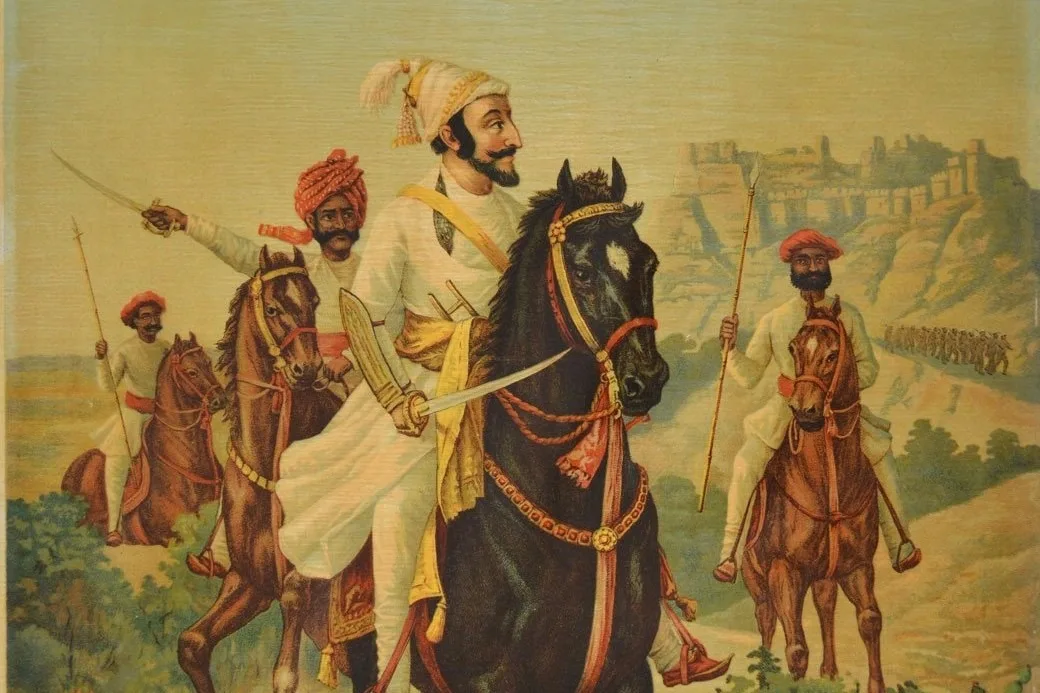
As the senior-most light infantry unit of the Indian Army, established in 1768, the Maratha Light Infantry carries forward the legendary guerrilla tactics and fierce independence of the Great Maratha Empire. Their war cry, “Har Har Mahadev,” invokes the supreme power of Lord Shiva, while the slogan “Bolo Shri Chhatrapati Shivaji Maharaj Ki Jai” honors the father of the Indian Navy and a pioneer of Swarajya. The regimental song “Mard Aamhi Marathe Khare” (We Are True Marathas) is a stirring Marathi anthem that celebrates the “Duty, Honour, Courage” of these warriors. Known for their agility and swift strikes, the Marathas remain the embodiment of the Hindu heartland’s defiance against any foreign or internal threat.
The Kumaon Regiment: The Sacred Echo of Kalika Mata
The Kumaon Regiment, established in 1813, is a mountain-warfare powerhouse rooted in the spiritual soil of Uttarakhand. Their motto “Parakramo Vijayate” (Valour Triumphs) is upheld by the thunderous war cry “Kalika Mata Ki Jai” (Victory to Mother Kali!), invoking the protective and fierce energy of the Goddess. The regiment is famously associated with the folk-tuned anthem “Bedu Pako Baro Masa.” What began as a Kumaoni folk song was transformed into a Vīra Gīta (Heroic Song) after gaining national acclaim, even receiving praise from the country’s early leadership for its cultural depth. With 22 battalions of elite soldiers, the Kumaonis guard our northern frontiers with a blend of Himalayan endurance and a deep-seated devotion to the divine protectors of our civilisation.
The Gorkha Rifles: The Khukuri-Wielding Sentinels of Maa Kali
Since 1815, the Gorkha Rifles have stood as a legendary wall of defiance, recruited from the fierce warrior communities of the Himalayas. Guided by the ironclad motto “Kayar hunu bhanda marnu ramro” (Better to die than live like a coward), these soldiers are the embodiment of raw courage. Their war cry, “Jai Maa Kali, Ayo Gorkhali” (Victory to Mother Kali, the Gorkhas are here!), strikes a primal fear into the hearts of adversaries. The regimental anthem “Yo Nepali Shir Uchali” urges every warrior to hold their head high with civilizational pride, while the rhythmic melodies of Gorkha pipe bands blend Nepali folk with the martial discipline of the Indian Army. Armed with their iconic Khukuris and a spirit of total sacrifice, the Gorkhas remain one of the most feared and respected infantry units on the global stage.
The Sikh Regiment: The Fearless Guardians of Dharma
The Sikh Regiment, established in 1846, is a powerhouse of valor and one of the most decorated units of the Indian Army. Their martial ethos is rooted in the sacred words of Guru Gobind Singh Ji: “Nischay kar apni jeet karon” (With determination, I will be victorious). The regimental march “Deh Shiva Bar Mohe,” drawn from the Dasham Granth, is a spiritual invocation for divine strength to fight for righteousness and the protection of the Motherland. When the air shatters with the thunderous war cry “Jo Bole So Nihal, Sat Sri Akal,” it signifies a soldier who views battle as a sacred duty and death as a gateway to glory. For the Sikh soldier, the defense of Bharat is a continuation of a centuries-old tradition of standing against tyranny and upholding the honor of the Khalsa.
The Naga Regiment: The Fierce “Head Hunters” of the North-East
Established on November 1, 1970, the Naga Regiment is a testament to the integration of the North-East’s elite warrior tribes into the national mainstream. Known affectionately as the “Head Hunters,” these soldiers bring the unparalleled resilience and tracking skills of the Naga hills to the frontline. Their motto “Parakramo Vijayate” (Valour Triumphs) is backed by the fierce war cry “Jai Durga Naga,” a powerful fusion of tribal identity and the protective energy of Goddess Durga. As the youngest infantry regiment, they represent a modern India that is secure, inclusive, and fiercely loyal. Their presence in the Indian Army ensures that the rugged hills of Nagaland remain a fortress of national integrity, guarded by those who know the terrain as their own backyard.
The Dogra Regiment: Duty Before Death in the Land of Sher-Mardan
Hailing from the heroic hilly regions of Jammu, Himachal, and Punjab, the Dogra Regiment has been a cornerstone of Indian military strength since 1877. Their motto “Kartavyam Anvatma” (Duty Before Death) reflects a stoic and unwavering commitment to the nation’s defense. The war cry “Jawala Mata Ki Jai” (Victory to Mother Jawala!) invokes the eternal flame of the Goddess to guide them through the darkness of war. Their regimental song “Dikhi Lai Dogra Des,” composed by Maharaja Karan Singh, is a beautiful folk-inspired tribute to a land of “lion-hearted men” and resilient spirits. For a Dogra soldier, the defense of the hills is a cultural mandate, ensuring that the legacy of Dogra valor continues to burn bright in the annals of Indian history.
The war cries and regimental songs of the Indian Army are far more than ceremonial relics; they are the terrifying echoes of a nation that refuses to yield. These cries – invoking the names of deities, legendary leaders, and the fierce pride of the land – serve as a psychological fortress, transforming ordinary men into extraordinary warriors. By weaving together the diverse threads of regional faith and ancestral glory, the regimental system creates a unique unity in diversity that is unmatched by any other force in the world. As these soldiers stand guard over our borders, their chants remind every adversary that the defense of Bharat is a sacred oath, written in blood and sustained by a spirit that is as eternal as the land itself.