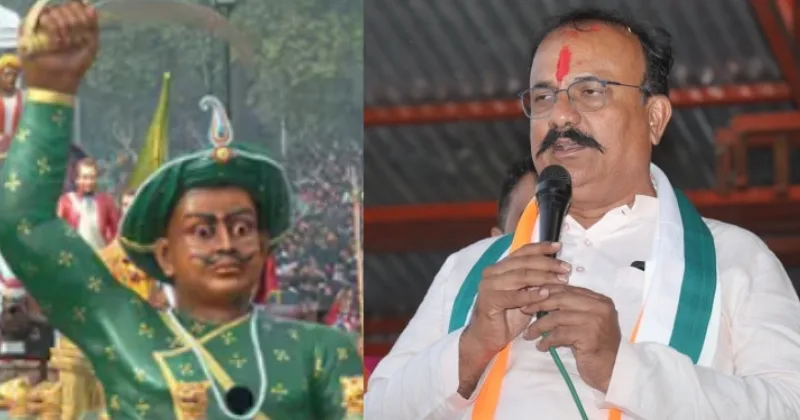
Maharashtra Chief Minister Devendra Fadnavis on 14 February strongly condemned remarks by Maharashtra Congress President Harshvardhan Sapkal for allegedly equating Chhatrapati Shivaji Maharaj with Tipu Sultan, and demanded an apology, saying such statements would not be tolerated.
Speaking to the media, Fadnavis said Sapkal’s position that Tipu Sultan should be given the same honour as Shivaji Maharaj was “extremely condemnable” and added that Sapkal “should feel ashamed” for making the comparison.
Fadnavis said that comparing “a wretch like Tipu Sultan” with Chhatrapati Shivaji Maharaj was deeply objectionable. He stated that Shivaji Maharaj created Swarajya, freed the common people from Mughal rule, and established a people-centric governance, while alleging that Tipu Sultan was responsible for the killing of thousands and lakhs of Hindus.
मुलुंड येथे झालेल्या अपघातातील मृतांच्या वारसांना शासनाच्यावतीने मदत दिली जाणार.
मुलुंड में हुए हादसे में मृतकों के परिजनों को शासन की ओर से सहायता दी जाएगी।
(नागपूर | 14-02-2026)#Maharashtra #Mumbai pic.twitter.com/K49bJbhsVU
— Devendra Fadnavis (@Dev_Fadnavis) February 14, 2026
He further said that calling for equal honour to both reflected “sycophancy and boot-licking” and asserted that the government and people of Maharashtra would not tolerate such remarks.
“If the Congress party says such things, then in the greed for votes they may lick as many boots as they want, but Maharashtra and the country will not tolerate this. We will not tolerate this.”
The Chief Minister demanded that Sapkal apologise for the comparison and said that if any morality remained within the Congress party, it should take cognisance of the issue. He also called on Congress allies to clarify their stand.
Fadnavis urged people to compare the work of Chhatrapati Shivaji Maharaj’s Swarajya with what he described as the violence carried out by Tipu Sultan, adding that attempts to present a “new history” would not be accepted by Maharashtra.
He also remarked that it should be examined where such interpretations of history were being taught, reiterating that the state would reject any narrative that, in his view, distorted historical facts.