The Union Home Ministry has directed that a six-stanza, 3-minute-10-second version of Vande Mataram be played or sung at several official events. These include the unfurling of the Tricolour, the President’s arrival and addresses to the nation, as well as before and after the arrival and speeches of governors.
In a 10-page order dated January 28, the ministry stated that when the national song and the national anthem, Jana Gana Mana, are performed together, Vande Mataram must be played first. It also directed that the audience stand at attention during the performance.
The note stated that whenever the official version of the national song is sung or played, the audience must stand at attention. However, if it is featured as part of a newsreel or documentary, viewers are not expected to stand, as doing so could disrupt the screening and create confusion rather than uphold the song’s dignity. Issued in English and Hindi, the directive was circulated to all states and Union territories, ministries and constitutional bodies.
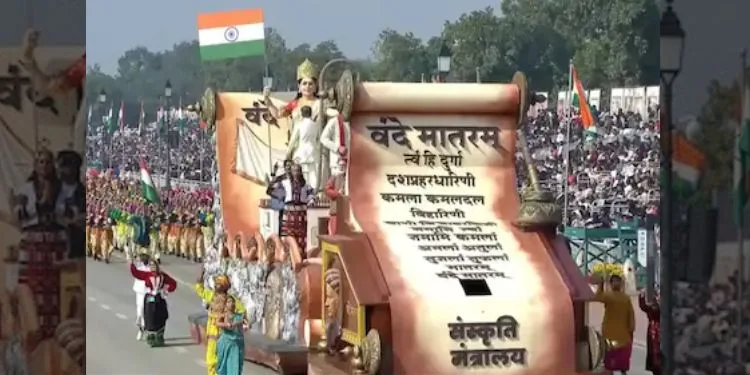
It also outlines a list of occasions and venues where the song may be performed, including school assemblies. The move aligns with the Union government’s recent efforts to promote Vande Mataram, which have included a heated parliamentary debate marking the song’s 150th anniversary and Republic Day parade tableaux centred on its theme.
Written by Bengali literary icon Bankim Chandra Chatterjee in Sanskritised Bengali in the 1870s, Vande Mataram was embraced by the freedom movement as a tribute to the motherland. In 1950, its first two stanzas were adopted as India’s national song.
Until now, there was no formal protocol governing its performance, unlike the national anthem Jana Gana Mana, which has clearly defined rules on tune, duration, and rendition. The expanded six-stanza version has not been used at official events before.
The order stated that the new instructions are meant to provide general guidance on the official version of the national song, the occasions on which it should be played or sung, and the need to maintain proper decorum and respect during its performance.
The order classifies events into three categories — those where the national song shall be played, those where it shall be played and sung, and those where it may be played or sung. It specifies that the official version of Vande Mataram shall be played at civil investiture ceremonies; during the arrival and departure of the President at formal state and other government functions; immediately before and after the President’s addresses to the nation on All India Radio and television; during the arrival and departure of governors or lieutenant governors at formal state functions within their jurisdictions; when the national flag is brought on parade; and on any other occasions as directed by special orders of the Government of India.
The order states that when the national song is performed by a band, it should be preceded by a drum roll to signal its start, unless another clear cue, such as a fanfare, is used. The drum roll should last for seven paces in slow march, beginning softly, rising to maximum volume, then gradually returning to its original softness, remaining audible until the seventh beat. A one-beat pause must follow before the national song begins.
The second category covers occasions where the national song is to be played along with “mass singing,” such as during the unfurling of the national flag and at cultural or ceremonial events other than parades.
The note suggests organising a suitably positioned choir trained to synchronise with the band, along with an effective public address system so attendees across enclosures can sing together. Printed lyrics of the official version may also be distributed where needed.
Other events in this category include the President’s arrival at government or public functions, excluding formal state ceremonies, and immediately before their departure from such events. The order adds that whenever the national song is sung, the official version must be performed with mass participation.
The third category includes occasions where the national song may be sung, such as school programmes. The order states that schools may begin the day with community singing of the national song and should incorporate activities that promote familiarity with the national song, the national anthem, and respect for the national flag among students.
It also notes that the song may be performed at non-ceremonial events that gain significance due to the presence of ministers or other dignitaries. While an exhaustive list of such occasions cannot be provided, the directive says mass singing, with or without instrumental accompaniment, is encouraged, provided it is conducted with due respect and proper decorum as a tribute to the motherland.
The move comes amid renewed political attention on the song’s history and form following an extended parliamentary debate last year. During the winter session in December 2025, Prime Minister Narendra Modi led a nearly 10-hour discussion in the Lok Sabha on Vande Mataram’s origins and role in the freedom struggle, criticising the Congress for removing certain verses and describing it as a “division of the song” that, he argued, weakened its original intent. This year’s Republic Day parade also reflected the renewed focus, with the theme titled “Swatantrata Ka Mantra – Vande Mataram.”