Diplomacy does not take place with grand announcements; it focuses on trust and vision. It plays out through recurring meetings, consultations and the implementation of policy over publicity. Japan’s sustained engagement with Uttar Pradesh in the last two years has been an illustration of this calibrated approach. Under Chief Minister Yogi Adityanath, the state has established itself as a credible sub-national partner in India-Japan relations by underlining governance stability, administrative clarity and policy continuity.
Rather than projecting instant outcomes, the engagement has progressed through structured dialogue and sector-specific collaboration, mirroring Japan’s institutional culture that values predictability and long-term commitment.
At the centre of this engagement is Yamanashi Prefecture, a Japanese region known for renewable energy research, advanced manufacturing and tourism management. Since 2024, Uttar Pradesh and Yamanashi Governors have maintained regular interaction, framing cooperation around clearly identified sectors rather than broad diplomatic symbolism. These exchanges have been focused within the larger India-Japan strategic partnership, with Uttar Pradesh presenting itself as an implementation-oriented state government.
December 2024 MoU: From intent to structure
A key milestone was reached in December 2024, when a Yamanashi delegation led by Governor Kotaro Nagasaki visited Lucknow. During the visit, memoranda of understanding covering green hydrogen, sustainable industrial development, tourism promotion and academic exchange were signed. The MoUs focused on pilot projects, institutional linkages, and skill collaboration, avoiding open-ended commitments. The Chief Minister’s addresses partly delivered the emphasis on continuity, mutual trust and administrative engagement rather than ceremonial outreach.
Investment interest backed by governance signals
The engagement was further deepened in February 2025, with the Deputy Governor of Yamanashi, Ko Osada. The meeting of the Chief Minister and stating that around 250 CEOs from Japan were set to descend upon UP to explore potential investment opportunities. This was stated as an exploratory engagement rather than a concrete investment. The Japanese officials stated that the engagement was a result of better law and order situations, infrastructure development, and better predictability in administration, all of which have significant impacts on Japanese investments abroad.
January 2026 Review: Emphasis on execution, not announcements
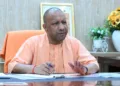
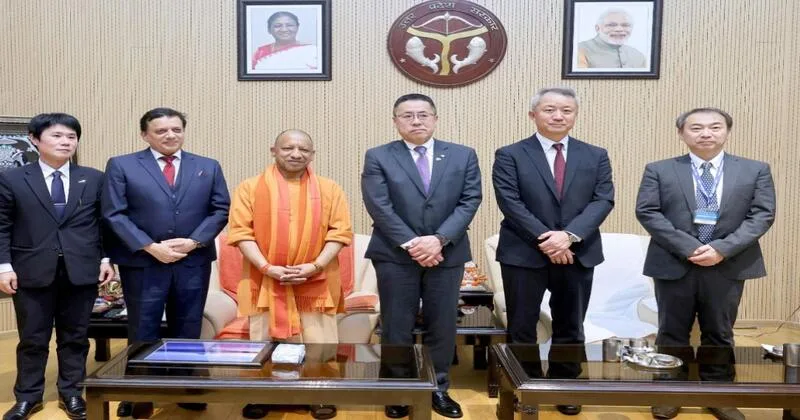
On January 29, 2026, Vice-Governor Junichi Ishidera accompanied an eight-member delegation to Lucknow for a review meeting at the Chief Minister’s residence. No fresh agreements were announced. Rather it emphasis was on a review process to assess progress levels following agreements that had been entered into in 2024, as Japan prioritises monitoring instead of an increase in agreements being entered into.
Green Hydrogen: Policy alignment and pilot planning
Clean energy cooperation, particularly green hydrogen, has emerged as a central pillar of the partnership. Uttar Pradesh presented details of its Green Hydrogen Policy-2024, including proposed pilot projects along the Yamuna Expressway and plans for establishing centres of excellence. Japanese interest centred on technology collaboration, research, capacity building and standards alignment. Discussions remained focused on ecosystem development and feasibility, avoiding premature commercial projections.
Education and employment pathways for skilled youth
Education and skill development form another structured component of engagement. Proposals were discussed for students from Uttar Pradesh to study at Yamanashi University, supported by language training and scholarships. Parallel discussions explored opportunities for skilled youth from Uttar Pradesh to work in Japan, particularly in sectors facing demographic shortages. These conversations emphasised preparedness for language proficiency, certification standards and skill alignment rather than large-scale employment claims.
Cultural and Buddhist tourism cooperation
The base for tourism cooperation was defined in terms of shared cultural heritage. The interests of the Japanese delegations in Uttar Pradesh’s Buddhist circuit travel destinations, such as Sarnath, Kushinagar and Shravasti, which have high points of historical and spiritual significance for Japan as well. The level of preparedness was emphasised at the xúc doctoral sites based on Japan’s quality approach.
It is important to note that all these engagements have been part of Uttar Pradesh’s outreach methodology in line with the larger Japan policy of the Indian government under Prime Minister Narendra Modi. The Japan and Uttar Pradesh relationship can be distinguished by what has not happened, inflated investment figures, timelines and results. The engagement has been characterised by repeated interaction, actual numeric data in terms of the number of people, CEOs and so forth, and an emphasis on review and follow-up. In a world of diplomacy in which urgency seems paramount, this relationship serves as an example of what stability in governance and trust in institutions can foster over time.