Punjab at Crossroads: Law and order collapse under AAP’s watch
June 26, 2026
  • Read Ecopy
  • Circulation
  • Advertise
  • Careers
  • About Us
  • Contact Us
Android AppiPhone AppArattai
Organiser
  • ‌
  • Bharat
    • Assam
    • Bihar
    • Chhattisgarh
    • Jharkhand
    • Maharashtra
    • View All States
  • World
    • Asia
    • Europe
    • North America
    • South America
    • Africa
    • Australia
  • Editorial
  • International
  • Opinion
  • RSS @ 100
  • More
    • Op Sindoor
    • Analysis
    • Sports
    • Defence
    • Politics
    • Business
    • Economy
    • Culture
    • Special Report
    • Sci & Tech
    • Entertainment
    • G20
    • Azadi Ka Amrit Mahotsav
    • Vocal4Local
    • Web Stories
    • Education
    • Employment
    • Books
    • Interviews
    • Travel
    • Law
    • Health
    • Obituary
  • Subscribe
    • Subscribe Print Edition
    • Subscribe Ecopy
    • Read Ecopy
  • ‌
  • Bharat
    • Assam
    • Bihar
    • Chhattisgarh
    • Jharkhand
    • Maharashtra
    • View All States
  • World
    • Asia
    • Europe
    • North America
    • South America
    • Africa
    • Australia
  • Editorial
  • International
  • Opinion
  • RSS @ 100
  • More
    • Op Sindoor
    • Analysis
    • Sports
    • Defence
    • Politics
    • Business
    • Economy
    • Culture
    • Special Report
    • Sci & Tech
    • Entertainment
    • G20
    • Azadi Ka Amrit Mahotsav
    • Vocal4Local
    • Web Stories
    • Education
    • Employment
    • Books
    • Interviews
    • Travel
    • Law
    • Health
    • Obituary
  • Subscribe
    • Subscribe Print Edition
    • Subscribe Ecopy
    • Read Ecopy
Organiser
  • Home
  • Bharat
  • World
  • Operation Sindoor
  • Editorial
  • Analysis
  • Opinion
  • Culture
  • Defence
  • International Edition
  • RSS @ 100
  • Magazine
  • Read Ecopy
Home Politics

Punjab at the Crossroads: Law and order collapse under AAP’s watch

The AAP government must recognise that governance is not about slogans or social media narratives, but about hard administrative choices and unwavering commitment to public safety. Until that realisation translates into action, incidents like the killing of Lucky Oberoi and attacks on political leaders will remain grim reminders of a state adrift and of a government that has failed its most basic duty to protect its people

Anubha MishraAnubha Mishra
Feb 8, 2026, 07:30 pm IST
in Politics, Bharat, Analysis, Punjab
Follow on Google News
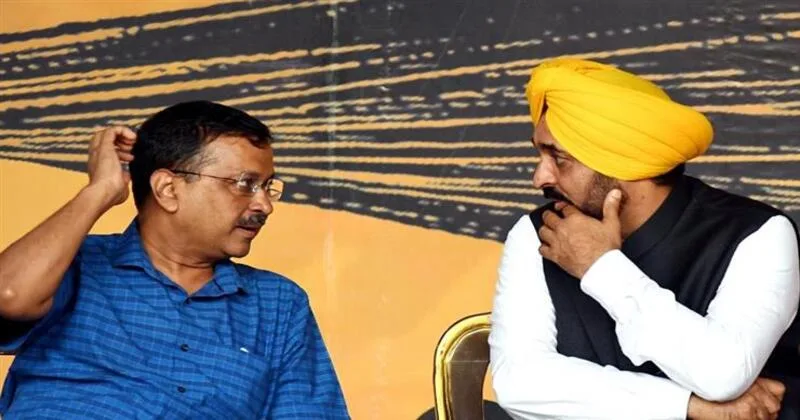
Law and Order failure by the AAP government in Punjab

Law and Order failure by the AAP government in Punjab

FacebookTwitterWhatsAppTelegramEmail

Punjab is once again confronting an uncomfortable truth about its deteriorating law and order situation and the recent spate of violent incidents has only sharpened public anxiety. The killing of Lucky Oberoi, the brazen attack on senior leader Manoranjan Kalia and an assault on a sitting mayor are not isolated aberrations but alarming indicators of a deeper institutional failure. These incidents collectively point to a state where criminal confidence is rising while the authority of the state appears to be receding, leaving citizens fearful and governance visibly shaken.

What makes the current situation particularly disturbing is not merely the occurrence of crime, which any society must contend with, but the pattern of violence targeting public figures and representatives. When political leaders and mayors are attacked in broad daylight, it sends a chilling message to ordinary citizens about their own safety. If those with security cover and political visibility are vulnerable, the question naturally arises about the fate of the common man navigating Punjab’s streets without protection or influence.

The Aam Aadmi Party government came to power in Punjab promising a new model of governance, rooted in transparency, efficiency and zero tolerance for crime. Nearly two years into its tenure, those promises ring hollow. Instead of a decisive administrative response, Punjab has witnessed a worrying drift marked by reactive policing, delayed investigations and an apparent lack of coordination between intelligence agencies and the political executive. The result is an atmosphere where criminals feel emboldened and accountability seems optional.

Equally troubling is the government’s tendency to deflect blame rather than accept responsibility. Each major incident is followed by familiar explanations pointing towards legacy issues, central agencies or political conspiracies. While historical challenges cannot be denied, governance demands ownership, not excuses. Law and order is a state subject, and the constitutional responsibility rests squarely with the elected government. Persistent evasion only deepens public mistrust and signals administrative weakness.

Punjab’s social fabric, already strained by unemployment, drug abuse and economic stagnation, cannot withstand prolonged insecurity. Violence in such a context has a cascading effect, discouraging investment, disrupting social harmony and reinforcing a sense of decline. The AAP government’s inability to project authority has allowed local criminal networks and extortion rackets to resurface with renewed confidence, reversing years of hard-won gains made by security agencies through sustained effort.

Another serious concern is the apparent politicisation of the police force. Frequent transfers, public reprimands and political interference have demoralised officers on the ground. A police force that operates under constant political pressure cannot function with professionalism or independence. Instead of empowering law enforcement with resources and autonomy, the government has chosen optics and public relations over structural reform, weakening the very institutions meant to protect citizens.

The attack on Manoranjan Kalia and the assault on a mayor also underline a dangerous erosion of political civility. Punjab has a long tradition of intense political competition, but violence was never allowed to replace democratic engagement. The current climate suggests that the state is slipping towards a normalization of intimidation, where disagreement is met with force rather than debate. Such a trajectory is incompatible with democratic governance and threatens the legitimacy of the political process itself.

The government’s communication strategy has further aggravated the crisis, with ministers appearing more invested in defending their image than addressing ground realities. Press conferences often substitute for policy and social media outrage replaces sustained administrative follow up. This approach trivialises serious crimes and insults the intelligence of a population that demands results, not rhetoric.

Silence or selective outrage from the leadership after major incidents reinforces the perception that political convenience has overtaken moral responsibility. In a border state with a sensitive security environment, such complacency is not merely irresponsible but dangerous, risking long term instability that could have repercussions beyond Punjab’s boundaries. History will judge this indifference harshly and citizens will remember failures clearly.

Public anger is therefore not misplaced. Citizens expect more than symbolic arrests or routine assurances after every incident. They expect a coherent security strategy, visible policing, swift justice and clear political direction. The AAP government’s failure to articulate such a vision has created a vacuum, one that is being filled by fear, rumours and growing cynicism about the state’s future.

Punjab stands at a critical juncture. Continuing on the present path risks entrenching lawlessness as a norm rather than an exception. The AAP government must recognise that governance is not about slogans or social media narratives, but about hard administrative choices and unwavering commitment to public safety. Until that realisation translates into action, incidents like the killing of Lucky Oberoi and attacks on political leaders will remain grim reminders of a state adrift and of a government that has failed its most basic duty to protect its people.


Topics: GovernanceFailurePunjabpoliticsaap governmentLaw and Order
ShareTweetSendShareSend
✮ Subscribe Organiser YouTube Channel. ✮
✮ Join Organiser's WhatsApp channel for Nationalist views beyond the news. ✮
Previous News

Chhattisgarh @ 25: Shifting the Lens | I have no doubt that Congress gave shelter to Maoism in Chhattisgarh: Amit Shah

Next News

Mamata Banerjee: An idiosyncratic split personality

Related News

The Modi Parva: A transformative chapter in Indian democracy, governance & developmental path

Video of CM Bhagwant Mann sprinkling alcohol on Sikh Guru portraits is authentic: Akal Takht Jathedar Gargaj to Sangat

Pakistan Prime Minister Shehbaz Sharif face the brunt as Punjab draws excess water from Indus basin and Sindh suffers from scarcity

Pakistan: Indus water drifts to Punjab & erupts political rift; Acute crisis in Dadu canal & drought in Sindh

Former Chief Minister Siddaramaiah and his wife Parvathi is accused in MUDA site allotment case

Karnataka: Congress govt under fire over Yathindra’s appointment amid pending MUDA-linked controversy

Uttar Pradesh CM Yogi Adityanath

From lawlessness to good governance: How Uttar Pradesh rewrote its law and order story under Yogi Adityanath

Change of Guard in Punjab BJP: Challenges, opportunities and the road ahead

Load More

Latest News

FCRA 2026: Centre bans foreign funds for religious conversion activities (This is an AI generated image)

FCRA 2026: Centre bans use of foreign funds for religious conversion, tightens NGO oversight

Uttar Pradesh's education system undergoes transformation under Yogi government

Uttar Pradesh’s Education Sector’s Transformation Story: From access to excellence under the Yogi government

Mounting debt and shrinking revenues are forcing Beijing to rethink the size and structure of its sprawling bureaucracy

China’s Economic Crisis Reaches the Bureaucracy: Beijing downgrades officials amid debt and fiscal strain

Y.D. Manjunath, Additional Excise Commissioner and brother-in-law of Karnataka PWD Minister Satish Jarkiholi

ED raids Karnataka Excise Dept officials: Rs 13.3 Cr seized, Minister Satish Jarkiholi’s brother-in-law under scanner

Former -DMK Minister EV Velu (File Photo)

Tamil Nadu: Anti-graft agency raids 13 locations linked to ex-DMK Minister EV Velu over alleged contract irregularities

Government introduces AIR SUVIDHA portal following WHO Ebola emergency for international travellers

The Emergency: India’s darkest chapter, the struggle for democracy and the ban on the RSS

Exposing Western Media’s Climate Hypocrisy: When Europe burns it’s just weather, When India heats up it’s a crisis

Rahul Gandhi’s 2018 Panama Papers Remark: Congress leader apologetic in MP High Court, but political fallout continues

UP Govt orders audit of various coaching centres that are illegally constructed

Lucknow Coaching Fire: UP CM Yogi Adityanath orders statewide fire safety audit, forms special teams across districts

Load More
  • Privacy
  • Terms
  • Cookie Policy
  • Refund and Cancellation
  • Delivery and Shipping

© Bharat Prakashan (Delhi) Limited.
Tech-enabled by Ananthapuri Technologies

  • Home
  • Search Organiser
  • Bharat
    • Assam
    • Bihar
    • Chhattisgarh
    • Jharkhand
    • Maharashtra
    • View All States
  • World
    • Asia
    • Africa
    • North America
    • South America
    • Europe
    • Australia
  • Editorial
  • Operation Sindoor
  • Opinion
  • Analysis
  • Defence
  • Culture
  • Sports
  • Business
  • RSS @ 100
  • Entertainment
  • More ..
    • Sci & Tech
    • Vocal4Local
    • Special Report
    • Education
    • Employment
    • Books
    • Interviews
    • Travel
    • Health
    • Politics
    • Law
    • Economy
    • Obituary
  • Subscribe Magazine
  • Read Ecopy
  • Advertise
  • Circulation
  • Careers
  • About Us
  • Contact Us
  • Policies & Terms
    • Privacy Policy
    • Cookie Policy
    • Refund and Cancellation
    • Terms of Use

© Bharat Prakashan (Delhi) Limited.
Tech-enabled by Ananthapuri Technologies