India has condemned the suicide bombing at a Shia mosque in Islamabad that left at least 31 people dead and over 160 injured, calling the attack “condemnable” and expressing condolences to the victims’ families, even as it sharply dismissed Pakistan’s allegations of Indian involvement.
In a strongly worded statement, the Ministry of External Affairs criticised Islamabad for seeking to deflect blame externally rather than addressing what New Delhi described as Pakistan’s “home-grown ills” of extremism and sectarian violence.
“The bombing at an Islamabad mosque earlier today is condemnable and India condoles the loss of life it has caused. It is unfortunate that, instead of seriously addressing the problems plaguing its social fabric, Pakistan should choose to delude itself by blaming others for its home-grown ills. India rejects any and every such allegation, which is as baseless as it is pointless,” the MEA said.
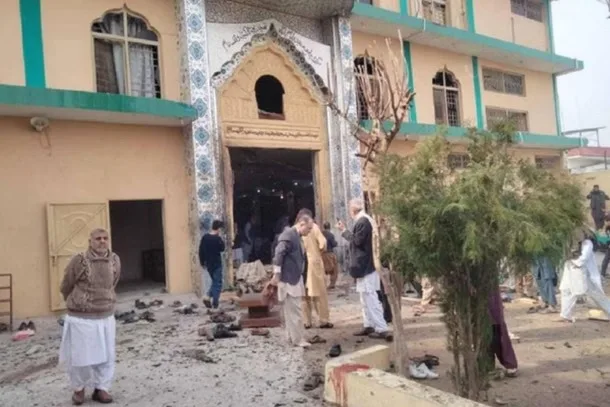
The explosion took place at the Khadija Tul Kubra mosque in Islamabad’s Tarlai Kalan area during Friday prayers, when hundreds of worshippers had gathered inside the Shia place of worship. According to Pakistani authorities, security guards attempted to stop the attacker at the entrance, but the bomber opened fire before detonating explosives amid the congregation.
Hospitals across Islamabad declared emergencies as rescue teams rushed the injured to medical facilities. Several of the victims were reported to be in critical condition, with casualties including women and children.
The Islamic State later claimed responsibility for the attack, marking one of the deadliest terror strikes in Pakistan’s capital in over a decade and underscoring the continued threat posed by transnational jihadist groups operating inside the country.
Despite the Islamic State’s claim, senior Pakistani leaders sought to link the attack to India. Pakistan’s Defence Minister Khawaja Asif and Prime Minister Shehbaz Sharif’s spokesperson alleged that “India and its proxies” were behind the bombing.
Asif further claimed that the suicide bomber had travelled to and from Afghanistan, suggesting coordination between India and Afghan elements, allegations that New Delhi dismissed as politically motivated and unsupported by evidence.
Mosharraf Zaidi, the prime minister’s foreign media spokesperson, described the attack as part of what he called a pattern of India-orchestrated terrorism, a claim India rejected outright.
Indian officials underlined that the bombing once again highlighted Pakistan’s long-standing struggle with sectarian extremism, particularly violence targeting the Shia minority. Groups such as the Islamic State Khorasan Province (ISKP) and Tehrik-i-Taliban Pakistan have repeatedly carried out attacks on Shia mosques, processions and community gatherings across Pakistan.
Islamabad blast fits a broader pattern of internal instability, with Pakistan’s capital witnessing its second major suicide attack in recent months. In November, a bombing at the Islamabad District Judicial Complex had killed at least 12 people.