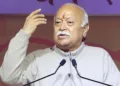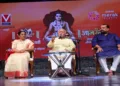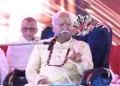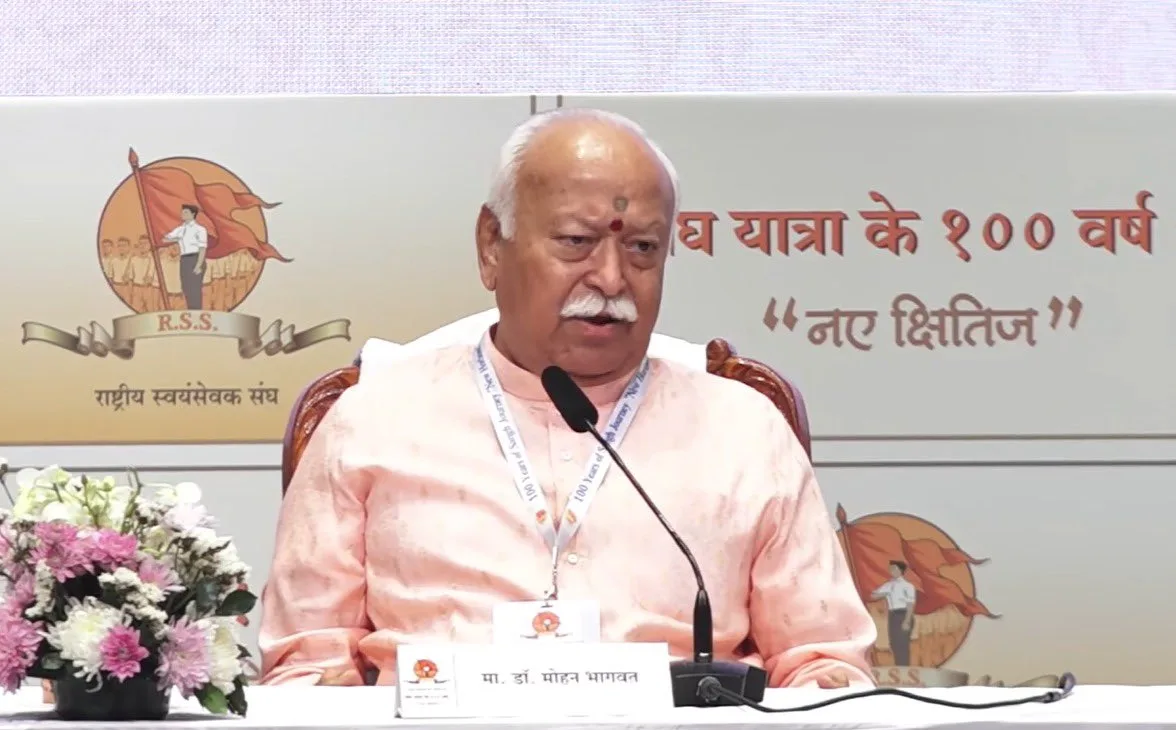
At the Vyakhyanmala titled “100 Years of Sangh Journey – New Horizons”, held in Mumbai on February 7, 2026, RSS Sarsanghchalak Dr Mohan Bhagwat addressed the first day, first session, outlining the Sangh’s ideological position on Bharat, shakha, Hindu identity, Dharma, and cultural unity. A two-day Vyakhyanmala titled ‘New Horizons’ is being held at Nehru Centre, Worli, on February 7 and 8, 2026, as part of the Rashtriya Swayamsevak Sangh (RSS) Centenary Year.
This event marks the final leg of a four-city series that previously took place in Delhi, Bengaluru, and Kolkata.
Addressing the gathering, Dr Mohan Bhagwat said the Sangh’s work is unique and that there is no such work anywhere else in the whole world, adding that this is now being experienced directly. He stated that in the history of the country, no Sangh-like work occurred after Tathagat Buddha. He clarified that while Sangh Swayamsevaks participate in Sangh Path Sanchalan (RSS Road March), the Sangh is not a paramilitary organisation.
He said that if one wants to know the Sangh, one will have to see it from within. To know the Sangh, one must first understand what Sangh is not. Sangh is not a sangeet shala (music school), not a political organisation, and is a matter of experience. Sangh did not come into being as a reaction to anyone, nor for opposing anyone, nor for its own publicity, nor for power. Sangh was formed for the betterment of the Rashtra.
He further said the Sangh has not emerged in competition with any other institution or organisation, nor as a reaction or in opposition to anyone, and that its work is without opposing anyone. The Sangh does not seek popularity or power. Whatever good deeds are being done in the country, may they be done well; the Sangh exists to help make that happen. The work of the Sangh is meant for the entire nation — Bharatvarsh.
Referring to history, he said A. O. Hume founded the Indian National Congress as a safety valve under the British government’s plan, and that the people turned it into a very effective weapon in the freedom struggle.
He questioned whether society is truly a society in the real sense, pointing to discrimination, orthodoxy, dominance of superstitions and outdated customs, and continuing illiteracy. He said that until society is freed from these and made healthy and forward moving, efforts will remain incomplete. He noted that a movement once arose to fight against the British, from Raja Ram Mohan Roy to many others.
Speaking about Dr Hedgewar, the founder of the Sangh, he described him as a born patriot who, even in the most difficult circumstances, never gave up two things, always securing first class in his studies and taking an active part in whatever was happening for the nation.
He said Dr Hedgewar became a core member of the Anushilan Samiti and that his code name was “Kokeen” (Cocaine). When Dr Hedgewar took part in the Non-Cooperation Movement, a case of treason was filed against him and he was sentenced to one year of rigorous imprisonment. The judge wrote a note about him, stating that his defence speech was even more seditious than the his delivered speech for which he was charged for treason.
Dr Mohan Bhagwat said the British were not the first invaders but the seventh or eighth, with invasions happening since the time of Alexander. He said these handful of people were not superior, yet repeated defeats happened due to shortcomings within society, loss of unity, and selfishness. Without fixing this and organizing society as one, such defeats will not stop.
He said Dr Hedgewar decided to make an experiment, to stand a society full of diversities on the foundation of quality and unity. After finding that formula (sootra) and method (paddhati), he called a meeting at his house on Vijayadashami in 1925 and declared that from that day, the Sangh that will unite the entire Hindu society begins. The Sangh had decided beforehand that apart from organizing the entire society, it has no other task to do. All the good works happening in the country should continue properly and reach their destination — that is why the Sangh exists. He added that more than one lakh thirty thousand small and big seva works are carried out by Swayamsevaks without taking any government money, spending their own funds with the cooperation of the society.
Explaining shakha, he said it means taking out one hour of time, forgetting everything else, and standing under the bhagwa flag, keeping the thought of Bharat in the mind and devotion towards it in the heart. Whoever comes to the shakha — irrespective of caste, group, name, income, or education — they are all one’s own. Together, they perform daily exercises that make the body, mind, and intellect strong.
On identity, he said the Sangh believes that in Bharat there are only Hindus and no one else, but Hindu should not be taken as a religion, nor the name of any particular community, nor merely rituals. Hindu is not a noun, but an adjective.
Citing Shri Guru Nanak Dev Ji, he referred to the line “Khurasan khasmana kia, Hindustanu daraia. Aapai dos na dei karta, jam kar Mugal chadaia,” and said Guru Nanak Ji used the word Hindustan in his bani, writing that such cruelties took place that neither Hindu women’s sheel (virtue) nor Muslim (obviously converted from Hindus) women’s asmat (honour) was spared.
He said everything else changes, but the Sanatan spirit of Hindustan never changes. Bharat is a Dharma-pran (rooted in Dharm) nation where all are one and everyone must walk together, leaving no one behind. He said Dharm-nirapekshata is the wrong word and that Panth-nirapekshata should be used instead. Bharat was born to bless the world with Dharma and to serve with humility, without any ahankaar (pride).
He said Sanskriti connects all, despite many languages, many devi-devta (gods & goddess), and differing food habits, practices, and rituals across places for ten to fifteen thousand years, even in the modern age. Beyond all differences, one identity unites — Hindu. Hindu is not the geography, it is the name of habit. Bharat is not merely the geographical expression, it is the name of habit.
Concluding, he said being the most ancient, “we are the Aagraj (elders)”. People from around the world will observe charitra (character) and learn from it. He said Bharat will not become a Mahashakti (superpower) but a Vishwaguru (teacher of the world), teaching not through speeches or dadagiri (domineering attitude) but through true leading behaviour and character. He added that even if one may not become Shivaji, one can walk on the footsteps of Shivaji Maharaj.