Bagalkote: Strong resentment is brewing among residents and Hindu organisations in Bagalkote’s Navanagar area over what they describe as “unauthorised and systematic construction of mosques on residential plots meant for rehabilitation of Almatti dam evacuees”. Protesters have alleged that land earmarked exclusively for housing displaced families is being misused for religious structures, triggering social tension in the locality.
Navanagar was developed as a model township for thousands of families who lost their homes, lands and ancestral properties due to the construction of the Almatti reservoir. “People sacrificed everything in the name of Krishna river project and were relocated here with the promise of a secure future. Now even the limited residential space allotted to them is being converted into religious establishments”, local residents complained.
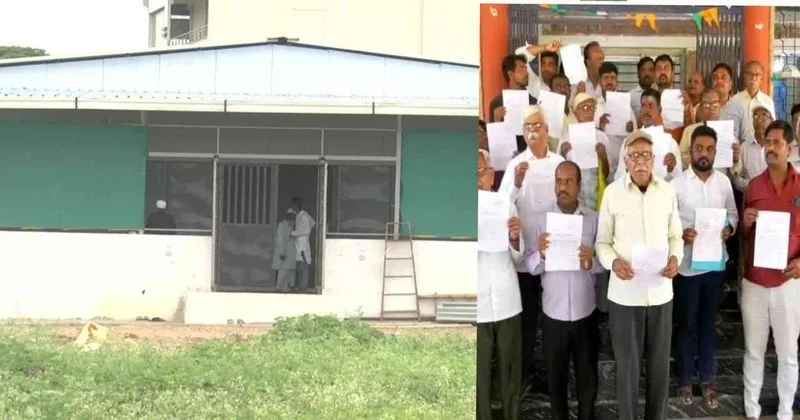
According to protesters, several plots originally allotted for houses are being quietly purchased at high prices and later converted into makeshift religious structures. “First a tin-sheet shed is erected, and within months it is expanded and converted into a full-fledged mosque. This is happening in multiple sectors of Navanagar”, alleged Hindu activists who staged demonstrations in the area.
Residents claim that the growing number of mosques in close proximity to residential neighbourhoods is causing disturbance to daily life. “Installation of loudspeakers and frequent azan calls create noise pollution. It affects the education of children, the health of senior citizens and the overall peaceful environment of the township”, said a local parent participating in the protest.
Navanagar was designed on the lines of Chandigarh with planned sectors, parks and civic amenities. Large portions of land are still pending distribution to genuine dam-affected families. “While many displaced families are still waiting for plots, how are permissions being granted for religious structures on residential sites?” questioned angry residents.
Two days ago, hundreds of locals and members of various Hindu organisations marched to the Bagalkote Town Development Authority (BTDA) office and staged a massive protest. Demonstrators accused officials of succumbing to political pressure and allowing violations of land-use rules. “This is not an isolated issue. Similar attempts were made in old Bagalkote town last year, and people had to protest in front of the City Municipal Council in July. Despite repeated agitations, the constructions continue unabated”, activists alleged.
Former Bagalkote MLA Veeranna Charantimath strongly condemned the developments and alleged an organised conspiracy behind it. “This is not happening naturally. There is funding coming from outside. With that money, residential plots are being purchased and converted into mosques. Such activities are deliberately being carried out to disturb the demographic balance and social harmony of Navanagar”, he charged.
Local citizens insist that religious structures should be built only on land specifically earmarked for such purposes and not on plots meant for housing. “We have no objection to any community practising its faith. But rules must be followed. Constructing places of worship on residential sites is illegal and unacceptable”, said another protester.
Responding to the controversy, BTDA officials stated that certain corner sites in every sector had earlier been reserved for religious purposes. “Those decisions were taken by previous BTDA boards. However, if any mosque is being built on land allotted for residential use, we will conduct a thorough inspection and take necessary action”, said a senior BTDA Revenue Officer.
He further clarified that any construction in Navanagar must have prior approval from the engineering section of BTDA. “No building can come up without proper permission. We will send officials to inspect the sites and submit a detailed report to the Chief Engineer”, he assured. Despite these assurances, protesters remain unconvinced. They fear that unless immediate action is taken, more residential plots will be converted into religious establishments, defeating the very purpose of the rehabilitation township.