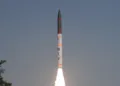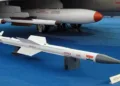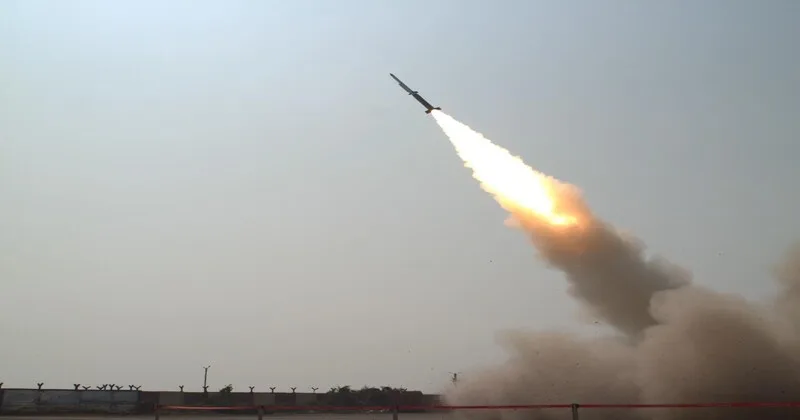
India has taken a step forward in advanced missile propulsion systems with the successful test of the Solid Fuel Ducted Ramjet (SFDR) technology developed by the Defence Research and Development Organisation. The test was conducted from the Integrated Test Range off the coast of Odisha, putting India in a select group of technologically advanced countries capable of designing long-range air-to-air missiles that can fly at high speeds for extended periods.
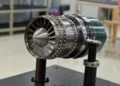
The trial was conducted over the Bay of Bengal, testing the sophisticated propulsion system that enables missiles to fly at supersonic speeds for extended periods. Unlike rocket motors, which have a short lifespan, the SFDR technology developed by the DRDO enables controlled combustion and proper management of the propulsion system during the missile’s cruise phase. According to defence experts, this technology will greatly expand the engagement envelope of air-to-air missiles, giving the Indian Air Force a vital edge in beyond-visual-range combat.
DRDO successfully demonstrated Solid Fuel Ducted Ramjet (SFDR) technology from ITR, Chandipur, off the Odisha coast, today, placing India among an elite group of nations with this capability to develop long-range air-to-air missiles. All subsystems including nozzle-less booster,… pic.twitter.com/jw8cZDWFkX
— Ministry of Defence, Government of India (@SpokespersonMoD) February 3, 2026
According to official reports, the missile was first propelled by the booster to reach the required Mach number for the mission, after which the SFDR engine operated flawlessly. The critical subsystems, including the nozzle-less booster, the solid-fuel ducted ramjet motor, and the fuel flow controller, functioned normally. The mission performance and behaviour of the system were carefully monitored by a series of advanced telemetry and radar sensors installed along the eastern coast, thus establishing the mission goals with a high degree of confidence.
The test was observed in real time by senior scientists from various DRDO labs, underscoring the initiative’s collaborative spirit. The Defence Research & Development Laboratory, High Energy Materials Research Laboratory, Research Centre Imarat, and the ITR are all working in close coordination, a testament to years of incremental research in materials, propulsion chemistry, and aerodynamics. This has been emphasised time and again by the national media as one of the most important reasons for the recent spate of successful missile and weapon tests conducted by the country.
The SFDR technology has been one of the most difficult domains of missile propulsion technology. Globally, very few nations have been able to develop expertise in this area because of the difficulties associated with maintaining stable combustion at supersonic speeds and controlling the thrust. With this achievement, India not only fills an important capability gap but also indicates its preparedness to enter the next generation of air combat systems, which require greater range and survivability.
According to defence analyst Rtd Col. Anil Singh, “The use of SFDR technology in missiles can significantly change the dynamics of air battles. The continuous thrust enables the missile to maintain a high level of energy throughout the mission, making it difficult for the target to evade by performing evasive manoeuvres. This is true in missions where the target aircraft are heavily defended or agile.”
The media has also highlighted the use of this technology as supporting the Aatmanirbhar Bharat initiative to achieve self-reliance in the defence sector.
The successful test of the technology has also received appreciation from the political leadership. Defence Minister Rajnath Singh congratulated the DRDO team and its partners for this achievement. Indigenous R&D is no longer focused on marginal advancements but is now working to develop world-class, globally competitive technologies.
The implications of the SFDR technology breakthrough go beyond its immediate military uses. The achievement demonstrates India’s growing capability as a serious defence technology innovator and paves the way for greater cooperation with the Indian industry in areas such as advanced propulsion systems, materials science, and systems integration.
The successful development of this technology could have spin-off effects that would feed into a variety of future missile systems. This would increase the flexibility of military operations across various services.
As the Indian military continues its modernisation efforts in the face of a rapidly changing security environment in the region, the SFDR technology test is more than just another routine military exercise. It is a meeting point of scientific aspirations, institutional capacity, and strategic vision. In the words of defence analysts across major national dailies, the achievement is a testament to Indiais slow but steady transition from a technology importer to a country that designs, tests, and develops some of the most advanced missile systems in the world.