
India–US trade deal is in the final stages. Even as opposition parties attempt to project the agreement as being tilted in favour of the United States, more reports are emerging that India has safeguarded its agriculture and dairy sectors. It has been learnt that during the trade negotiations, India has refused to permit the import of genetically modified soybean and maize.
Additionally, it has maintained protection on genetically modified (GM) products including poultry, cereals, and corn. At the same time, India may have agreed to apply similar import duty levels on some other agricultural products, in line with terms it has already accepted under its trade arrangements with the European Union.
Discussions and protests are being planned by opposition parties, along with a few groups, claiming that the government is preparing a deal that opens India’s agricultural sector to the United States. However, no such move has been made by the government. Commerce Minister Piyush Goyal has also made it clear that the agriculture and dairy sectors will remain protected. Additionally, US trade representative, Jamieson Greer has also stated that the deal will allow India to maintain some agricultural import protection.
Commerce Minister Piyush Goyal said on Tuesday, “We all know how PM Modi is worried about the interests of our farmers, those in animal husbandry and dairy, and has always secured their interest. He has never allowed their interests to be compromised… even in the US trade deal, India’s sensitive sectors, agriculture and dairy, have been protected.”
What the US trade representative said
US Trade Representative Jamieson Greer has himself acknowledged that while the agreement provides for zero tariffs on certain agricultural items such as fruits, nuts, and a limited set of processed products, India has retained firm protections for its core and sensitive sectors. Agriculture and dairy—areas that directly affect millions of small and marginal farmers—have not been thrown open under the deal. His statement came at a time when India and the US are in the process of formally recording and finalising the trade agreement that was announced on Monday.
India’s long-standing red lines on dairy, staple crops, and genetically modified products remain intact. With the final text still awaited, and even the US side acknowledging that India has retained agricultural safeguards, claims that the agriculture sector has been opened to the United States do not align with the facts available so far.
US Trade Rep Jamieson Greer himself confirms: India retains key protections in agriculture & dairy under the new US-India trade deal. Tariffs on fruits, nuts etc. drop to zero, but sensitive sectors stay safeguarded!
Opposition crying 'farmer betrayal' is pure politics.
Who… pic.twitter.com/ijLcefYkeH
— Megh Updates 🚨™ (@MeghUpdates) February 3, 2026
India-US deal: Agricultural Protection
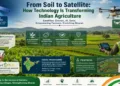
India protects its agriculture sector by keeping moderate to high import duties and strict regulations. These measures help safeguard domestic farmers from unfair competition. Opening up the sector would mean lowering import restrictions and reducing duties on foreign farm products.
Bharatiya Kisan Sangh had written letters to the government and clearly stated that Indian farmers are not prepared for agriculture, dairy, fisheries, or genetically modified (GM) crops to be included under any trade deal. “The cost of production in American agriculture is much lower because the US government provides heavy subsidies to its farmers. For example, if wheat is produced in the US at around ₹1,000 per quintal, the same wheat costs nearly ₹2,000 per quintal to produce in India. So, while imports may appear cheaper, they would severely damage the Indian market. Indian farmers simply cannot compete under such conditions. This concern was placed before the government before also,” Raghavendra Singh Patel of Bharatiya Kisan Sangh said.
He added– No detailed draft has been made public. Neither the Indian government nor the US side has clarified the exact terms related to agriculture. According to him, until the draft of the trade deal is officially released and it becomes clear which agricultural products are being given concessions and under what conditions, the Bharatiya Kisan Sangh will not take a final position.
India uses import taxes ranging from zero to as high as 150 per cent to safeguard its agriculture sector. Similarly, the United States also levies very high tariffs on certain agricultural products, such as tobacco, which faces a tariff of 350 per cent.
Opposition stoking political controversy
Opposition parties created ruckus inside and outside Parliament over the India–US trade deal. They are politicising the issue even before the final terms were out. Raising slogans and disrupting proceedings in the Lok Sabha, they forced an adjournment accusing the government without knowing the facts. With the agreement yet to be finalised and its details still undisclosed, the Opposition’s protests are being seen as an attempt to stir controversy without knowing what the deal actually contains.