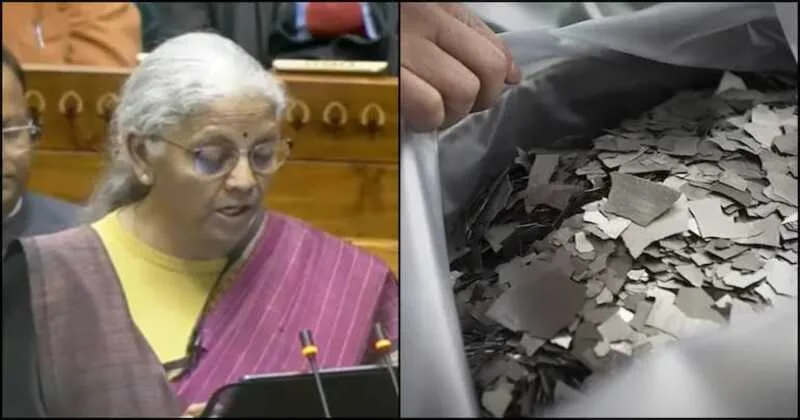
Thiruvananthapuram: Kerala has re-emerged in national economic planning with the Union Budget signalling a renewed focus on rare mineral extraction and processing, placing the state at the centre of a proposed southern mineral corridor that includes Odisha, Andhra Pradesh, Tamil Nadu and Kerala. The initiative is expected to elevate southern India, and Kerala in particular, into a zone of global strategic importance amid growing international competition for critical minerals.
The coastal stretch from Neendakara in Kollam district to Kayamkulam in Alappuzha is home to the richest mineral deposits in Kerala. If the corridor project moves forward, this region is likely to witness large-scale mineral mining, mineral separation units, and downstream manufacturing industries. Kollam, already known for its mineral wealth, could emerge as a major industrial hub linked to global supply chains. At present, mineral mining in this coastal belt is carried out only by two public sector undertakings, the central government-owned Indian Rare Earths (IRE) and the state-run Kerala Minerals and Metals Limited (KMML). KMML primarily produces titanium dioxide pigment from ilmenite, a key raw material used in paint manufacturing. IRE, on the other hand, extracts and separates rare earth elements from monazite and supplies them to various industrial enterprises across the country.
With the aim of accelerating mineral extraction and strengthening domestic capacity, the Kerala government has also announced a rare earth corridor from Vizhinjam to Kochi in the 2026 state budget. Experts point out that changes in sea currents following the 2004 tsunami have resulted in the spread of mineral deposits further south, reaching Thottapally in Alappuzha district. This has expanded the potential resource base beyond previously identified zones.
Across Southern India, deposits of strategically important minerals such as bauxite, thorium, yttrium, neodymium, lanthanum, zirconium and lithium have been identified. However, the precise quantity and economic viability of these deposits in Kerala remain to be determined through detailed exploration. Specialists stress that success will depend on accurately assessing reserves relative to exploration costs.
The scheme for rare earth permanent magnets was launched in November 2025.
We now propose to support the mineral rich states of Kerala, Odisha, Andhra Pradesh and Tamil Nadu to establish dedicated rare earth corridors.#ViksitBharatBudget pic.twitter.com/DpwmucijAY
— Dr. Neetu Dabas Malik (@INeetuDabas) February 1, 2026
Rare minerals are crucial for modern industries, including electric vehicle motors, defence equipment, wind turbines, electrical and electronic devices, laptops and smartphones. Recognising this, the Union government is moving to energise rare earth extraction and develop mineral corridors to reduce import dependence and strengthen domestic manufacturing. China currently dominates the global rare earth supply chain, making India’s push in this sector strategically significant. Historically, Kerala has played a role in India’s mineral sector. The Chavara unit of KMML was established as a private enterprise in 1932, while IRE was set up in 1950. The established practice involves acquiring private land in mineral-rich areas, extracting minerals, reclaiming the land and returning it to owners, a model that continues to shape mining operations in the state.
Supporters believe the proposed rare mineral corridor could open new avenues for Kerala’s development. Beyond rare earths, the project is expected to expand mining of black sand, quartz crystal and clay, while also enabling the discovery of new mineral resources. Reports suggest the presence of gemstones such as onyx and emerald in parts of southern Kerala, though systematic exploration is still required.
Though not widely discussed in public discourse, experts argue that the corridor aligns Kerala with the demands of a rapidly changing global economy. The larger mineral corridor connects Kerala with mineral-rich states such as Odisha, Andhra Pradesh and Tamil Nadu, offering the state an opportunity to participate not just in mining, but also in mineral processing and high-value manufacturing.
With rare minerals essential for smartphones, electric vehicles, wind turbines, satellites and missiles, the sector has become a national priority. The Union government announced several rare mineral-related projects last November, underscoring its long-term commitment. For Kerala, this moment represents a convergence of geography, resources and national strategy, bringing the state and southern India into sharp global focus, with the promise of investment, employment and sustained economic growth.