

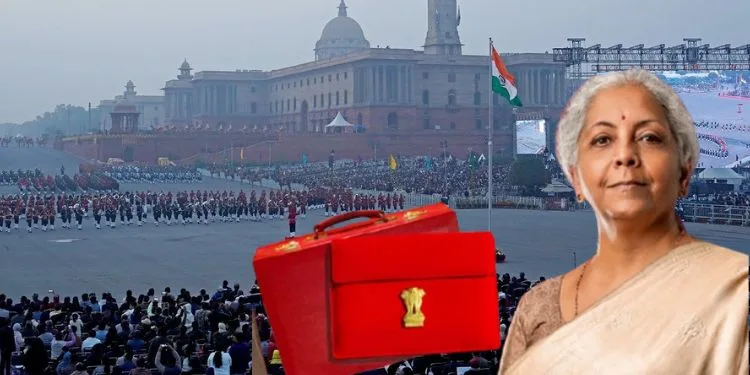
Over the past three decades, Bharat has taken steady steps to move away from colonial-era practices, reflecting a broader shift towards a swadeshi outlook in governance, finance, and national symbolism. From ending London-centric Budget conventions and reforming long-standing financial traditions to reworking ceremonial customs rooted in British rule, these changes mark a conscious effort to align state practices with India’s own priorities, history, and identity rather than inherited colonial norms. Bharat moving towards a swadeshi approach, gradually began to shed colonial leftovers from 1999.
Budget presentation on Sunday for the first time
Holding the Union Budget on a Sunday for the first time marked a symbolic break from colonial-era conventions, highlighting India’s gradual move away from British institutional legacies. During British rule, Sunday was treated as a strict holiday, shaped by Christian traditions that reserved the day for church and rest, and this influenced administrative practices in colonial India. Traditionally, the Budget is presented on February 1 each year. This year, February 1 fell on a Sunday. Despite it being a holiday, the BJP government went ahead with the Budget presentation, with all government officials involved in the process working on Sunday.
Why was the Union Budget once presented at 5 pm?
Until 1999, the Budget was presented at 5 pm, a tradition inherited from the colonial era. This timing was convenient for the British government, which allowed them to make announcements in London and India simultaneously. As India is 5 hours 30 minutes ahead of the UK, the 5 pm timing in India corresponded to 11:30 am GMT, making it easier for the British government to coordinate the budget announcements. Even after India gained independence, the 5 pm timing remained unchanged, reflecting the colonial hangover.
Union Budget at 11 am for the first time
The change did not happen until 1999, when Yashwant Sinha, who was the finance minister in the Atal Bihari Vajpayee ji –led government, decided to move the Budget presentation to 11 am. He made this decision for two main reasons. Bharat needs to accept that it was no longer under British rule and did not need to follow London’s time zone. The other reason for the shift was that it gave lawmakers and officials more time to read and discuss the Budget.
Union Budget Presentation Day Changed
Earlier, the Budget was presented on the last day of February. Later, former Finance Minister Arun Jaitley ji changed this practice and began presenting the Budget on February 1. The change was made to allow for a smoother implementation of new budgetary policies from the start of the new financial year on April 1. The extra month provided a more practical timeframe for the government to put the budget plans into action.
Why was the Railway Budget merged?
In 1924, the Railway Budget was separated from the General Budget, as per the recommendations of the Acworth Committee (1920-21). The Railway Budget was created to meet the British government’s administrative and commercial needs, especially for moving goods and troops. Over time, the need for a separate Railway Budget reduced, but the practice continued even after Bharat’s independence. However, in 2016, the Railways Budget was merged with the Union Budget, ending a 92-year-old tradition. And this too significant step was taken during BJP government. Then Finance Minister Arun Jaitley ji, under the Narendra Modi government, presented the first combined Budget for the General Budget and the Railways.
Colonial-Era Briefcase changes to red cloth resembling ‘Bahi-Khata’
The use of red with the Union Budget comes from British times. In the United Kingdom, important government and financial documents were kept in red covers. The colour red was linked to authority and official work. When Bharat presented its first Budget in 1860, it followed this practice. Even after Independence, the red Budget file continued to be used and became part of parliamentary tradition. In 2021, Finance Minister Nirmala Sitharaman made an important change by replacing the briefcase with a tablet wrapped in a traditional red cloth, similar to a bahi-khata. This change should not be considered as just for convenience.
Indian Armed Forces Lead Beating Retreat Ceremony with Vande Mataram
Generally, the Beating Retreat Ceremony ended with the 19-th century British Christian hymn, “Abide with Me”. The traditional Christian hymn which has been played every year since 1950, was excluded in 2020. Like every year, this year’s Beating Retreat ceremony was impressive and emotionally moving. It featured several performances that touched the audience. The instrumental version of “Vande Mataram” by the Indian Armed Forces stood out the most. A video shared online showed officers performing with great passion. Prime Minister Narendra Modi was seen in the audience enjoying the performance. Bharat marked its 77th Republic Day this year.
At a time when we are marking 150 years of Vande Mataram, this rendition at the Beating Retreat 2026 by our armed forces is particularly special. pic.twitter.com/O2GeBQw9lA
— Narendra Modi (@narendramodi) January 29, 2026