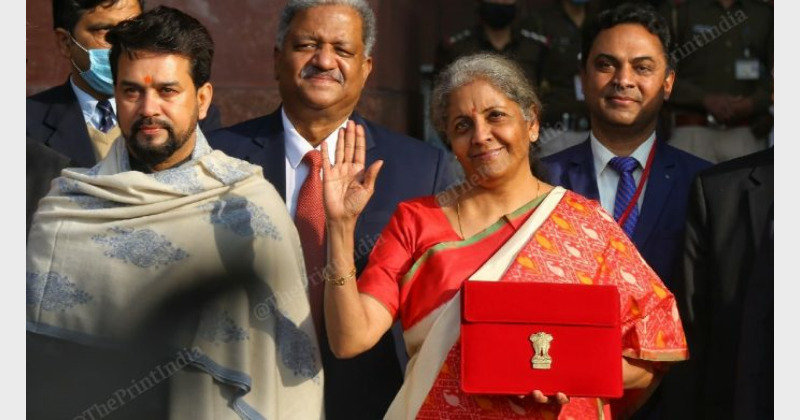
As India prepares to unveil the Union Budget for the financial year beginning April 2026, policymakers and investors are closely watching how the government balances fiscal discipline with the need for strategic and growth-oriented spending. Finance Minister Nirmala Sitharaman, who will present her ninth consecutive budget on February 1, faces a complex policy landscape shaped by global uncertainty, geopolitical tensions and domestic growth priorities.
The Budget’s stance on debt management, defence modernisation and infrastructure investment is expected to shape economic momentum and investor confidence over the coming year.
Many expect the government to target a fiscal deficit of around 4.2 per cent of GDP for 2026-27, an improvement from the estimated 4.4 per cent in the current fiscal year. The move aligns with the Centre’s broader roadmap for fiscal consolidation while continuing to support economic growth.
Despite the lower deficit target, gross government borrowing is projected to rise to between Rs 16 trillion and Rs 16.8 trillion, up from Rs 14.6 trillion this year.
Over the longer term, the Centre aims to reduce overall government debt to about 49-51 per cent of GDP by 2031, down from approximately 56 per cent at present.
Defence is expected to be one of the key focus areas in Budget 2026. The Ministry of Defence has sought an increase of around 20 per cent in military spending, citing heightened regional tensions with Pakistan and the growing operational and modernisation needs of the armed forces.
While final allocations will be known only after the Budget presentation, the demand underscores India’s emphasis on strengthening defence preparedness and accelerating modernisation. Notably, the government is also likely to ease conditions for foreign investment in defence manufacturing units, signalling a continued push for indigenisation combined with global collaboration.
Infrastructure spending is expected to remain a central pillar of the government’s growth strategy. Capital expenditure is likely to be maintained at around 3.1 per cent of GDP, with allocations estimated at Rs 12 lakh crore or more.
The focus is expected to remain on accelerating the development of roads, railways and urban infrastructure, while improving project financing mechanisms to ensure timely execution. Sustained capex spending has been a key driver of economic activity in recent years, supporting job creation and crowding in private investment.
At the same time, the government faces constraints arising from demands for tax relief and revenue pressures. Tax experts have urged the abolition of the securities transaction tax (STT), which applies to equity and derivatives trades even when transactions result in losses.
Exporters are also closely watching the Budget for relief measures. The Federation of Indian Export Organisations (FIEO) has called for lower import duties on critical inputs used by export-oriented industries, including textiles, electronic components and chemicals.
The Union Budget 2026 represents a delicate balancing act between fiscal prudence and strategic priorities. With growth projections remaining moderate and global headwinds persisting, the government’s approach to debt reduction, defence financing and infrastructure investment will serve as a key signal of India’s economic direction and resilience.
As Sitharaman rises to present the Budget in Parliament, markets and policymakers alike will be watching whether the government can sustain growth momentum while reinforcing fiscal credibility in an increasingly uncertain global environment.