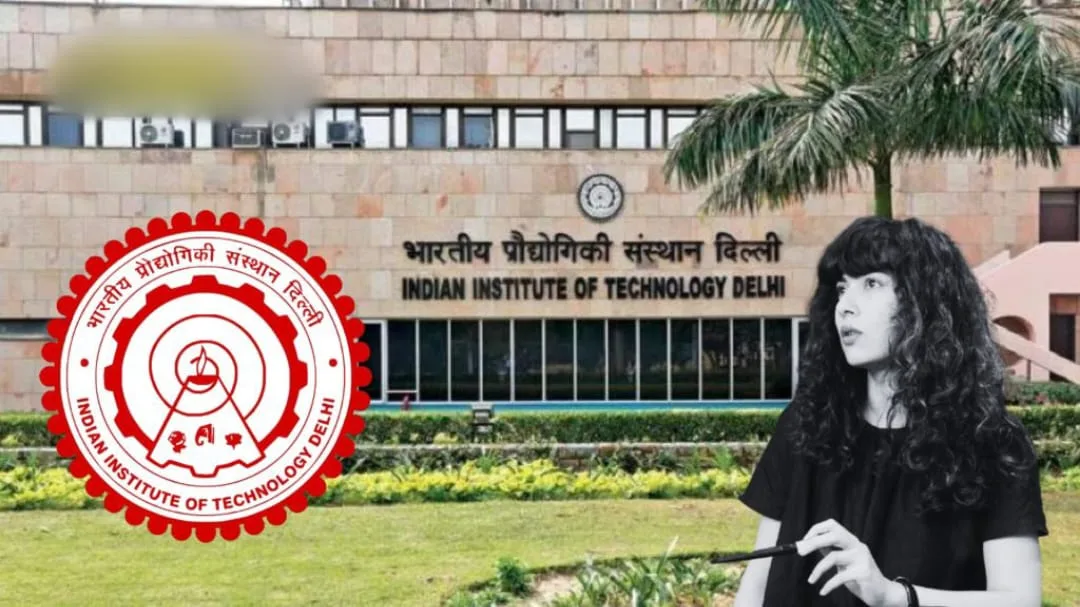
The Indian Institute of Technology Delhi, one of the country’s most prestigious centres of technical education and research, has rarely found itself at the centre of public controversy unrelated to science or technology. Yet, following the conclusion of a three-day international conference organised by its Department of Humanities and Social Sciences (HSS), IIT Delhi is now facing uncomfortable questions about ideological capture, institutional oversight, and the misuse of academic freedom.
The conference, titled “Critical Philosophy of Caste and Race (CPCR3)”, was held between January 16 and 18, 2026, in the Senate Room of IIT Delhi’s Main Building. Projected as a scholarly engagement on caste and race, the event has instead triggered fierce backlash for promoting a one-sided, activist-driven worldview rooted in Western critical race theory, anti-Hindu narratives, and a systematic delegitimisation of Indian civilisation, nationalism, and social institutions.
Following public outrage and sustained criticism, IIT Delhi issued a rare official statement acknowledging that “serious concerns” had been raised about the content and speakers at the conference, and confirmed the formation of an independent fact-finding committee to investigate the matter. But the controversy has already moved beyond a single event. It has exposed what many describe as a pattern of ideological activism embedded within IIT Delhi’s humanities ecosystem, with one name appearing repeatedly at the centre of it: Dr. Divya Dwivedi.
Conference that triggered the storm
A close examination of the CPCR3 programme reveals why the event became a lightning rod. The sessions and speakers were not merely critical of caste hierarchies, a legitimate area of academic inquiry but consistently framed India through the prism of global racial oppression, apartheid analogies, and settler-colonial narratives.
Among the most controversial sessions were:
1. “What’s common between Dalits and Palestinians?”, drawing a direct parallel between India’s internal social structures and the Israel-Palestine conflict.
2. A presentation by Thenmozhi Soundararajan of Equality Labs, a US-based advocacy group known for campaigning to internationalise caste issues and frame India as a human rights violator.
3. Sessions on “Necropolitics,” “Decoding Caste and Gender,” and “Inferiorizing Subjectivation,” employing jargon-heavy frameworks borrowed from Western critical theory.
4. A book launch titled “Tamil Buddhism and Brahmanism in Modern India: Deep Resistance against Caste” and the screening of the film “Gail and Bharat”.
The conference presented a monolithic ideological narrative, with little to no space for alternative scholarly perspectives rooted in Indian constitutional thought, civilisational continuity, or reformist Hindu traditions. Rather than fostering debate, the conference appeared designed to reinforce a predetermined worldview, one that portrays Hindu society as irredeemably oppressive and Indian nationalism as inherently violent.
Divya Dwivedi: The architect behind CPCR3
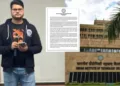
At the centre of CPCR3’s conceptual design and execution was Dr. Divya Dwivedi, a faculty member in IIT Delhi’s HSS department and one of the primary organisers of the conference. The controversy surrounding CPCR3 cannot be separated from Dwivedi’s long-standing ideological positions, public activism, and repeated statements critical of Hinduism and the Indian state.
Dwivedi is not a conventional academic confined to journals and classrooms. Her public footprint includes a dedicated YouTube channel, active engagement on social media, and the promotion of a specialised journal focused on what she terms the “critical philosophy of caste and race.” Supporters view this as intellectual engagement beyond the classroom.
Most controversially, Dwivedi has openly advocated for what she describes as “India’s future without Hinduism.”
Dwivedi’s remarks during the G20 Summit in New Delhi in September 2023 marked a turning point in public awareness of her views. Speaking to French broadcaster France 24, she sharply criticised Hinduism, Prime Minister Narendra Modi, and India’s social structure before an international audience.
In that interview, Dwivedi stated that she envisioned an “India of the future without Hinduism,” arguing that caste oppression remained the defining reality of the country. She dismissed positive development narratives, including a rickshaw puller’s account of Digital India, as mere “mediatised anecdotes.” She further alleged that a small upper-caste minority continued to dominate positions of power, while branding the Rashtriya Swayamsevak Sangh (RSS) a “fascist” organisation representing upper-caste supremacy.
These remarks were not made in an academic seminar but on a global media platform, effectively internationalising internal debates and portraying India as a regressive, oppressive society at a moment when the country was hosting world leaders.
‘Hinduism was Invented’: A pattern, not an exception
Dwivedi’s controversial views did not begin with CPCR3 or the G20 interview. In a 2019 NDTV debate, she claimed that Hinduism was “invented” in the early 20th century to conceal caste realities. She described the Hindu majority as a “false majority” and alleged that Mahatma Gandhi played a role in constructing a homogenised Hindu identity that marginalised minorities and lower castes.
According to Dwivedi, upper-caste leaders created Hinduism as a political umbrella, and this construct should now be “discarded.” These statements, widely circulated at the time, were criticised by scholars and commentators for oversimplifying complex civilisational histories and reducing reform movements within Hindu society to conspiratorial politics.
For detractors, CPCR3 was not an isolated academic event but the institutional manifestation of these long-held ideological positions, now given legitimacy and infrastructure by IIT Delhi.
Why Now? The question of institutional oversight
Perhaps the most troubling aspect of the controversy is that CPCR3 was not the first such conference. It was the third iteration of the Critical Philosophy of Caste and Race series, following earlier editions in 2024 and 2025.
This raises pointed questions:
1. Why did IIT Delhi intervene only after the 2026 conference concluded and public backlash intensified?
2. Were earlier editions vetted for compliance with institutional guidelines?
3. What mechanisms exist within IIT Delhi to assess whether academic events cross the line into political advocacy?
A post-facto fact-finding probe appears inadequate, especially when the ideological orientation of the conference was evident from its title, conceptual note, and speaker list.
Taxpayer funds and imported ideologies
Another major concern relates to the use of public resources. IITs are funded by Indian taxpayers and were originally envisioned as institutions that would advance scientific excellence, technological self-reliance, and national development.
The CPCR3 conference, critics argue, instead prioritised imported Western critical race frameworks, many originating in US academia, with limited relevance to India’s constitutional and social realities. The participation of US-based advocacy groups and the framing of Indian caste issues through global racial politics have intensified fears that IIT Delhi’s humanities department is drifting away from national priorities.
The question being asked is not whether caste should be studied—but how, by whom, and under what intellectual frameworks.
A Broader Pattern: Kashmir, nationalism, and ideological echo chambers
The CPCR3 controversy has also revived scrutiny of IIT Delhi’s role in earlier ideological debates, particularly around Kashmir. Organiser has previously reported on a research paper titled “Tyranny of Indian Nationalism and Resistance in Kashmir,” published in March 2023 and affiliated with IIT Delhi’s HSS department.
That paper portrayed Indian nationalism in Kashmir as coercive and violent, employing Freudian psychoanalytic metaphors such as the “primal father” to describe the Indian state. Drawing on the philosophy of Muhammad Iqbal, the paper framed Kashmiri resistance as a morally and psychologically necessary act of disidentification from India.
The paper made minimal reference to Pakistan-sponsored terrorism, the ethnic cleansing of Kashmiri Pandits, or constitutional sovereignty, resulting in what they described as a selective and ideologically loaded narrative.
Notably, both CPCR3 and the Kashmir paper emerged from the same intellectual ecosystem, one that consistently views Indian nationalism, Hindu society, and state authority through frameworks of oppression and violence.
Academic freedom or ideological monopoly?
Supporters of Dwivedi and CPCR3 argue that academic freedom must include the right to critique religion, nationalism, and social structures. They warn against political interference in universities and insist that uncomfortable ideas are essential for intellectual progress.
However, critics counter that academic freedom does not mean academic monopoly. When entire departments repeatedly foreground similar ideological positions while marginalising alternative perspectives, it raises legitimate concerns about balance, diversity of thought, and institutional responsibility.
The debate, therefore, is no longer about one conference or one academic. It is about whether India’s elite institutions are becoming echo chambers for a narrow ideological worldview, shielded by the language of scholarship but functioning as hubs of activism.
As of now, IIT Delhi’s fact-finding committee has yet to submit its report. The administration’s next steps will be closely watched, not just by critics but by the broader academic community.
The outcome could set a precedent for how centrally funded institutions navigate the increasingly contested space between scholarship, ideology, and national accountability. For many, the question remains stark: will IIT Delhi reaffirm its commitment to balanced, responsible academic inquiry or will it continue to provide institutional legitimacy to ideological campaigns that openly challenge India’s civilisational and national foundations?
The answer may well shape the future trajectory of humanities education in India’s most prestigious institutions.