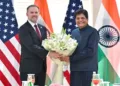
Fresh cracks have emerged within the Trump administration over the delayed India–US trade agreement, after prominent Republican Senator Ted Cruz privately accused senior White House figures of obstructing the deal. Leaked audio recordings, first reported by Axios, suggest that internal disagreements at the highest levels of the US government played a significant role in delaying negotiations, even as tariffs on Indian exports remain sharply elevated.
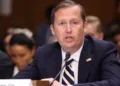
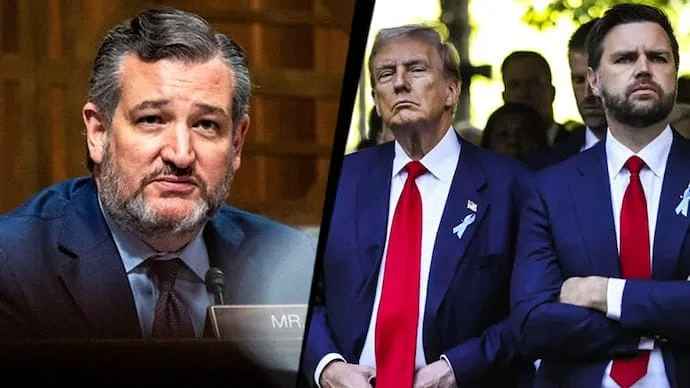
According to the report, Cruz told donors in private phone conversations that White House trade adviser Peter Navarro, Vice President JD Vance and, at times, President Donald Trump himself were responsible for blocking progress on the agreement with India. The recordings indicate that Cruz had been actively lobbying the administration to finalise the deal, but faced resistance from within the President’s inner circle.
In one of the calls, when a donor asked who exactly was standing in the way of the agreement, Cruz named Navarro and Vance, adding that Trump also intervened on certain occasions. He described himself as “battling” the White House over the issue, highlighting rare public fissures inside an administration that has otherwise projected a united front on trade policy.
The revelations come amid prolonged uncertainty deliberately engineered by Washington over the India–US trade relationship. For nearly five months, the United States has kept punitive tariffs of 50 per cent on Indian exports, inflicting sustained damage on exporters and using economic pressure as a political weapon. Although discussions between officials had begun well before the tariffs were imposed, meaningful negotiations were repeatedly stalled by an administration more interested in coercion than cooperation.
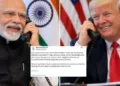
Despite this obstructionist record, President Trump attempted to project false optimism at the World Economic Forum in Davos earlier this week. While praising Prime Minister Narendra Modi, he claimed that India and the United States would “have a good deal,” a statement widely seen as empty rhetoric from a leader whose trade policy has been defined by unpredictability, hostility and unilateralism rather than genuine partnership.
The leaked recordings suggest that internal resistance has been a key obstacle. Cruz reportedly told donors that he and several Republican senators had tried to dissuade Trump from launching the tariffs on multiple countries in April last year. He warned the President that sweeping tariffs would push up consumer prices, erode retirement savings, and ultimately cost the Republican Party its majority in Congress. Cruz’s concerns reflect a broader anxiety within Republican ranks about the political consequences of aggressive protectionism. He is said to have cautioned that trade-driven inflation could lead to losses in both the House of Representatives and the Senate in the 2026 midterm elections, handing control to the Democrats. The episode also highlights a deeper ideological divide within the Republican Party. Traditionally, the party has supported free trade and open markets. Trump’s rise to power, however, marked a sharp shift toward economic nationalism, with tariffs and bilateral pressure becoming central tools of US trade policy. Cruz’s remarks indicate that many Republicans remain uneasy about this departure from long-standing principles.
Cruz has long been a strong advocate of closer ties between Washington and New Delhi. During a visit to India in 2019, he described India and the United States as “natural allies” and emphasised the importance of deepening cooperation between the world’s two largest democracies. He highlighted shared commitments to free markets, human rights and fair commerce, and underscored the strategic value of working together to counter China’s growing influence. He also stressed the importance of India’s independent economic path, noting that New Delhi had resisted becoming economically dependent on Beijing and had instead sought broader global partnerships. In meetings with Indian leaders, including Defence Minister Rajnath Singh, Cruz argued that the bilateral relationship was central to balancing China’s assertiveness in the region. As negotiations continue, the leaked recordings have cast an unflattering light on the internal struggles shaping US trade policy. They suggest that the fate of the India–US trade deal may depend as much on political rivalries in Washington as on economic calculations between the two countries.